
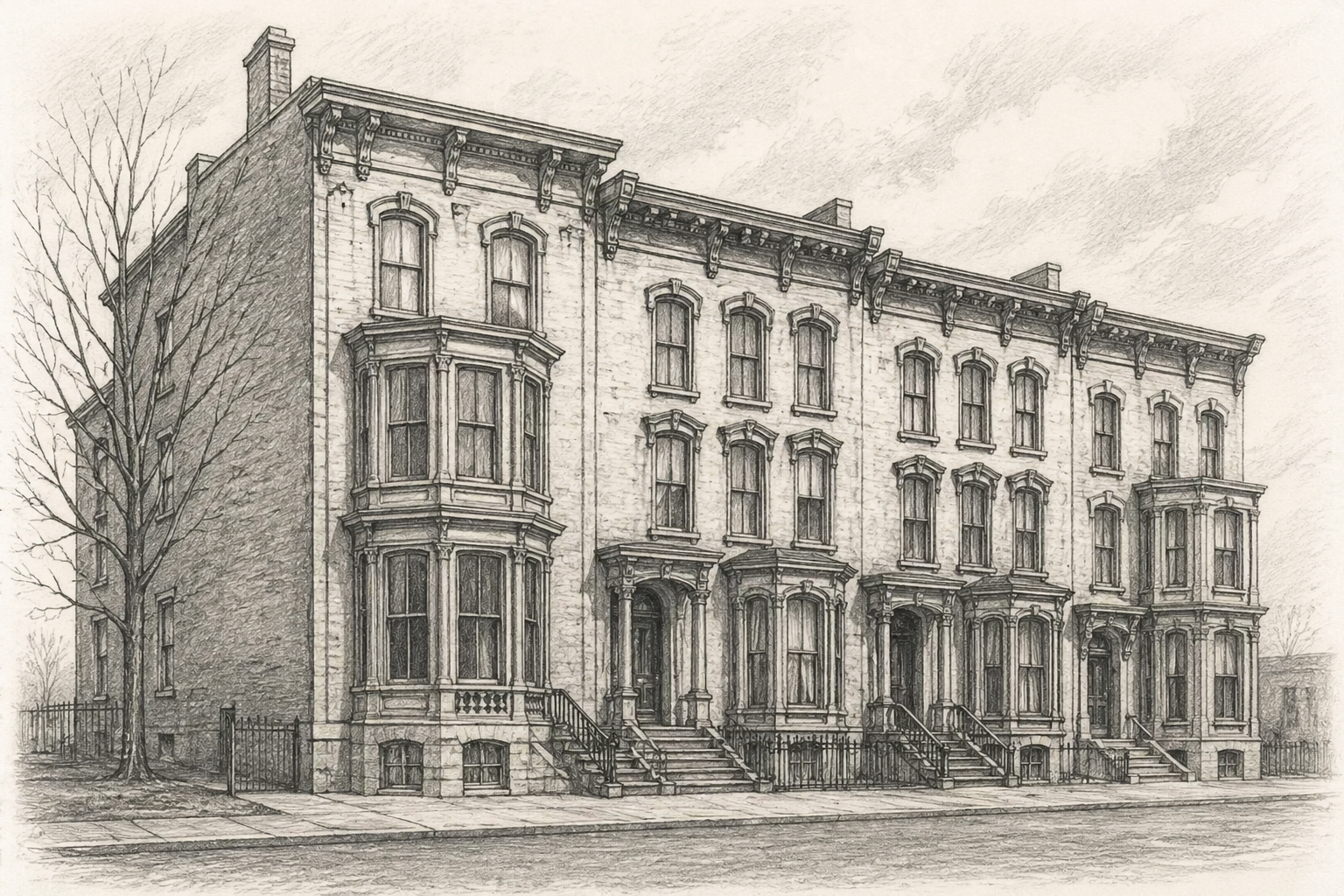
Typical Givens Row Residences
Joseph W. Givens
2909 Morgan Street
Givens & Adams, Builders
903 St. Charles Street
Joseph B. Givens
Architect
2909 Morgan Street
Builders, Architects, and a Legacy in Stone
In 1875, Joseph W. Givens resided at 2909 Morgan Street, listed in Gould’s Directory as a partner in Givens & Adams, Builders, with offices at 903 St. Charles Street. At first glance, his entry appears modest—one among many tradesmen contributing to the physical growth of a rapidly expanding St. Louis. Yet the Givens household would prove to be far more than a simple residence of a working builder. It was the foundation of a multi-generational architectural legacy tied directly to one of the city’s most important institutions.
Census records from 1870 and 1880 confirm that the Morgan Street address was a family household, occupied by Joseph W. Givens, his wife Kate Abbey Givens, and their children, including Joseph B. Givens. Within this environment, the processes of building were not distant abstractions but part of daily life. Materials, design decisions, labor, and construction realities formed the backdrop of a household in which the next generation was raised.
Contemporary accounts confirm that Joseph W. Givens served for many years as architect and contractor for Washington University, placing him in direct connection with one of St. Louis’s most significant emerging institutions during its formative period on its downtown campus. Operating in an era when the distinction between builder and architect was still evolving, Givens functioned in both capacities, helping translate institutional ambition into physical form. His work positioned him within a network of civic development that extended beyond individual structures to the shaping of the city’s educational and cultural landscape.
 Within this Morgan Street household, Joseph B. Givens came of age in that environment of design and construction. By the early 1880s, as the city’s residential center of gravity shifted westward, a “Joseph Givens” was associated with the design of Givens Row (1884) along Delmar Boulevard, an elegant series of Italianate row houses constructed in what was then one of the most desirable residential corridors in St. Louis. While attribution between father and son reflects the transitional nature of the profession at the time, the timing strongly suggests that this work represents a generational progression, with the son extending and refining the architectural foundations established by the father.
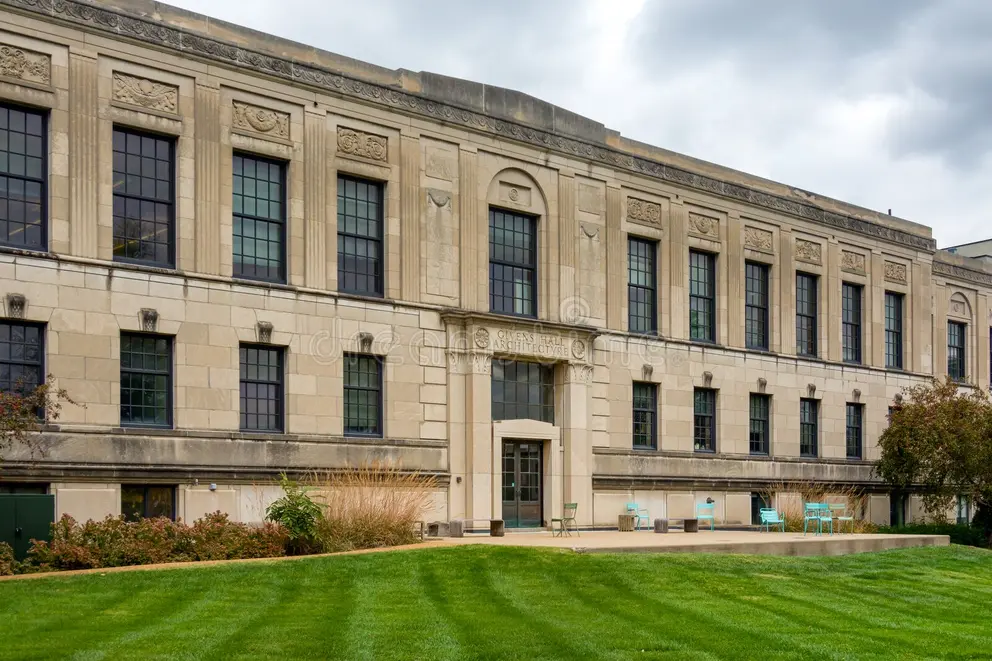
Givens Hall at Washington University