
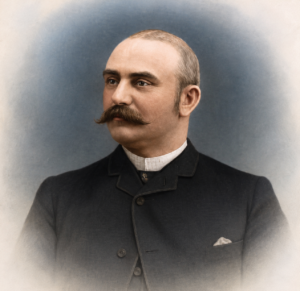
Joseph Clifford Richardson
2811 Locust Street
Richardson & Company – Wholesale Druggists
Chemical National Bank
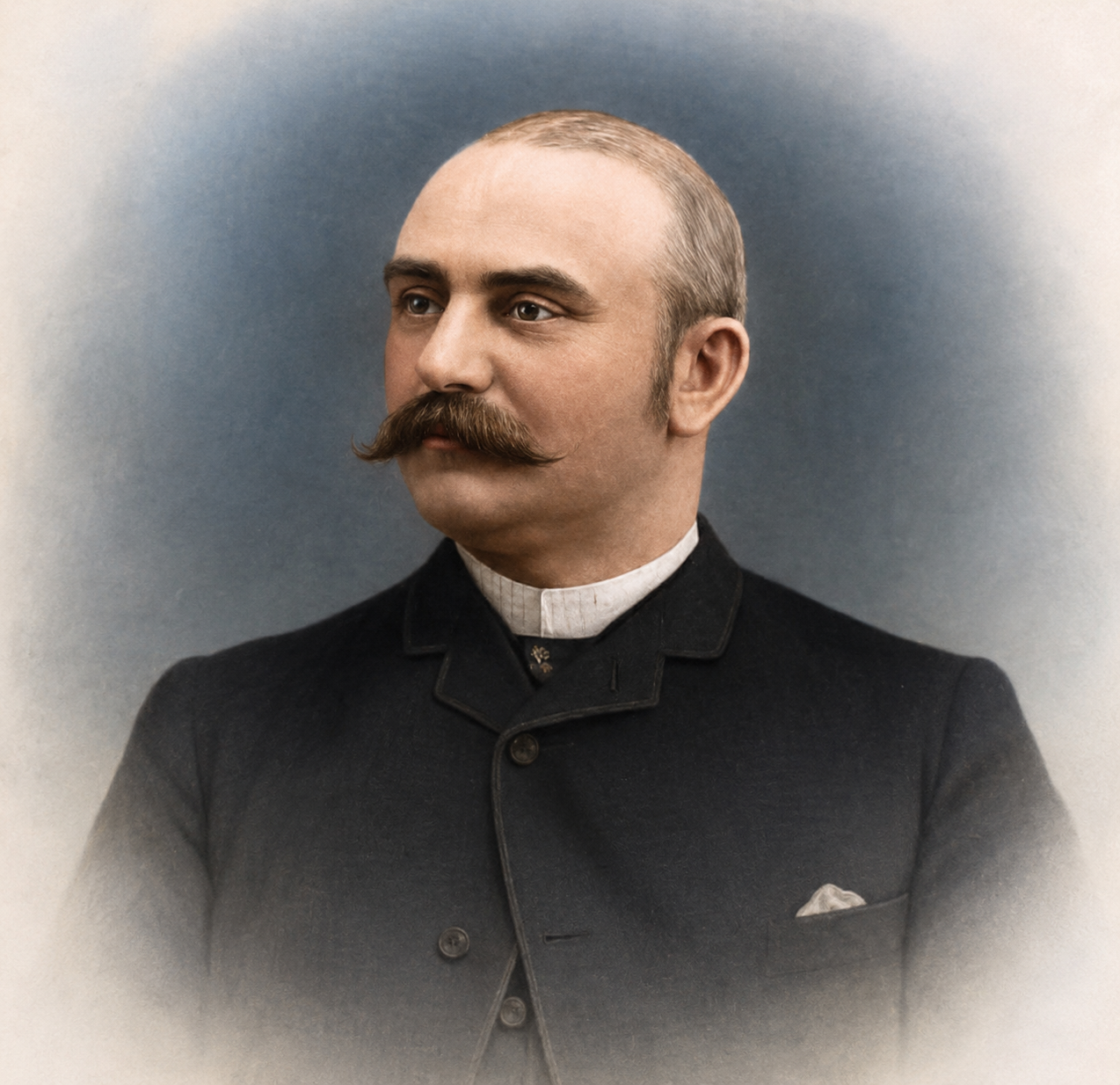
Born: April 15, 1849
Pittsburgh, Pennsylvania

Died: March 31, 1899 (age 49)
Pasadena, California

Buried: Bellfontaine Cemetery
St. Louis, Missouri

The life of Joseph Clifford Richardson illustrates the remarkable transition of St. Louis from a riverfront mercantile city into a modern corporate metropolis during the late nineteenth century. While his father, James William Richardson, helped build one of the city’s great wholesale commercial enterprises, Joseph Clifford Richardson represented the next generation of business leadership that increasingly turned toward banking, finance, steel-frame construction, and modern urban development.

In 1875 Joseph Clifford Richardson resided at 2811 Locust Street, only a short distance from the primary Richardson family residence at 2827 Locust. Gould’s Directory identified him as connected with Richardson Drug Company, and contemporary accounts described him as the “junior partner” in the expanding family enterprise. Educated at Washington University in St. Louis, Joseph represented the increasingly professionalized generation of post–Civil War business leadership emerging within St. Louis.

By the late nineteenth century, Richardson & Company had become one of the largest wholesale pharmaceutical houses in the American West. Yet Joseph Clifford Richardson’s ambitions eventually expanded beyond the drug trade itself and into the rapidly evolving world of finance and corporate urban development.

After divesting much of his interest in the Richardson Drug Company, Joseph organized the Chemical National Bank in 1891. The institution reflected the growing sophistication of St. Louis financial systems during the Gilded Age, when banking increasingly supported large-scale industrial expansion, real estate development, transportation systems, and urban modernization.

Although the Chemical National Bank was absorbed into the Third National Bank during an 1897 consolidation, Richardson’s influence continued to rise. On April 1, 1897, he became president of Third National Bank, placing him among the leading financial figures of the city during a period of extraordinary economic transformation.

At nearly the same moment, Joseph Clifford Richardson launched one of the most ambitious commercial building projects then underway in St. Louis.
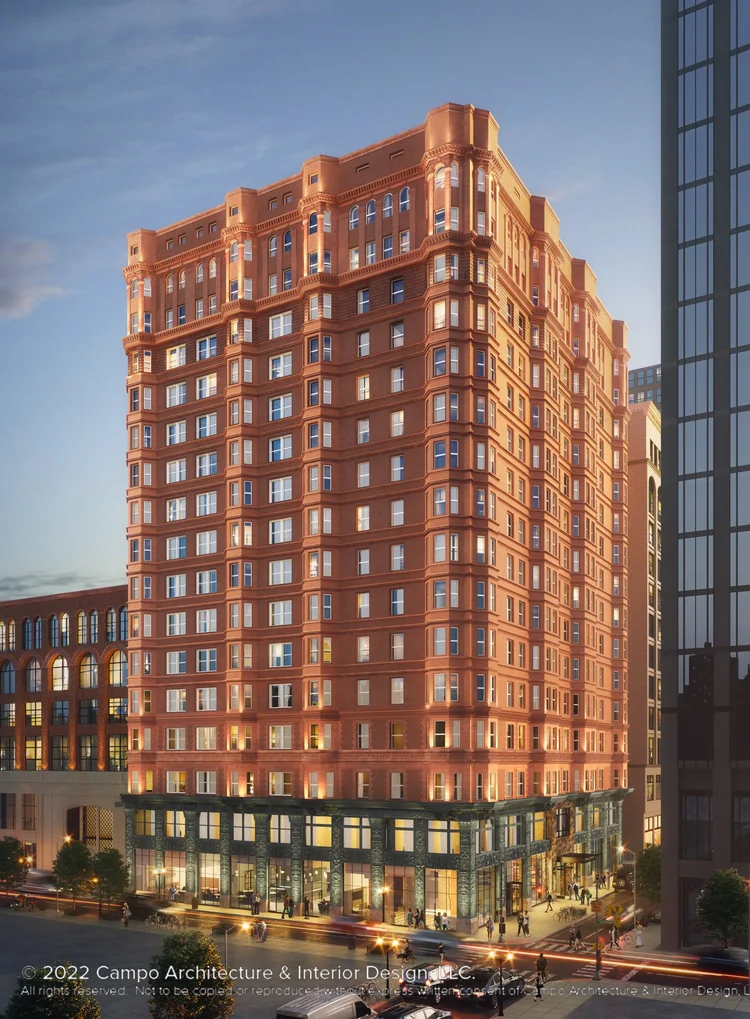
Sixteen Story. Chemical Building

Between 1895 and 1897, Richardson erected the massive Chemical Building at the corner of Eighth and Olive Streets on the site of the old Erskine Building. Designed by nationally prominent Chicago architect Henry Ives Cobb and constructed by Johnson Brothers of Omaha, the sixteen-story steel-frame skyscraper represented the arrival of modern metropolitan architecture in St. Louis.

The project encountered serious engineering difficulties, including foundation challenges and delayed steel shipments, illustrating the experimental and technologically demanding nature of early skyscraper construction. Richardson organized the Chemical Building Company during site clearance operations, treating the development as a major corporate enterprise rather than merely a speculative office structure.
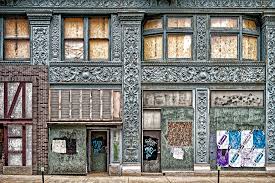
Remains of the ornate facade of the Chemical Building

When completed in 1897, the Chemical Building became one of the city’s most prominent commercial towers. Lawyers, dentists, architects, tailors, and other professionals occupied its offices, while shops and restaurants filled the lower floors. The building’s popularity eventually required a substantial addition in 1903 designed by the distinguished St. Louis architectural firm Mauran, Russell and Garden.

The building also played a role in the emerging national visibility of St. Louis during the years preceding the 1904 Louisiana Purchase Exposition. The United States Weather Bureau occupied one of the upper floors, considering the height advantageous for forecasting and signal operations associated with the approaching World’s Fair era.

Following Joseph Clifford Richardson’s death, his widow Mary inherited his interests in the Chemical Building Company, and the property remained connected to the extended Richardson family for years afterward.

Joseph Clifford Richardson’s life therefore represents a fascinating second-generation evolution within the Richardson family itself. While the elder Richardson generation built mercantile and wholesale infrastructure along the riverfront commercial district, Joseph helped shape the banking systems, corporate structures, and vertical architecture of the modern city.

From wholesale pharmaceuticals to steel-frame skyscrapers, from riverfront warehouses to modern banking institutions, Joseph Clifford Richardson stood among the business leaders who helped guide St. Louis into the emerging twentieth century. One of the lasting contributions of the Richardson Family is the Richardson Memorial Library as the St. Louis Art Museum.

The Richardson Memorial Library at the St. Louis Art Museum

One of the more enduring cultural legacies connected to the Richardson family still exists quietly within Saint Louis Art Museum in Forest Park.

Located on the third floor of the museum’s South Building, the Richardson Memorial Library serves as one of the region’s most important specialized art research collections. Established in 1915 through a bequest from Mary D. Richardson in memory of her husband, Joseph Clifford Richardson, the library today contains nearly 160,000 volumes devoted to art history, museum studies, auction records, exhibition catalogs, and the cultural history of St. Louis.

The library’s holdings include one of the nation’s largest collections of auction catalogs, extensive resources relating to the 1904 Louisiana Purchase Exposition, and archival materials documenting the growth of the St. Louis art community during the late nineteenth and early twentieth centuries. Museum archives are also housed within the collection, making the library an important center for historical research connected to both the museum and the broader cultural development of St. Louis.

J. Clifford Richardson bust located in the Richardson Memorial Library

The existence of the Richardson Memorial Library reveals how thoroughly some of the great St. Louis merchant families extended their influence beyond commerce and industry into education, scholarship, and cultural patronage. The same Richardson family associated with wholesale pharmaceuticals, riverfront commerce, and the business expansion of the Mississippi Valley ultimately helped support one of the city’s enduring intellectual and artistic institutions.

In a fitting continuation of the Richardson family’s longstanding commitment to public education and civic improvement, the library remains open to scholars and the public more than a century after its founding.

Thus, from the Richardson residences on Locust Street in 1875 emerged not only commercial success, but a lasting contribution to the intellectual and cultural life of St. Louis that still serves researchers, historians, and art scholars today.