
 The Chemical Building
A Monument to St. Louis Ambition
Eighth and Olive Streets
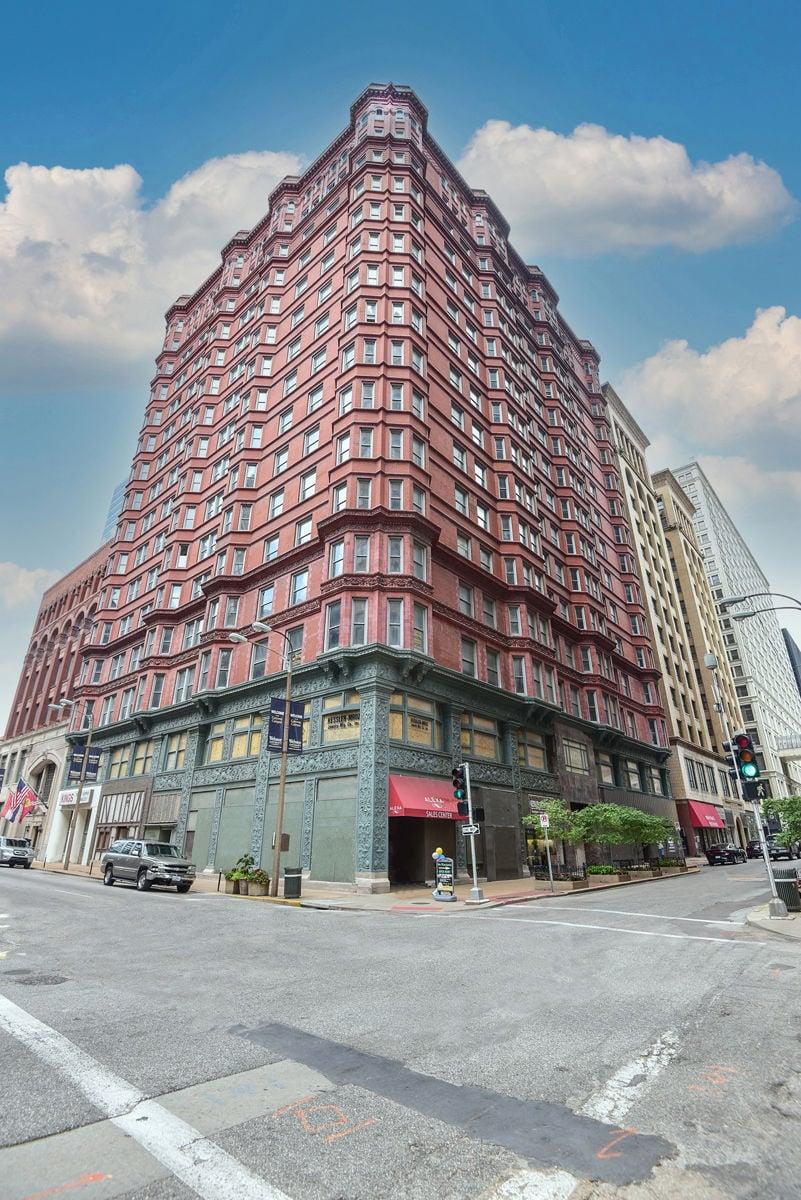
Among the great lost commercial monuments of late nineteenth-century St. Louis, few better represented the city’s confidence, financial power, and architectural ambition than the Chemical Building. Rising prominently at the corner of Eighth and Olive Streets, the structure embodied a transformational era when St. Louis sought to establish itself not merely as a Mississippi River city, but as one of the dominant commercial capitals of the United States.
The building’s story also provides a remarkable connective thread into the LucGar world through the Richardson family and the expanding network of banking, industry, and urban development that tied many Plate 71 residents to the evolving downtown core.
A New Kind of St. Louis
By the 1890s, St. Louis stood at a crossroads.
The Civil War was long over. Railroads now stretched westward across the continent. Manufacturing exploded. Wholesale trade surged. Banks multiplied. Industrial fortunes grew rapidly. The city’s merchants and financiers increasingly sought to project permanence, sophistication, and national relevance through architecture.
Older four- and five-story brick commercial blocks no longer seemed adequate.
 St. Louis wanted skyscrapers.
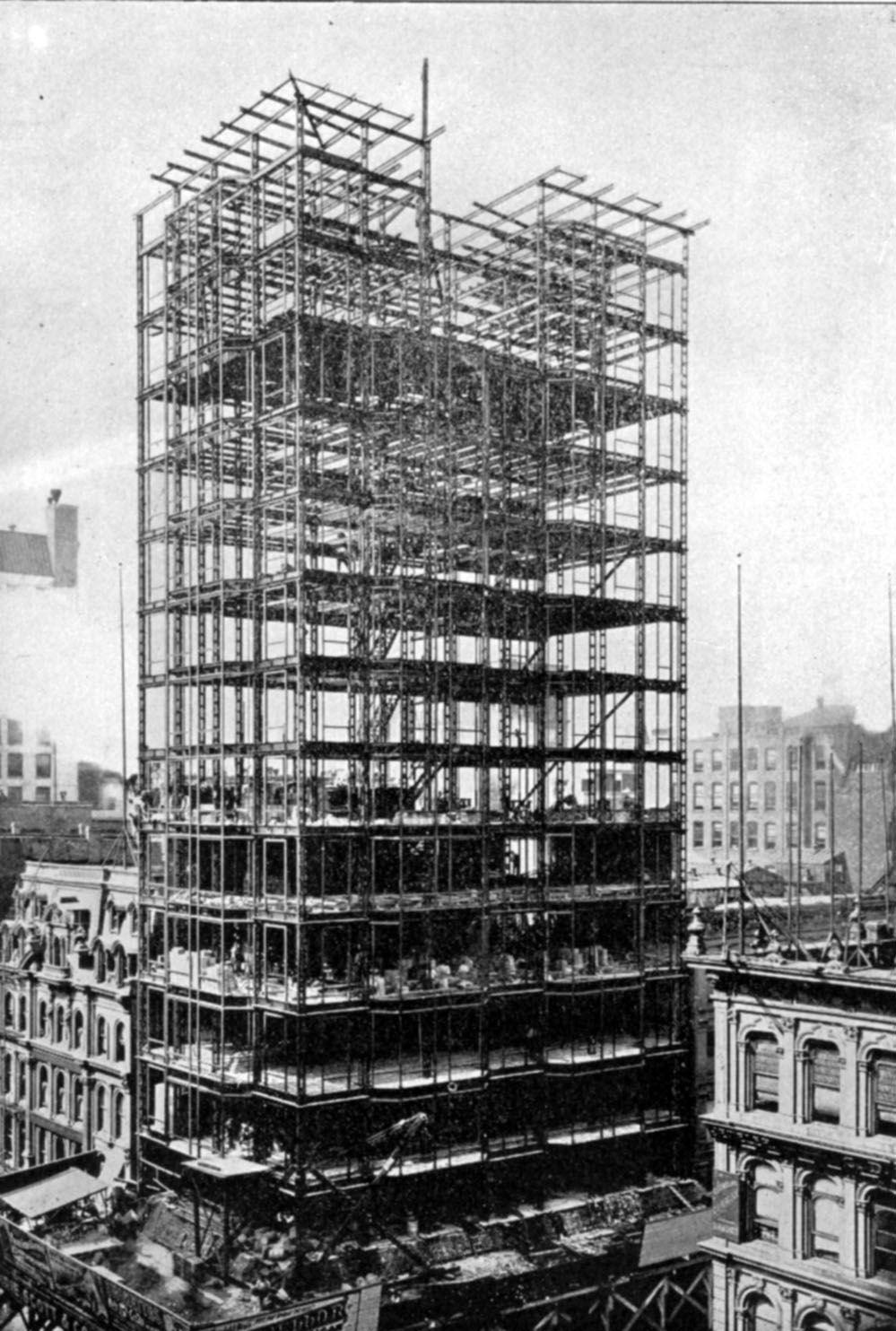
The Chemical Building emerged directly from this environment of aggressive urban modernization.
J. Clifford Richardson and the Chemical National Bank
The project was closely tied to J. Clifford Richardson, son of the powerful Richardson drug manufacturing family whose interests extended into banking, real estate, and finance.
After the success of the Richardson Drug Company, J. Clifford Richardson organized the Chemical National Bank in 1891. Seeking a headquarters that reflected modern financial ambition, Richardson commissioned an entirely new commercial tower on the site of the older Erskine Building.
The resulting structure became known as the Chemical Building.
This connection is especially valuable within the Lucas Garrison framework because it demonstrates how many of the residents and families associated with Lucas, Washington, and Garrison Avenues were deeply interconnected with the commercial reinvention of downtown St. Louis itself.
The fortunes accumulated in wholesale houses, manufacturing concerns, banking institutions, railroads, and industrial enterprises often flowed outward into the elegant residential districts represented on Plate 71.
 Architecture of Power
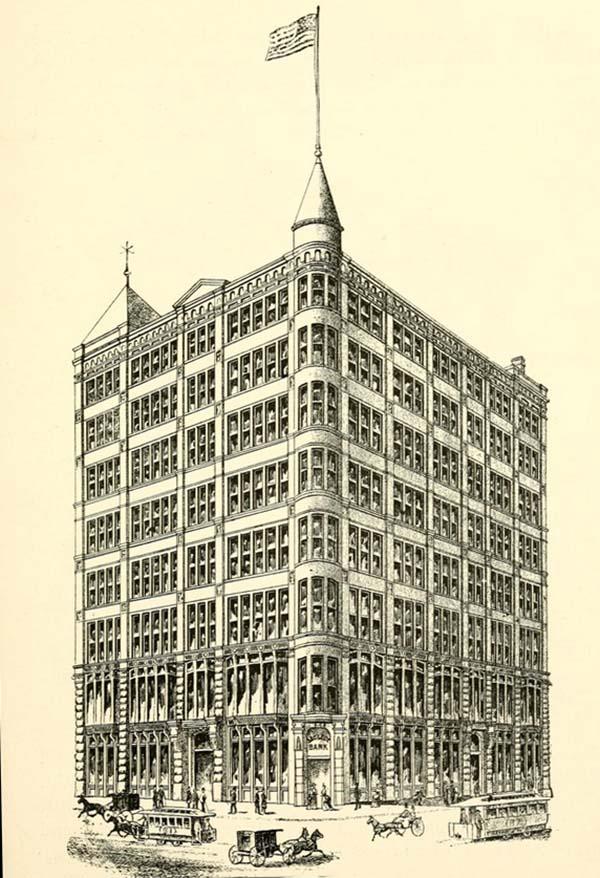
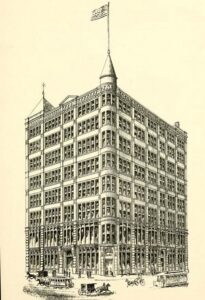
The Chemical Building was designed by celebrated Chicago architect Henry Ives Cobb, one of the important figures associated with the emerging Chicago School of architecture.
Cobb’s work reflected the changing technological realities of American cities:
-
Steel-frame construction
-
Fireproof engineering
-
Elevators
-
Expansive office floors
-
Large commercial windows
-
Greater building height than traditional masonry permitted
The Chemical Building therefore represented more than attractive architecture. It symbolized the arrival of modern urban engineering in St. Louis.
Structures like this transformed the visual identity of the city.
For generations, St. Louis had largely spread horizontally along the riverfront and outward into neighborhoods. Now, buildings began rising vertically, announcing that the city intended to compete with Chicago, New York, and other emerging centers of finance and commerce.
 The Symbolism of “Chemical”
The building’s very name reflected the late nineteenth century’s fascination with science, industry, and modernity.
The word “chemical” carried associations of:
-
Industrial advancement
-
Pharmaceutical manufacturing
-
Scientific progress
-
Banking stability
-
Corporate sophistication
In many ways, the Chemical Building represented the confidence of the Gilded Age itself—an era convinced that technology, finance, engineering, and industrial expansion would continue indefinitely upward.
That optimism permeated St. Louis during the decades surrounding the 1904 World’s Fair.
A City Reaching Upward
Buildings like the Chemical Building also reflected a deeper shift in the geography of power.
The wealthy families living in neighborhoods like Lucas Place and the Lucas and Garrison district increasingly conducted their business lives downtown while maintaining private residential worlds several miles westward.
This separation of:
-
commerce and residence,
-
industry and domesticity,
-
manufacturing and refinement,
became one of the defining characteristics of elite late nineteenth-century urban life.
By day, financiers and industrialists occupied towering downtown offices. By evening, they returned to broad avenues lined with mansions, carriage houses, gas lighting, and ornamental streetscapes.
The Chemical Building thus stood as one half of a larger social equation whose residential counterpart existed in neighborhoods like your study area.
Decline and Loss
Like many great St. Louis commercial structures, the Chemical Building ultimately became a casualty of changing economics, urban decline, and redevelopment pressures during the twentieth century.
Its disappearance reflects one of the recurring themes running throughout the LucGar project:
Cities often erase the very physical structures that once symbolized their greatest ambitions.
The loss of buildings like the Chemical Building makes projects such as yours especially important. The surviving stories, biographies, maps, and neighborhood studies become acts of historical reconstruction—restoring memory where architecture itself has vanished.
 LucGar Reflective Addendum
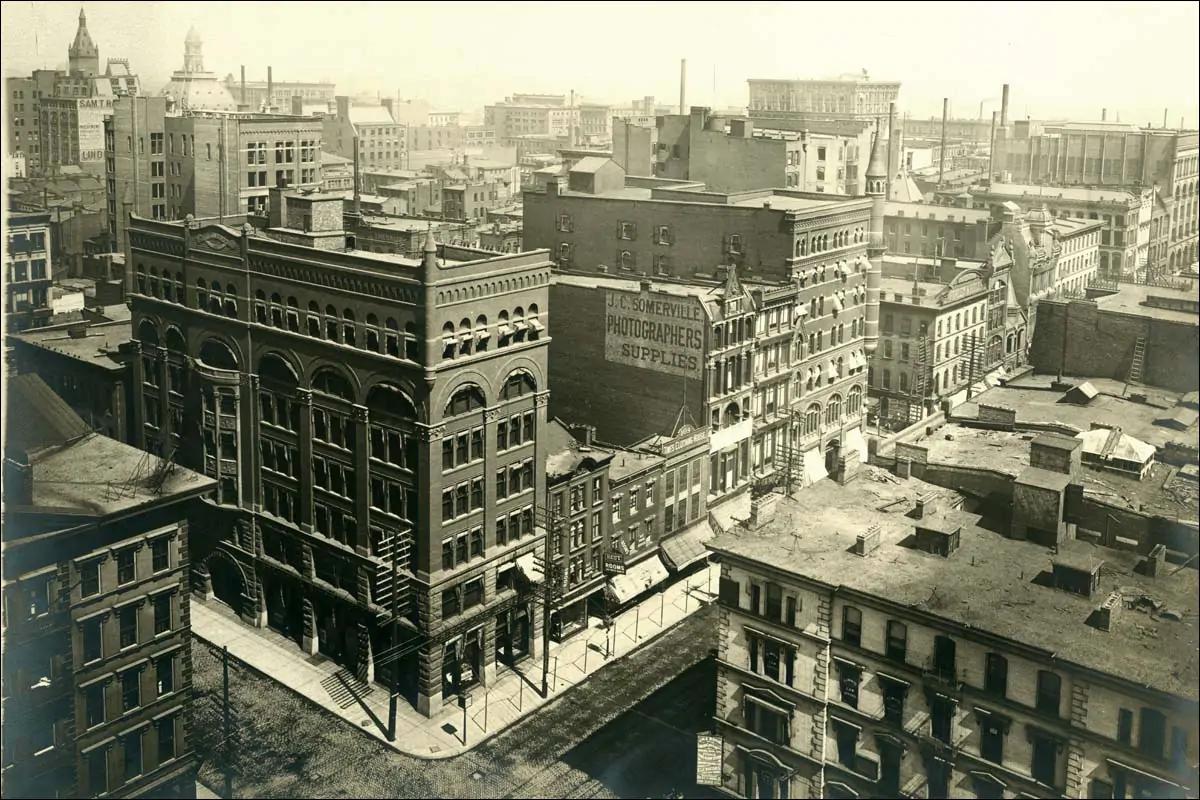
The Chemical Building stood as a vertical declaration of confidence during the years when St. Louis believed its future had no visible ceiling. Built through the wealth generated by banking, manufacturing, trade, and industry, it symbolized a city determined to rise alongside the great commercial centers of America. Yet today the building itself is gone, reminding us how fragile even the grandest monuments can become.
In this way, the Chemical Building serves not merely as an architectural story, but as a cautionary reflection on memory, ambition, and impermanence. The fortunes that built St. Louis once seemed immovable. The buildings themselves appeared eternal. History proved otherwise.
The Richardson connection to the Chemical Building also ties naturally into your developing profiles involving the Richardson family and St. Louis banking expansion.