Charles E. Slayback
3107 Lucas Avenue

Born: March 27, 1840
Marion County Missouri

Died:
September 29, 1924
Chicago, Illinois


LucGar Narrative Profile

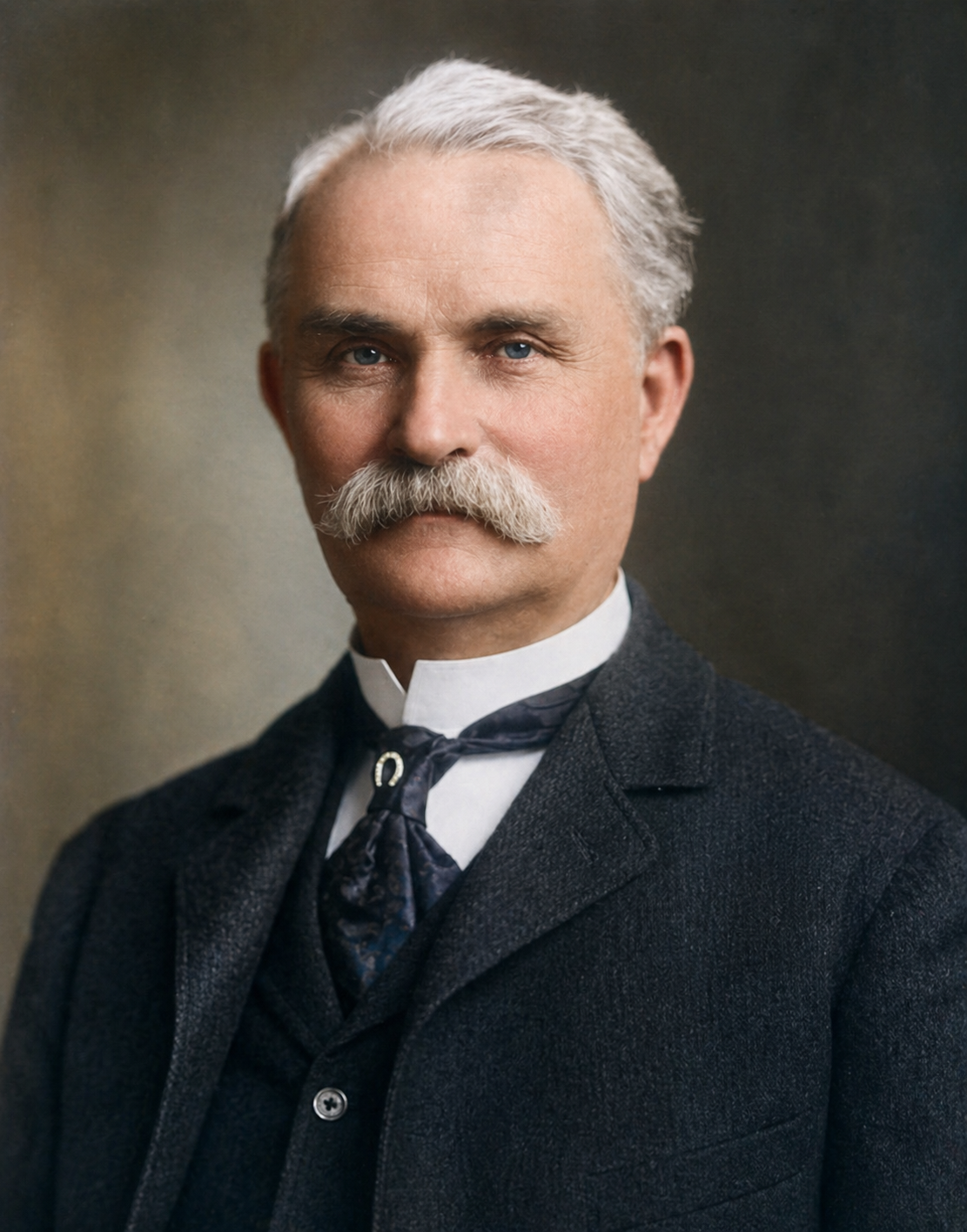
Charles E. Slayback represents a particular type of late nineteenth-century St. Louis resident—cosmopolitan, socially connected, commercially successful, and deeply embedded in the civic structures that shaped the city’s public identity.

Born on March 27, 1840, in Marion County, Missouri, Slayback came of age in a family marked by both early loss and strong ambition. His father, Alexander L. Slayback, a lawyer of Ohio origin, died in 1848 at just thirty-one years of age, leaving behind a young family in Lexington, Missouri. Charles, along with his brothers Alonzo and Preston, grew up in a household that would soon intersect with the defining conflict of their generation. While Charles and Preston avoided active service in the Civil War by securing substitutes—a common though controversial practice among men of means—their brother Alonzo distinguished himself by raising and commanding a regiment.

At just sixteen, Charles left home and entered the world of commerce in St. Louis, securing a modest position in a commission house at $25 per month. His rise was rapid. Within a few years, his salary increased, and by the age of twenty-two he had become a partner—an early indication of both business acumen and personal drive.

Rather than remain in St. Louis, Slayback expanded his ambitions southward, relocating to New Orleans in the volatile Reconstruction era. There, he emerged quickly as a figure of influence. By 1869, he had been elected organizing president of a social and merchandising club, and in 1870 he joined the board of the Merchants’ Bank of New Orleans. His involvement extended beyond business into governance, serving as secretary of the so-called “Electoral Jury of Fifty,” a body of leading citizens advising Governor Henry C. Warmoth on the reorganization of the city in the aftermath of the Civil War. By 1873, Slayback had established his own business and risen to vice president of the New Orleans Chamber of Commerce.

Yet his most consequential chapter began upon his return to St. Louis in the winter of 1874–75, precisely at the moment captured by the Lucas and Garrison landscape. Taking up residence at 3107 Lucas Avenue, Slayback entered a city poised between postwar recovery and Gilded Age expansion. Contemporary accounts describe him as immediately prominent in civic life—his wit and conversational ease making him a fixture in the social circles that bound together St. Louis’ commercial elite.

Professionally, he established himself as a prosperous grain broker, aligning with one of the most important industries in the Mississippi Valley economy. His leadership credentials were further solidified in January 1882, when, as a principal in the firm of Slayback, Smythe & Company, he was elected president of the Merchants’ Exchange of St. Louis—an institution central to the city’s role as a national grain hub.

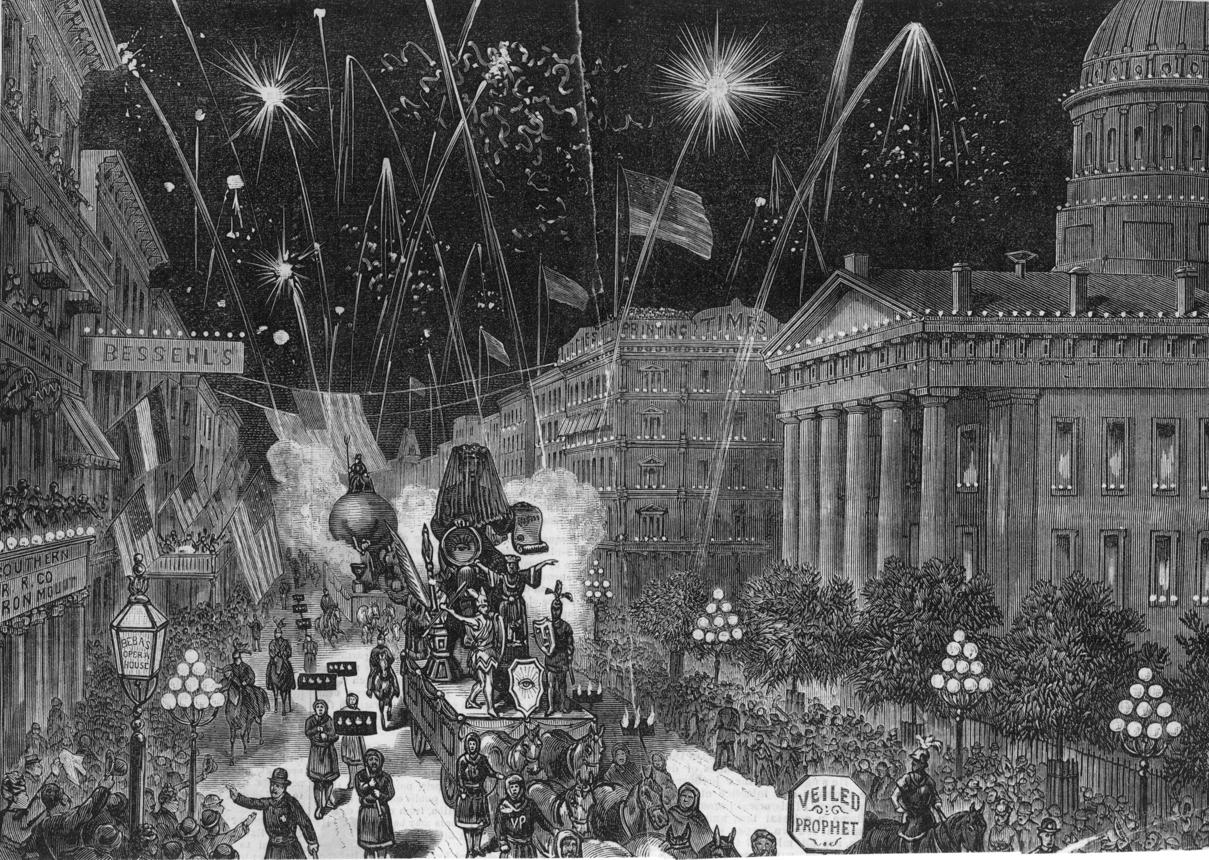
However, Slayback’s most enduring—and controversial—legacy lies not in commerce, but in culture. In 1878, he convened a meeting of business and civic leaders that resulted in the formation of what became known as the Veiled Prophet Organization. Drawing inspiration from the pageantry of New Orleans Mardi Gras and the romantic symbolism of the Irish poet Thomas Moore, Slayback and his associates crafted an elaborate civic ritual centered on the mythical “Veiled Prophet of Khorassan.” The organization blended spectacle, exclusivity, and social hierarchy, quickly becoming one of the defining institutions of elite St. Louis society.

Modern scholarship has cast a more critical light on this creation, suggesting that beyond its outward celebration, the organization functioned to reinforce existing racial and class structures during a period of significant social tension. Regardless of interpretation, the founding of the Veiled Prophet Society illustrates Slayback’s influence in shaping not only the economic but also the symbolic and cultural life of the city.

In addition to these pursuits, Slayback held numerous positions of trust, including directorships in banks and insurance companies and service as chancellor of the American Legion of Honor in St. Louis. His career reflects a seamless blending of commerce, social leadership, and institutional authority—hallmarks of the Gilded Age urban elite.

After the early 1880s, Slayback relocated to Chicago, where he spent his later years with his daughter, Bertha S. Carel. He died there on September 29, 1924, and was returned to Lexington, Missouri, for burial—closing a life that had spanned frontier Missouri, Reconstruction New Orleans, and the rise of metropolitan St. Louis.


Lucas and Garrison Reflective Addendum

Charles E. Slayback’s life invites a deeper question that extends well beyond his individual accomplishments: who shapes the identity of a city—and to what end?

Slayback was not merely a participant in St. Louis’ growth; he was a designer of its public face. Through commerce, he helped fuel its economic engine. Through institutions like the Merchants’ Exchange, he strengthened its position in national markets. But through the creation of the Veiled Prophet Organization, he did something more enduring—he helped define who belonged at the center of civic life, and who did not.

This dual legacy is instructive. It reveals how progress and exclusion can coexist, how celebration can mask division, and how civic pride can be both genuine and selective. The same energy that builds institutions can also harden boundaries.

Standing at 3107 Lucas Avenue in 1875, Slayback was surrounded by men of similar influence—bankers, merchants, industrialists—each contributing to a city on the rise. Yet their collective impact was not neutral. It shaped the social order that would define St. Louis for generations.

The lesson is neither simple nor comfortable. If cities are built not just of brick and commerce, but of ideas and institutions, then those who lead them bear responsibility not only for prosperity, but for equity and inclusion.

The question that remains is one Slayback himself may not have asked:
When we build systems that endure, who do they ultimately serve—and who is left outside their gates?