St. Louis Veiled Prophet

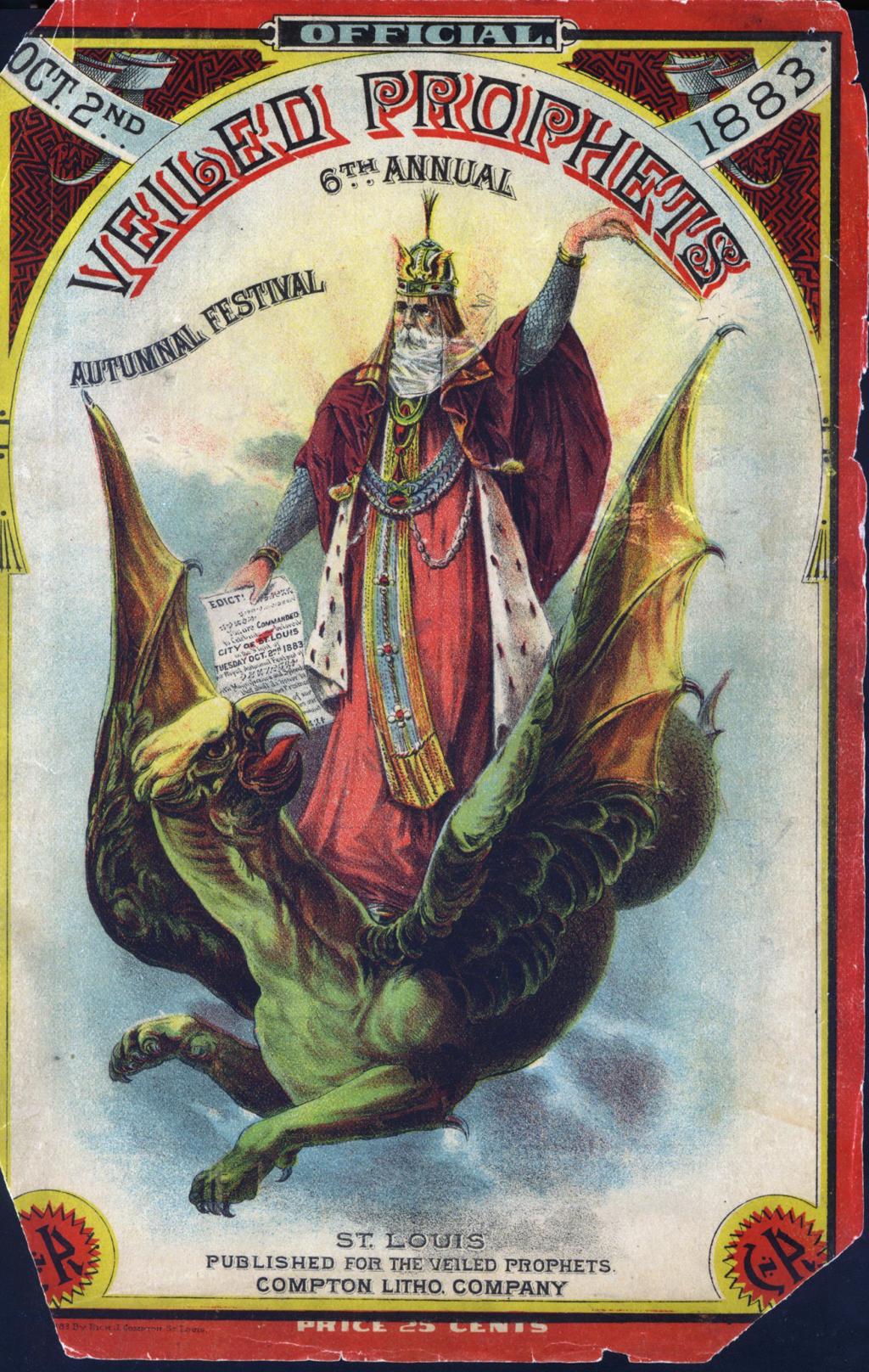
1883 Veiled Prophet Promotion

St. Louis Veiled Prophet Association

In the years following the Civil War, St. Louis stood at a crossroads—economically ascendant, socially fragmented, and increasingly conscious of its national standing. Out of this environment emerged one of the city’s most curious and enduring institutions: the Veiled Prophet Organization, founded in 1878 by a group of prominent businessmen seeking to shape both the image and the order of their city. At the center of this effort stood Charles E. Slayback and his brother Alonzo W. Slayback, figures whose lives intersected commerce, conflict, and civic ambition.

Charles Slayback’s path to prominence followed a familiar arc for the postwar commercial elite. Beginning as a young clerk in a St. Louis commission house, he rose through the grain trade, eventually becoming a successful merchant with strong ties to both St. Louis and New Orleans. His business success placed him within a network of men who viewed the city not merely as a place of residence, but as a project—something to be cultivated, ordered, and, when necessary, controlled.

The origins of the Veiled Prophet Organization must be understood within the turbulence of the 1870s. Labor unrest, most notably the Great Railroad Strike of 1877, shook St. Louis and exposed deep divisions between capital and labor. To the city’s commercial leadership, the strike was not simply an economic disruption; it was a warning. Social order, they believed, required visible reinforcement.

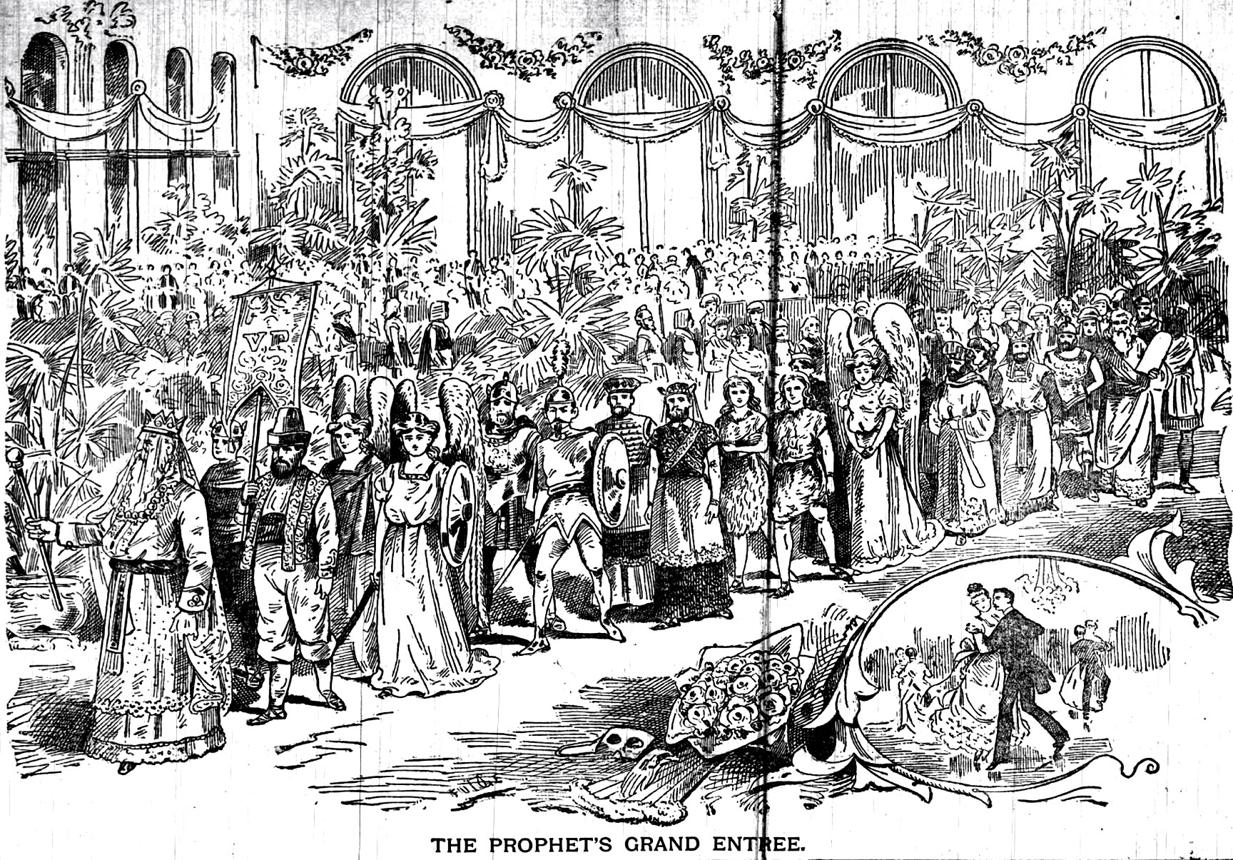
It was in this climate that Charles Slayback and his associates conceived the Veiled Prophet. Modeled in part on European pageantry and secret societies, the annual parade and ball presented a carefully constructed vision of harmony, hierarchy, and civic pride. The mysterious “Veiled Prophet” himself—an anonymous, costumed figure—symbolized authority cloaked in tradition, presiding over festivities that celebrated the city’s prosperity while subtly reinforcing its social structure.

The Slayback family’s influence on this creation cannot be separated from their wartime experience. Alonzo Slayback, a former Confederate officer, embodied the unresolved tensions of a border-state city still grappling with divided loyalties. His postwar presence in St. Louis, alongside Charles’s commercial success, reflects the broader reintegration of former Confederates into positions of influence within the city’s elite circles. Together, the brothers represent a reconciliation not of ideals, but of interests—economic stability taking precedence over sectional memory.

The Veiled Prophet Organization thus functioned on multiple levels. Publicly, it was spectacle: parades, illuminated floats, and lavish balls that rivaled those of older eastern cities. Privately, it was a mechanism of cohesion among the city’s leading families, reinforcing networks of power and influence. The debutante presentations, which became a central feature of the annual ball, quietly affirmed social boundaries, defining who belonged within the city’s recognized elite.

For a figure like Charles Slayback, the organization was both an expression of success and an instrument of legacy. His role in founding the Veiled Prophet placed him among those who sought to shape not only the economic future of St. Louis, but its cultural identity as well. The pageantry masked something more deliberate: an attempt to stabilize a rapidly changing city by anchoring it in ritual and hierarchy.

LucGar Reflective Addendum

The story of the Veiled Prophet, when viewed through the lens of the Slayback brothers, reveals something essential about St. Louis in the late nineteenth century. Prosperity alone did not produce confidence. Beneath the surface of growth lay uncertainty—about labor, about class, and about the city’s place in a nation still healing from war.

What the Slaybacks and their peers created was not merely celebration, but reassurance. The masked figure of the Prophet, the ordered procession, the carefully curated society—all spoke to a desire to impose clarity on a world that felt increasingly unsettled. It is a reminder that civic traditions, however ornate, often arise not from comfort, but from concern.

In this way, the Veiled Prophet stands as both a symbol of achievement and a quiet admission of unease—a reflection of a city striving to define itself, even as it sought to control the forces shaping its future.