
White Haven — The Dent Family Estate and the St. Louis Roots of a Presidential Family
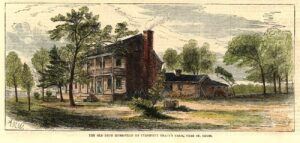 Among the many powerful family connections radiating outward from the Lucas and Garrison neighborhood, few lead more directly into the national story of the United States than the Dent family of St. Louis and their estate known as White Haven.
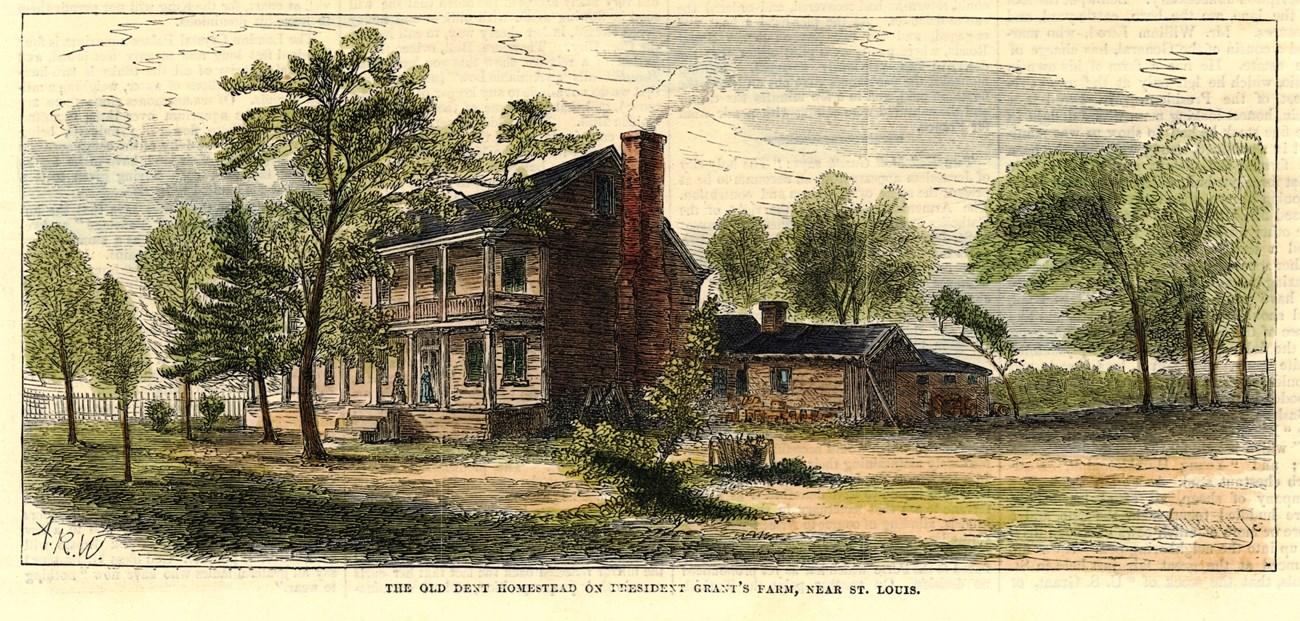
For students of the Lucas and Garrison project, White Haven provides an extraordinary bridge between elite St. Louis society, westward expansion, slavery in Missouri, the Civil War, and the rise of President Ulysses S. Grant. It is also directly connected to the Dent family represented within the Plate 71 orbit through figures such as John Cromwell Dent.
A Southern Estate on the Edge of St. Louis
White Haven originated as a substantial country estate in what was then rural St. Louis County, several miles southwest of the city. The property became associated with the family of Colonel Frederick Fayette Dent, a prosperous merchant, farmer, and slaveholder whose household occupied a respected place within Missouri’s upper social circles.
 The estate reflected a familiar pattern among affluent nineteenth-century St. Louis families:
-
Urban commercial influence
-
Country property ownership
-
Interconnected kinship networks
-
Dependence upon enslaved labor prior to the Civil War
The Dent family moved comfortably between the developing city and the semi-rural estates that surrounded it. White Haven thus stood at the intersection of refinement and frontier, gentility and labor, prosperity and contradiction.
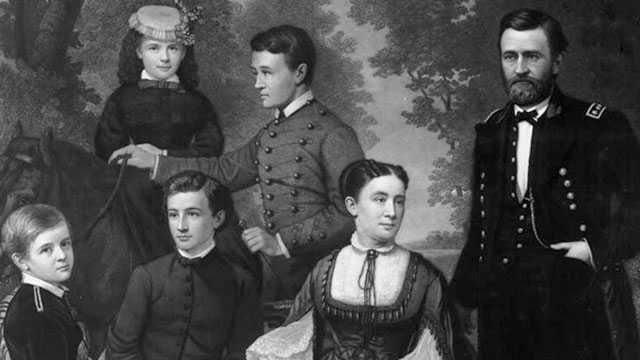
The Grant family
Julia Dent and Ulysses S. Grant
White Haven entered American history most prominently through Julia Dent Grant, daughter of Frederick Dent, who met young Army officer Ulysses S. Grant while he was stationed at nearby Jefferson Barracks.
Grant visited White Haven repeatedly during the 1840s and became deeply attached both to Julia and to the estate itself. The couple married in 1848, beginning one of the most consequential political and military partnerships in American history.
For a time, Grant attempted to establish himself on land adjoining the estate, farming a tract later nicknamed “Hardscrabble.” His years there were difficult and financially uncertain. Before the Civil War transformed his fortunes, Grant struggled with debt, farming failures, and limited business success.
This is one of the great ironies embedded within White Haven:
The future commanding general of the Union Army and future President of the United States once labored unsuccessfully on the margins of a St. Louis farm owned by a slaveholding family into which he had married.
White Haven and the Contradictions of Missouri
No aspect of White Haven can be honestly examined without acknowledging slavery.
The Dent family enslaved African Americans who lived and worked on the estate. Missouri occupied a deeply conflicted position before and during the Civil War—a slave state with divided loyalties and strong economic ties to both North and South.
Grant himself occupies a historically complex position within this setting. Though he ultimately became the Union’s leading general and helped secure emancipation through military victory, he also lived within a slaveholding household and, for a brief period, legally owned one enslaved man before manumitting him in 1859.
White Haven therefore serves as a remarkably powerful historical lens:
-
It reveals the blurred moral and political boundaries of border-state Missouri
-
It demonstrates how intertwined Northern and Southern cultures remained before the war
-
It humanizes national figures often simplified by later memory
The estate reminds modern observers that history rarely unfolds in clean or uncomplicated categories.
A St. Louis Family Network
The Dent family’s connections stretched throughout St. Louis society, politics, and business life. Through marriage, military service, commerce, and social standing, the family became woven into the fabric of elite nineteenth-century Missouri life.
For the LucGar project, this matters because the neighborhood was not isolated. Families such as the Dents belonged to expansive social systems connecting:
-
Military officers
-
Merchants
-
Railroad men
-
Politicians
-
Financiers
-
Industrialists
-
Civic leaders
A resident listed on Plate 71 might simultaneously possess connections reaching from downtown St. Louis parlors to Washington politics and Civil War command headquarters.
White Haven Today
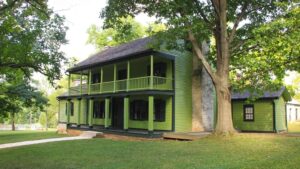
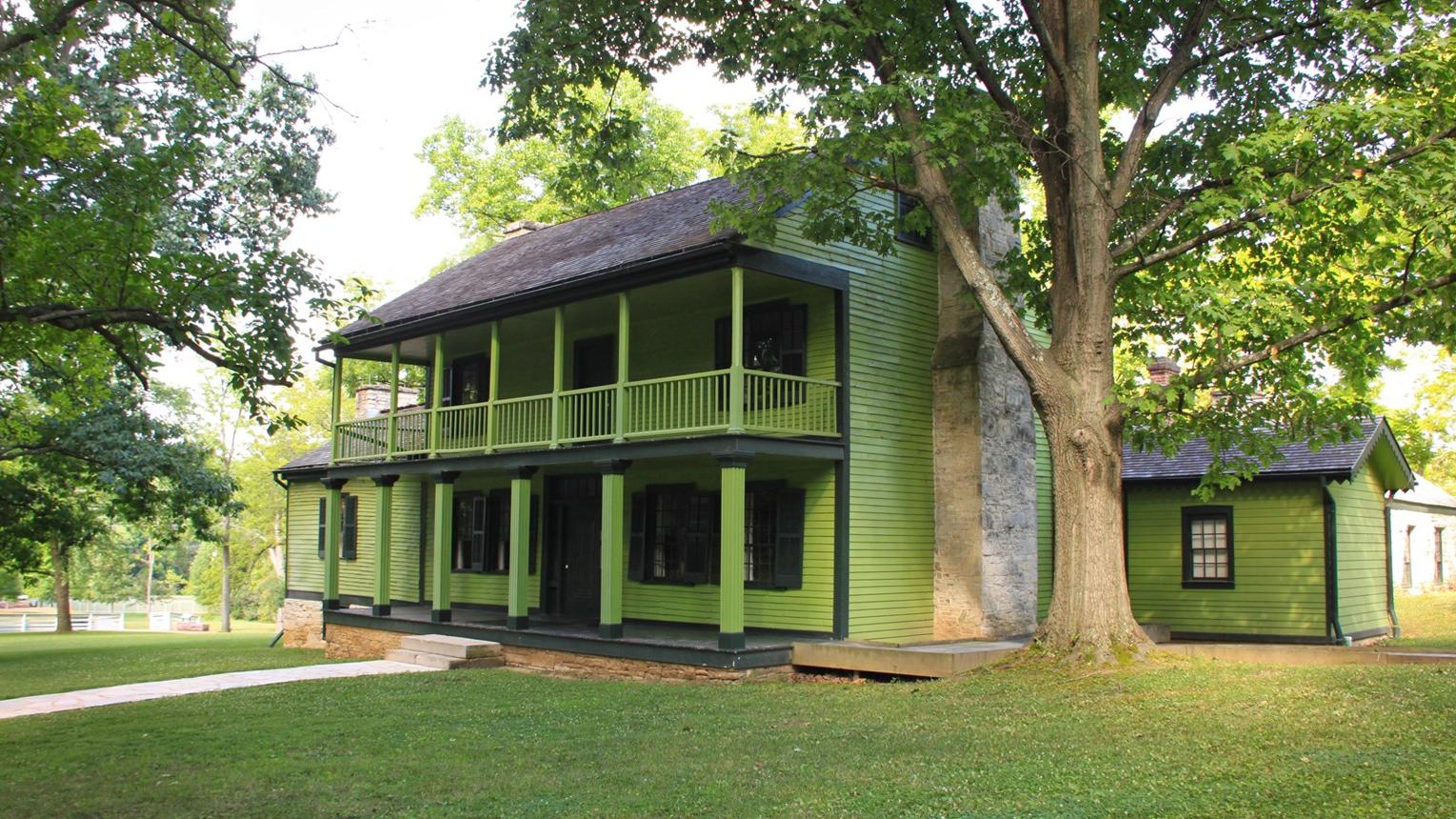
Today, White Haven survives as part of the Ulysses S. Grant National Historic Site, preserving both the physical estate and the complicated historical realities attached to it.
The site is valuable precisely because it refuses simplification. It is simultaneously:
-
A family home
-
A presidential landmark
-
A site connected to slavery
-
A western farmstead
-
A Civil War crossroads
-
A surviving remnant of nineteenth-century St. Louis society