
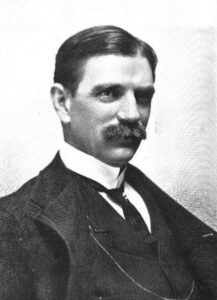
 Rolla Wells
2725 Olive Street
Future Mayor of St. Louis
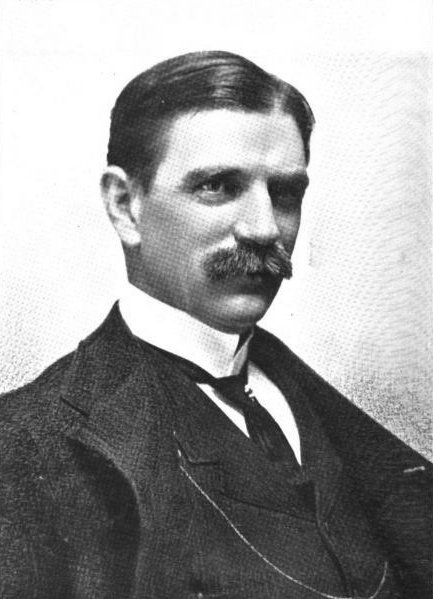
Born: June 1, 1856
Saint Louis, City of St. Louis, Missouri
Died: November 30, 1944 (age 88)
Saint Louis, City of St. Louis, Missouri
Buried: Bellfontaine Cemetery
Saint Louis, City of St. Louis, Missouri
Among the young men living on Plate 71 in 1875, few would later shape the future of St. Louis more profoundly than Rolla Wells. Though only nineteen years old at the time and still residing in the household of his father, Erastus Wells, at 2725 Olive Street, he would eventually emerge as one of the most influential civic reform mayors in the city’s history.
Rolla Wells was born in St. Louis on June 1, 1856, the son of Erastus and Isabella Bowman Henry Wells. His father was already a towering figure in the development of the city. Arriving in St. Louis from New York in 1843, Erastus Wells built his fortune through transportation enterprises and became closely associated with the city’s first successful horse-drawn street railway systems. By 1875, Erastus was not only wealthy and influential but also serving as a United States Congressman representing Missouri. The Wells household at 2725 Olive therefore stood at the intersection of business, politics, and civic leadership during one of St. Louis’s great eras of expansion.
Young Rolla received the type of education reserved for the sons of elite St. Louis families. In 1868 he was sent to the Vermont Episcopal Institute near Burlington, Vermont, a semi-military academy popular among affluent Midwestern families. He later attended Washington University and subsequently Princeton University. Both institutions eventually awarded him honorary degrees in recognition of his later accomplishments.
Like many sons of powerful nineteenth-century businessmen, Wells entered the family enterprise at a young age. In 1878, only three years after the date represented on Plate 71, he became superintendent of the Missouri Railroad Company, the street railway system founded by his father. After the company’s sale in 1882, he ventured westward into cattle ranching and mining enterprises in the New Mexico Territory. Though those investments proved unsuccessful, Wells retained his business interests in St. Louis and soon turned his attention toward industry and civic leadership.
During the 1880s and 1890s, Wells steadily rose within the city’s business community. He served as a director and later president of the St. Louis Fair Association, one of the city’s most important commercial and social institutions. In 1891 he invested in a steel foundry enterprise that ultimately became the enormously successful American Steel Foundries Company. By the close of the nineteenth century, Rolla Wells had become independently wealthy and firmly established among the leading civic figures of St. Louis.
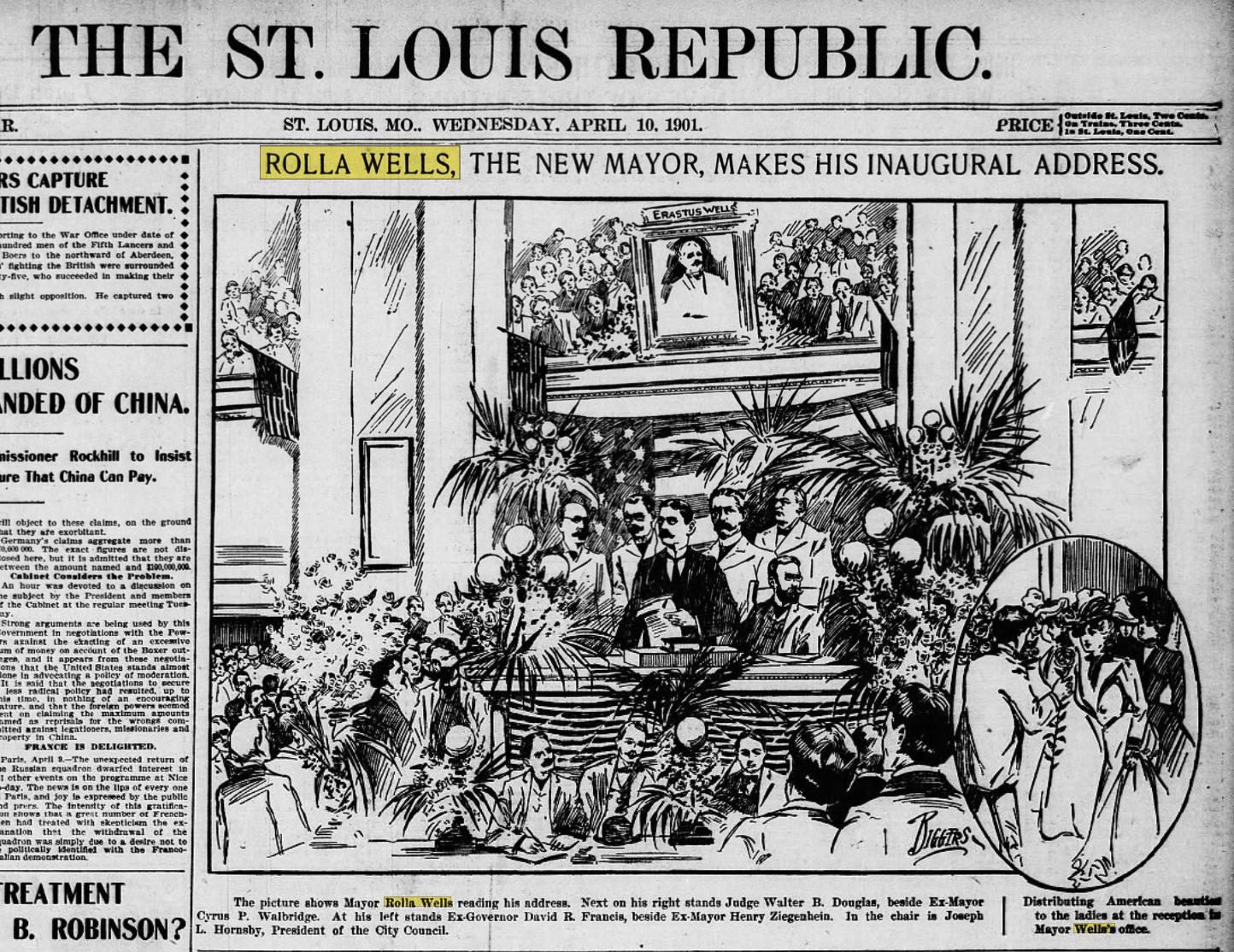
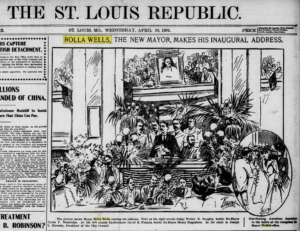 In 1901, Rolla Wells was elected mayor of St. Louis. His administration arrived at a pivotal moment in the city’s history. St. Louis was preparing to host the Louisiana Purchase Exposition — the 1904 World’s Fair — while simultaneously struggling with corruption, political machine influence, infrastructure deficiencies, and the pressures of rapid urban growth. Wells emerged as one of the city’s most important progressive reform leaders.
One of the greatest political challenges facing Wells involved the entrenched power of political boss Edward Butler and the corrupt garbage disposal contracts that enriched his machine. In an extraordinary move, Wells personally purchased an island in the Mississippi River and arranged for city refuse to be transported there, effectively undermining Butler’s control. Reflecting later upon the episode, Wells observed with characteristic dry humor that it seemed fitting that “the extinction of boss rule in St. Louis should be achieved in a controversy... over the problem of garbage.”
Wells believed government should be efficient, honest, and responsive to the practical needs of the city. Under his administration, St. Louis undertook extensive street paving projects, expanded public health measures, improved parks and playgrounds, enhanced utility services, constructed public baths, and modernized civic infrastructure. More than three hundred miles of streets were paved during his tenure, helping propel St. Louis into the twentieth century.
Among the most dramatic stories associated with the Wells administration involved the city’s water supply just before the opening of the 1904 World’s Fair. St. Louis water drawn from the Mississippi River was notoriously muddy and unattractive. David R. Francis, president of the exposition and another major figure connected to the Lucas and Garrison world, feared the embarrassing spectacle of murky water flowing through the fairgrounds’ elaborate fountains and cascades. Wells confidently assured Francis that clear water would be ready by opening day — despite having no actual solution at the time.
Only weeks before the fair opened, city chemist John Wixford developed a revolutionary purification process using large quantities of milk of lime to remove sediment from the river water. The process succeeded spectacularly. On March 22, 1904, for the first time in the city’s history, clear water flowed through St. Louis. The magnificent cascades and fountains of the World’s Fair sparkled before millions of visitors, while Wells quietly breathed a sigh of relief.
Wells also participated prominently in the civic ceremonies surrounding the fair era. In October 1906, during his administration, St. Louis dedicated the great bronze equestrian statue known as The Apotheosis of St. Louis atop Art Hill in Forest Park. More than 200,000 people reportedly attended the ceremony. Former mayor and governor David Francis presented the monument to the city while Mayor Wells presided over one of the grandest civic celebrations in St. Louis history.
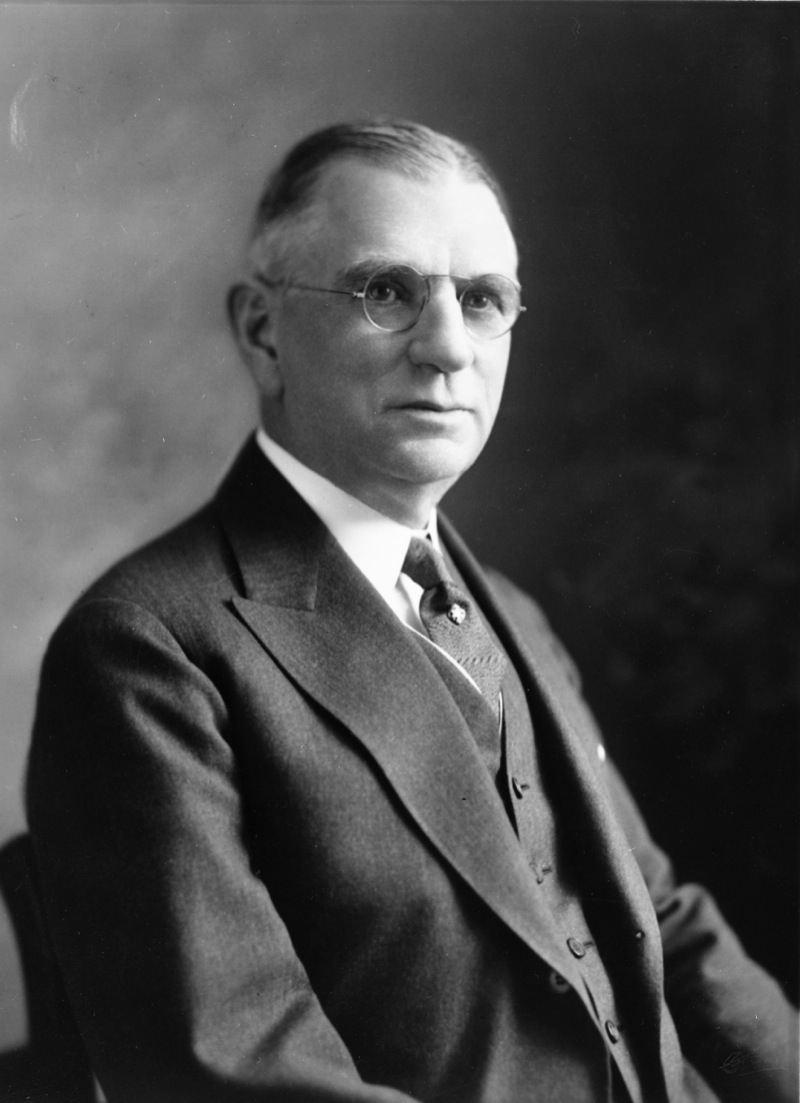
The St. Louis Federal Reserve Bank's first governor (president).