
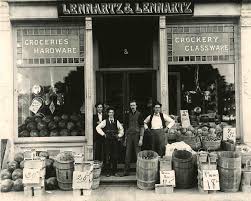
 John G. Kaiser
 The Kaiser name had already been firmly planted in the city’s wholesale grocery trade by mid-century. The firm of John G. Kaiser & Company, established in 1845, emerged during a formative period when St. Louis was transforming from a frontier river town into the dominant provisioning hub of the Mississippi Valley. By the time John G. Kaiser occupied his residence at 3110 Franklin Avenue, the business had transitioned from a founder-led operation into a structured, incorporated enterprise—an evolution reflecting the broader professionalization of commerce in the post–Civil War era.
 Educated in the German parochial schools of St. Louis, Kaiser’s upbringing reflects the strong influence of the city’s German immigrant community, whose cultural cohesion and emphasis on discipline, education, and trade played a decisive role in shaping St. Louis’ commercial class. His early entry into the grocery business in 1865—immediately following the Civil War—placed him at the intersection of reconstruction-era expansion and the explosive growth of regional trade networks.
 Yet this raises a deeper consideration. The wholesale grocery trade, while essential, operated largely behind the scenes. It fed the city, supplied its neighborhoods, and enabled daily life—yet left little visible legacy in the modern landscape. No grand monuments mark its influence, and few physical traces remain.