
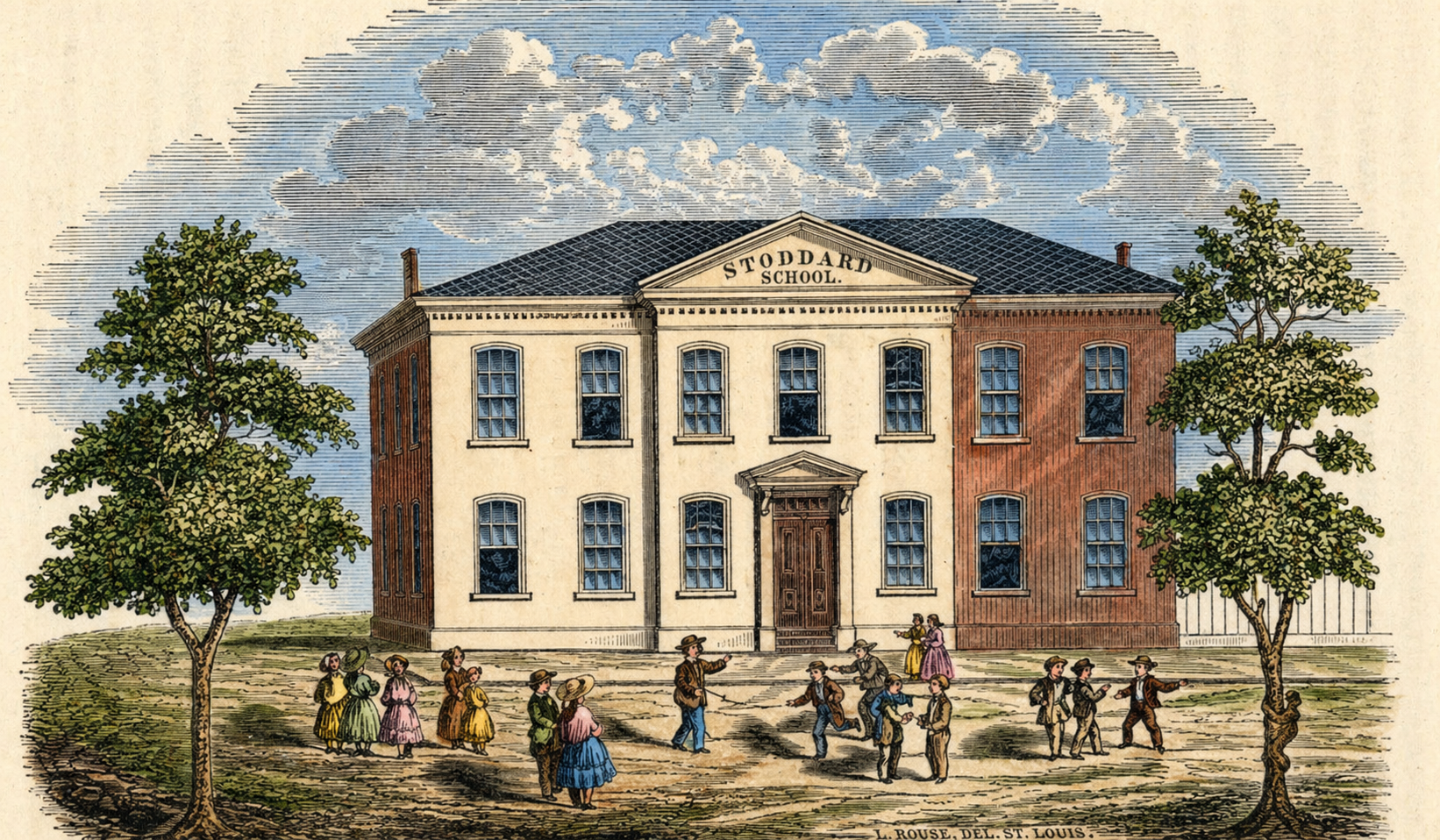
 Stoddard School
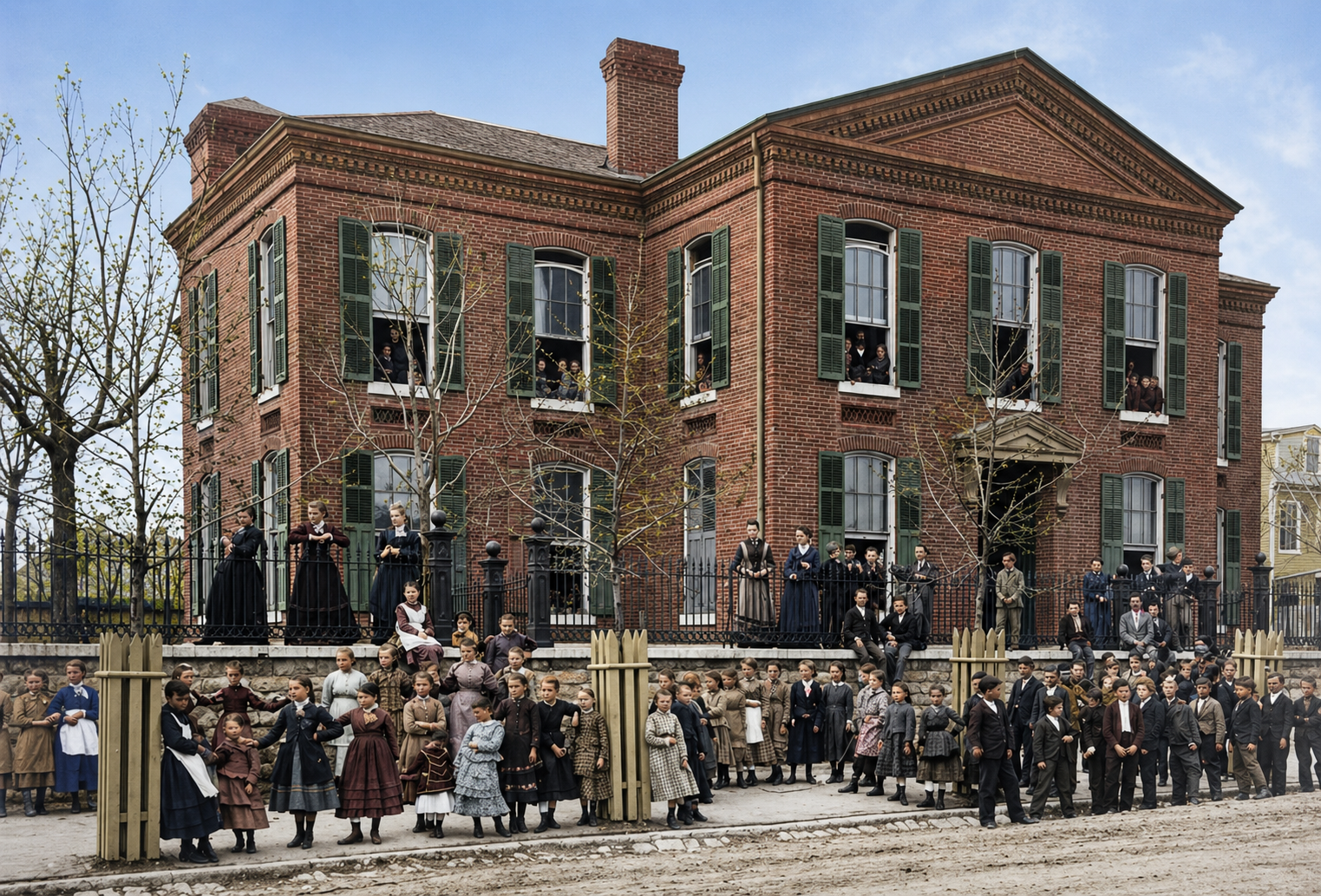 The presence of such a large and well-appointed school within the Lucas and Garrison corridor underscores the transitional character of the neighborhood. While the area is often understood through its prominent residents—merchants, industrialists, and civic leaders—the Stoddard School reveals another dimension: a community anchored not only in wealth and influence, but in the education of its children.
 The engraving of the school—students gathering, dispersing, and interacting in the yard—captures something beyond architecture. It reflects routine, expectation, and the normalization of public education as a shared civic experience. These were the sons and daughters of a city in ascent, shaped daily by an institution that stood quietly at the intersection of opportunity and obligation.
 The Stoddard School stands as a reminder that the true measure of a neighborhood is not only found in its most accomplished residents, but in the structures built to prepare those who would follow them.