Edwards Whitaker
3135 Lucas Avenue
Banker, Civic Leader, and Gilded Age Power Broker of St. Louis
Born: April 29, 1849
St. Louis, Missouri
Died: April 1, 1926
St. Louis, Missouri
Buried: Bellfontaine Cemetery
St. Louis, Missouri
Among the many names connected to the Lucas and Garrison neighborhood, few reveal the dramatic transformation of St. Louis during the late nineteenth century more clearly than Edwards Whitaker. Though not directly listed on the original Plate 71 resident roster, (John Whittaker is listed at 2825 Lucas Avenue on Plate 71. If listed, Edwards Whitaker's residence would appear in Section 1, Group 2). Whitaker’s family was firmly rooted in the neighborhood, and his rise from Lucas Avenue resident to one of the most powerful financial figures in St. Louis reflects the broader evolution of the city itself.
Edwards Whitaker was born in St. Louis on April 29, 1849, the son of William A. Whitaker and Letitia Edwards Whitaker. Gould’s St. Louis Directory places both Edwards Whitaker and his widowed mother, Letitia Whitaker, at 3135 Lucas Avenue, only blocks from the Lucas and Garrison intersection. The Whitaker name also appears elsewhere in the neighborhood under alternate spellings, including “Whittaker,” a common nineteenth-century directory inconsistency.
Whitaker came of age during the explosive economic growth that followed the Civil War. After early clerical work connected to federal treasury operations, he entered the banking and brokerage world through the respected St. Louis firm of Matthews & Whitaker. His career advanced rapidly as St. Louis matured into one of the nation’s great commercial centers.
By the late nineteenth century, Whitaker had become one of the city’s most influential financiers. He eventually rose to the presidency of Boatmen’s Bank, then among the oldest and most powerful banking institutions in St. Louis. His influence extended into railroads, investment firms, and civic organizations, placing him among the elite business leadership class that helped shape modern St. Louis.
Whitaker’s career also intersected with the early development of what became the nationally known A.G. Edwards brokerage enterprise. During his early professional years, he worked under General Albert G. Edwards, one of the foundational figures in St. Louis finance. The connection placed Whitaker within the emerging network of investment and brokerage leaders transforming the city’s economy during the Gilded Age.
As his wealth and influence grew, Whitaker joined the westward migration of elite St. Louis families away from the older Lucas Avenue corridor. In 1903 he established his residence at 13 Westmoreland Place, one of the city’s prestigious private streets. The massive mansion reflected the architectural grandeur and exclusivity increasingly sought by St. Louis’s corporate and financial elite during the early twentieth century.
Yet Whitaker’s legacy was not without controversy. In 1899 he became president of the St. Louis Transit Company following the consolidation of many of the city’s streetcar lines. The resulting monopoly and deteriorating labor conditions helped trigger the violent Streetcar Strike of 1900, one of the most significant labor conflicts in St. Louis history. As tensions escalated between workers and corporate leadership, riots, shootings, and public unrest erupted across the city. Whitaker became a symbol, to many laborers, of the growing divide between corporate power and working-class life in industrial St. Louis.
Despite these conflicts, Whitaker remained a towering civic figure for decades. He served as president of the Missouri Botanical Garden and held leadership positions in numerous business and social organizations. When he died in 1926, he left behind an estate valued at more than three million dollars — an extraordinary fortune for the era.
The story of Edwards Whitaker reflects the transformation of St. Louis from a post-Civil War river city into a modern corporate metropolis. His life bridged banking, transportation, investment, labor conflict, and elite residential development, all while maintaining direct roots in the Lucas and Garrison neighborhood from which his family emerged.
LucGar Reflective Addendum
The rise of Edwards Whitaker illustrates how the seemingly ordinary residential listings of Plate 71 often concealed connections to much larger forces shaping the city. From Lucas Avenue to Westmoreland Place, Whitaker’s life traced the movement of wealth, influence, and power across St. Louis during the Gilded Age. His story also reminds us that urban progress carried tensions beneath its surface — between labor and capital, expansion and inequality, neighborhood identity and elite withdrawal. Through figures like Whitaker, the Lucas and Garrison neighborhood becomes not merely a local study, but a window into the changing character of America’s industrial cities.

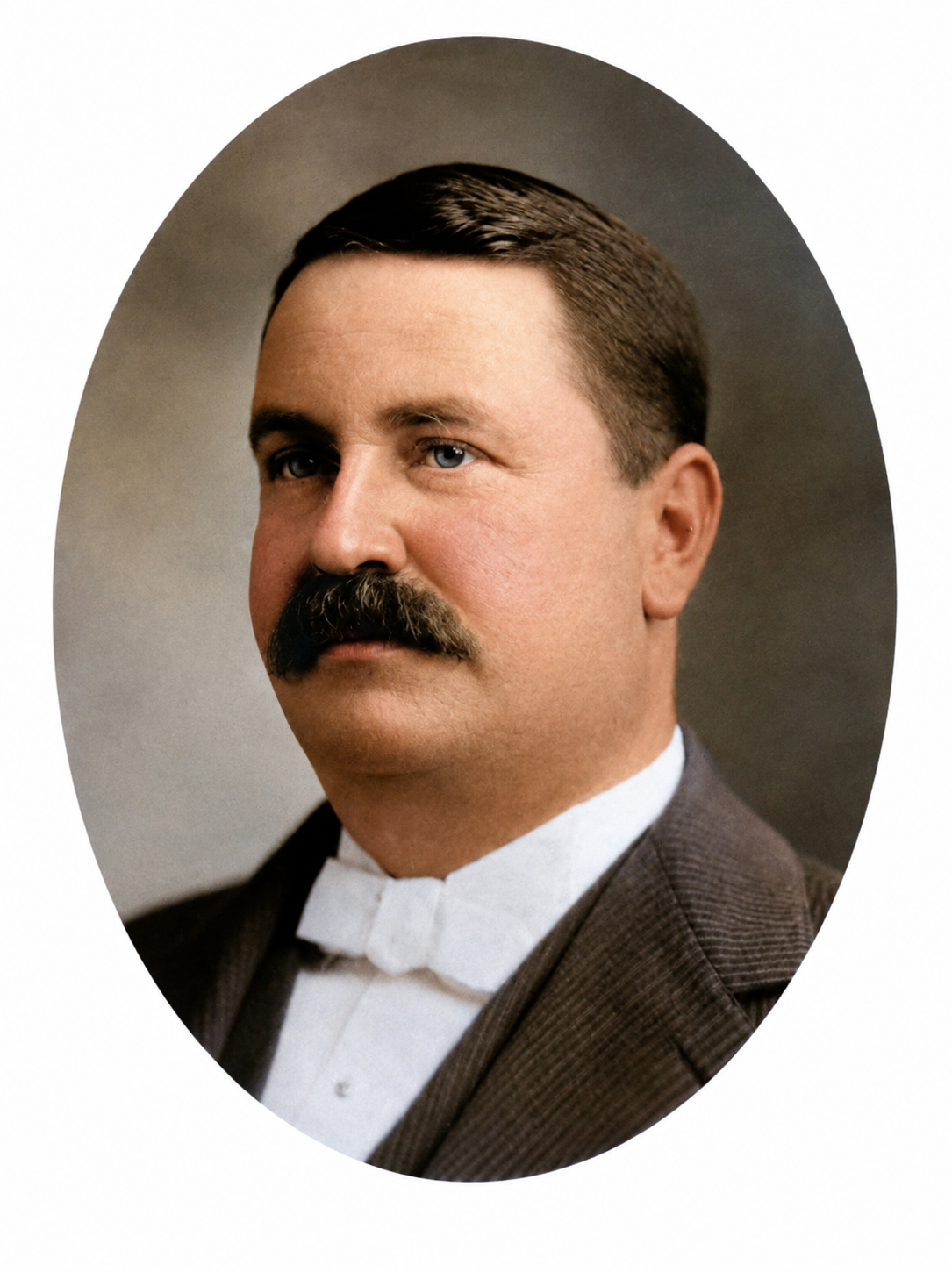 Edwards Whitaker
 LucGar Reflective Addendum