
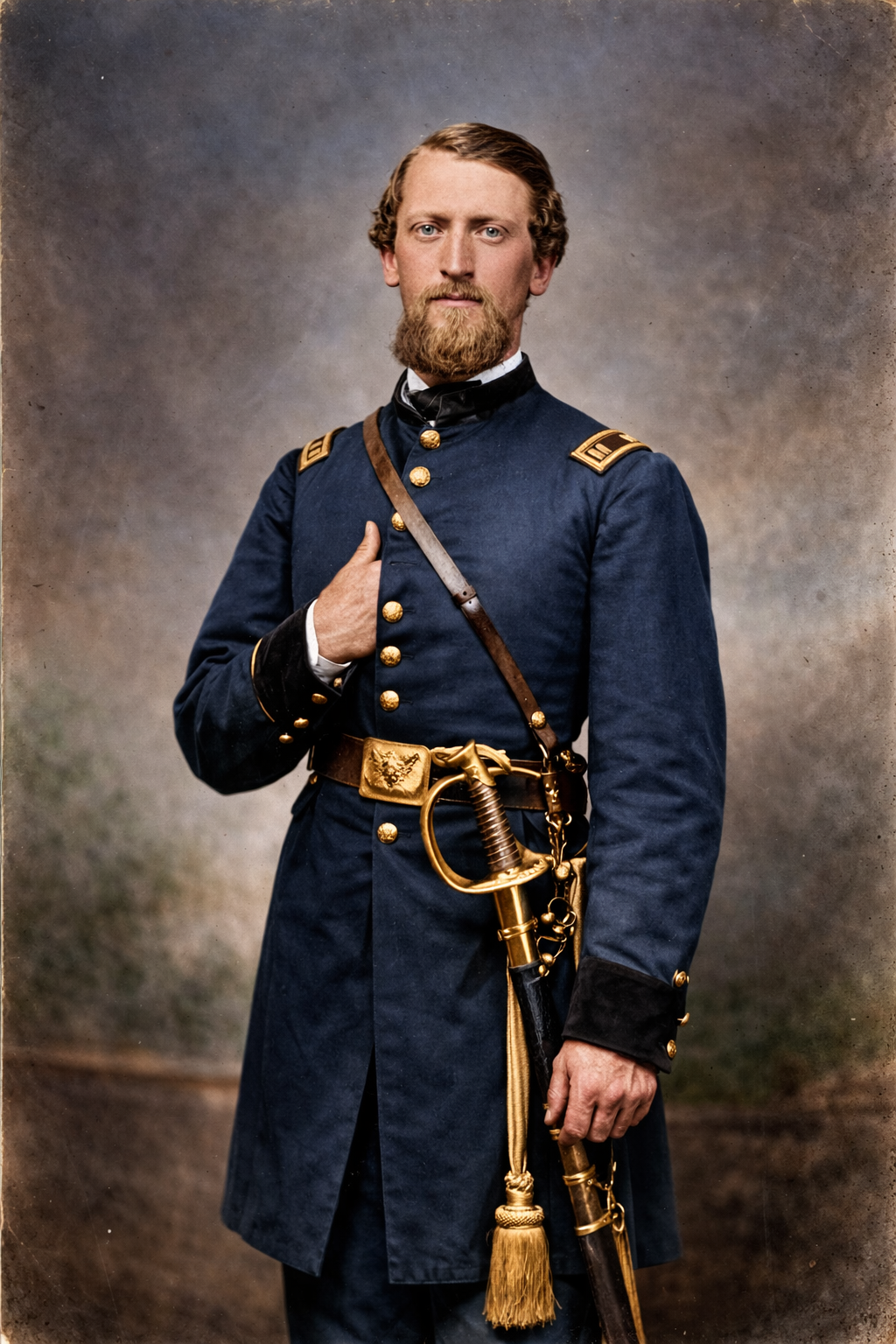
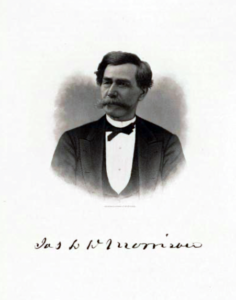
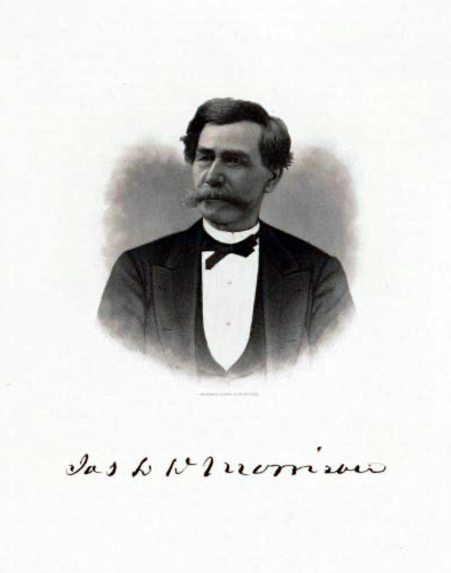
 Colonel James L.D. Morrison
2740 Locust Street
Born, April 12, 1816 Kaskaskia, Illinois
Died: August 14, 1888
Buried: Calvary Cemetery, St. Louis, Missouri
James L. D. Morrison, eminent as lawyer, soldier, legislator, and orator, was born in Kaskaskia, Illinois, April 12, 1816, son of Robert and Eliza (Lowry) Morrison. His paternal grandfather was John Morrison, an Irish gentleman who immigrated to this country and settled at Kaskaskia in 1794, and his maternal grandfather was Colonel William Lowry, of Castle Glaney, County Monaghan, Ireland.
His mother came to St. Louis in 1805 as the guest of her near relative, James Lowry Donaldson, an eminent Irish lawyer of Baltimore, who had been appointed Attorney General of the Territory of Louisiana by President Jefferson. She first met her future husband at a reception given at the residence of Governor William Clark, and they were married in 1806, the ceremony being performed by Rev. James Maxwell, vicar-general of the Diocese of Upper Louisiana.
Of the four sons born of this union, all achieved distinction. The eldest, William Edgar Morrison, was the first native of Illinois graduated from West Point Military Academy and died while superintending the construction of the old National Road by appointment of President Andrew Jackson. John M. Morrison, another of the sons, was serving as a judge of the Circuit Court of California at the time of his death, and Robert F. Morrison attained great eminence as a lawyer and jurist in the same state, reaching the position of Chief Justice of California.
James L. D. Morrison inherited from chivalrous ancestors a love of arms, and after completing his education obtained appointment as a midshipman in the United States Navy in 1832. In 1833 he sailed on the sloop-of-war Fairfield, Frederick Chatard, master, for a cruise on the Pacific, and was next heard of in naval circles at Callao, where he distinguished himself by gallant conduct in the rescue of American ships during a mutiny which broke out while his vessel lay at anchor in that port.
At the end of his Pacific cruise he was ordered to the flagship of Commodore Dallas in the West Indies, and remained aboard until he was attacked by inflammatory rheumatism which rendered necessary his transfer to the marine hospital at Pensacola, Florida. For more than a year he suffered from this painful disease, and during that time letters which he received from his mother, urging him to return to civilian life and become a lawyer, caused him to begin reading Kent and Blackstone.
In 1838 he returned to Kaskaskia on an eighteen months’ leave of absence, and while endeavoring to regain his health continued and practically completed his law studies. At the expiration of his leave he was ordered to report for duty at New York, and while on his way back to the receiving ship stopped in Washington City.
 He was present in the Senate gallery when the renowned Hugh L. White resigned his seat rather than observe instructions of the Tennessee Legislature which he could not, in conscience, obey. The following evening the young midshipman attended a banquet given to Senator White, over which William Preston presided, and late in the evening Illinois was toasted. No one responding to the toast on behalf of his native State, he volunteered a response which stamped him as a young man of genius and doubtless had a pronounced influence in changing the course of his life.
Inspired with a feeling that he should be able to acquit himself with credit at the bar and in public life, he resigned the following day from the Navy and returned to Kaskaskia, where he was soon admitted to the bar. After a short time he removed to Belleville, Illinois, where he at once gained prominence in the practice of his profession, and within a few years became recognized as one of the leading members of the Western bar.
He was engaged in the practice of law in Belleville when the United States declared war against Mexico, and his chivalrous spirit prompted him at once to take steps to become a participant in the struggle. He raised the first company of troops recruited for the Mexican War in Illinois, which was first tendered to the St. Louis Legion, but later mustered into the Second Illinois Regiment, of which he was elected lieutenant-colonel.
He served in this regiment, commanded by Colonel William H. Bissell (afterward Governor of Illinois), in the advance into Mexico under General Taylor. The regiment suffered severely at Buena Vista, and its valor and the heroic conduct of its officers were the subject of universal comment at the time. Thirteen of its commissioned officers gave their lives on that memorable 22nd of February, and the gallant charge of the Second Illinois won lasting renown for the soldiery of that State.
After his return from the war, the Illinois Legislature voted Colonel Morrison a sword as a reward for gallantry and meritorious conduct, and St. Clair County presented him with a similar testimonial of appreciation of his distinguished services in the field. Not long afterward he was nominated on the Whig ticket for Lieutenant-Governor of Illinois, and although defeated, led the other candidates on the ticket by nearly five thousand votes.
Immediately thereafter St. Clair County, then Democratic by a majority of 1,500, sent him to the House of Representatives as a Whig, and later he was elected to the Illinois Senate. As a legislator he quickly became a recognized leader, being especially prominent in promoting the building of railroads and the development of the material resources of the State.
He introduced into the Legislature the compromise charter of the Illinois Central Railroad Company, under which seven percent of its gross receipts were to be paid to the State, and had the satisfaction of seeing his charter bill passed on the same day it was introduced, notwithstanding a long and bitter contest over the measure. He also secured the passage of a bill chartering the St. Louis & Vincennes Railroad Company, and wherever he chose to exert his influence, whether for or against proposed legislation, its potency was immediately felt and recognized.
For many years he was a leading member of the Whig Party in Illinois, but when that party became permeated with the doctrine of “Know-Nothingism,” he did not hesitate to denounce it as un-American, un-Christian, and unworthy of a people claiming an advanced civilization. Breaking with his old party associates, he delivered a speech in the Illinois Senate against the movement which was notable alike for its eloquence, logic, and force of argument.
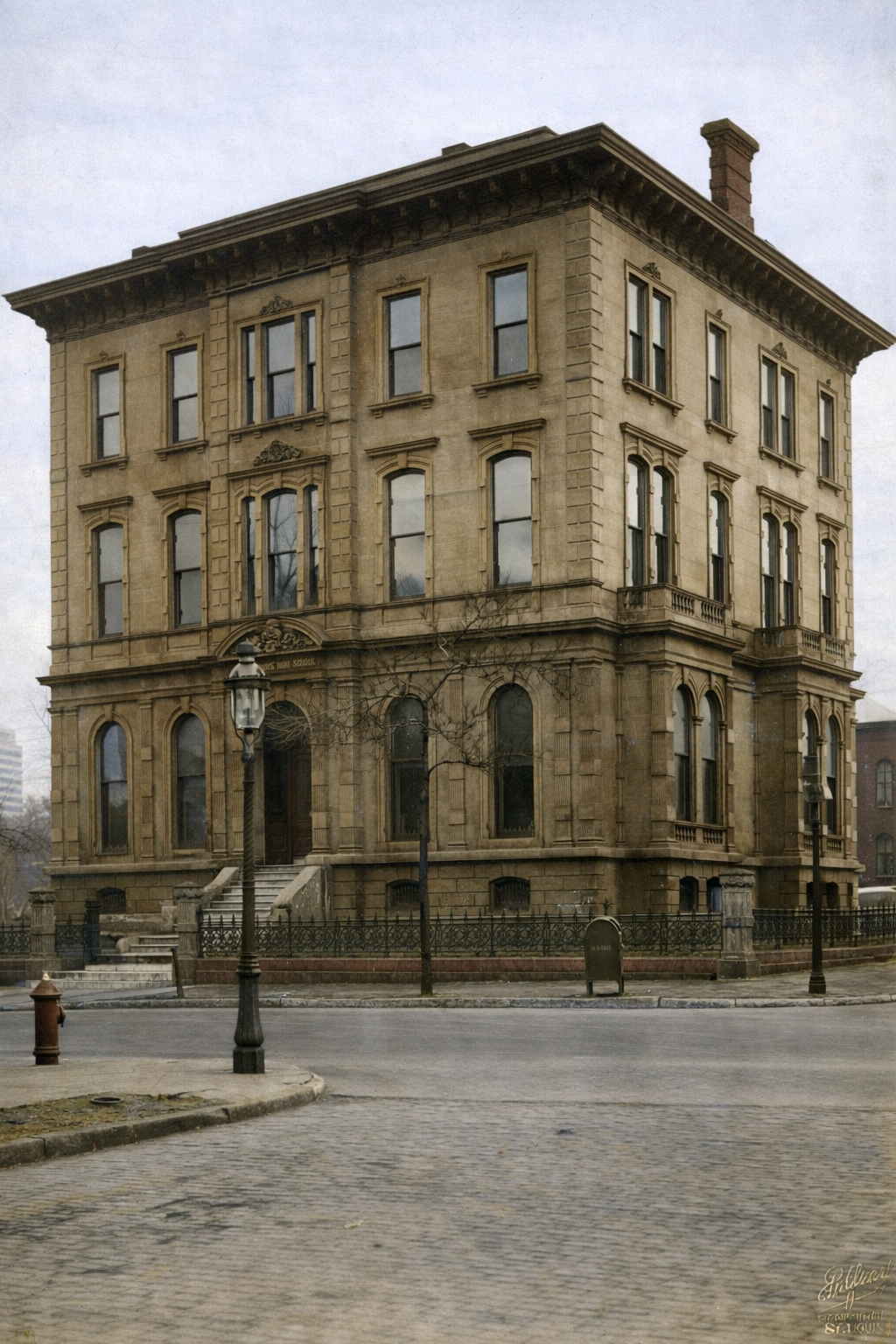
Morrison Mansion - 2740 Locust Street
Becoming identified with the Democratic Party upon the dissolution of the Whig Party, he succeeded Judge Lyman Trumbull—who had been chosen United States Senator—as a member of the National House of Representatives, where he served with distinction. After his retirement from Congress, he continued to take an active interest in political affairs and, after his removal to St. Louis, was prominent in the councils of the Democratic Party in Missouri, serving as a presidential elector-at-large in 1880.
He possessed captivating powers of speech, together with ready wit and imperturbable composure, and his tall, supple figure and graceful gestures added not a little to the charm of his eloquence. As a political orator—particularly in the Kansas-Nebraska debates and in the Douglas campaigns of 1858 and 1860—he was the peer of any of the eminent men who made that period of Illinois history so brilliant.
As a member of the bar he was especially learned and able as a land lawyer, having devoted extensive research to matters relating to land titles in this region. As a consequence, he was identified with much of the most important land litigation in Illinois and Missouri during the most active years of his professional life.
Having acquired a large fortune, he retired from practice many years before his death, which occurred August 14, 1888. The later years of his life were devoted to the management of his estate, to literature, and to foreign travel.
He married first, in 1842, Miss Mary A. Carlin, daughter of Governor Thomas Carlin of Illinois (1838–1842). Six children were born of this marriage, three of whom survived their father: James L. D. Morrison, Jr., who became a lawyer; William Edgar Morrison of Bancroft, Iowa; and Eugenia M. Morrison, later Mrs. Joseph Carr of St. Louis.
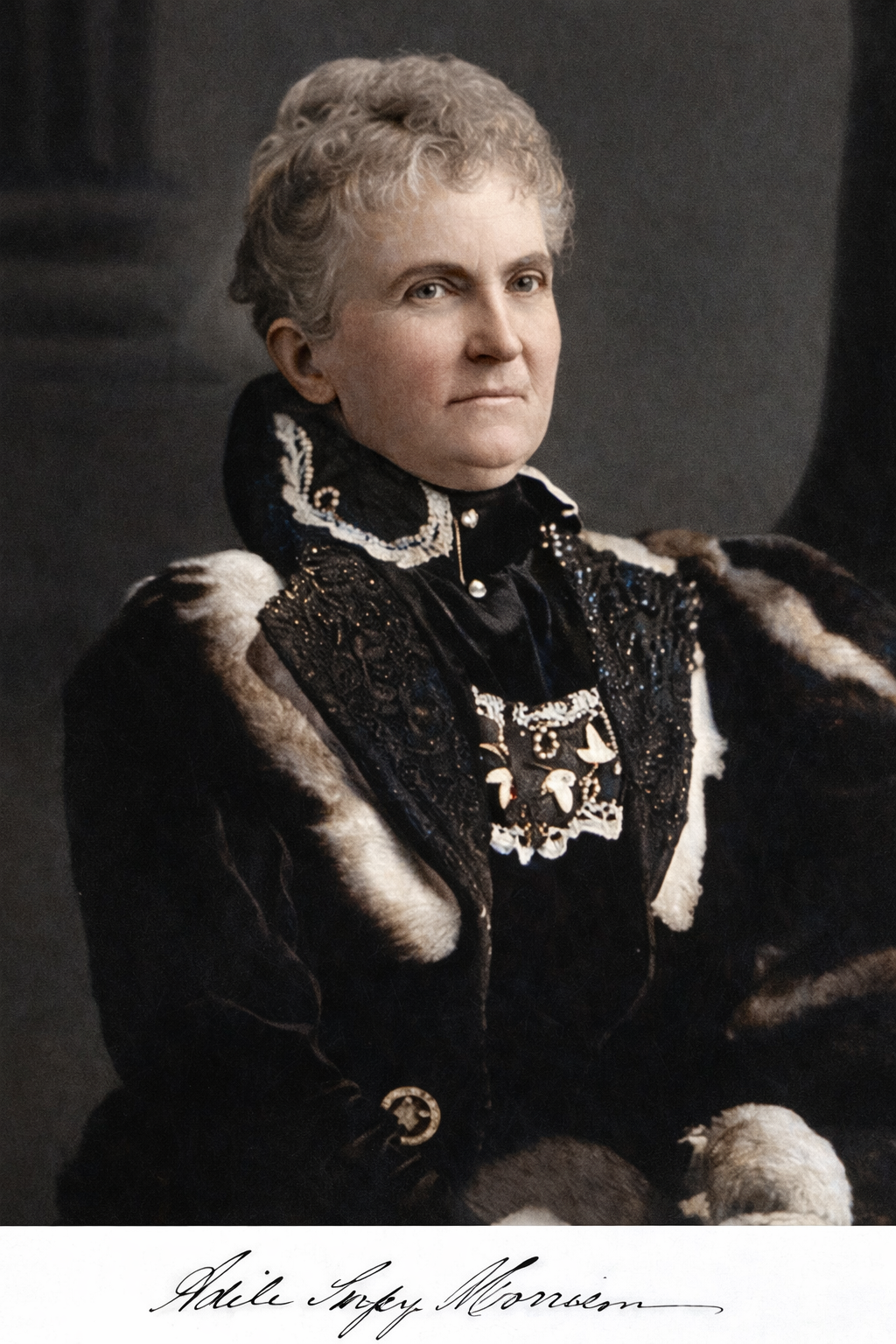
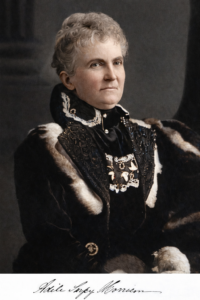 His first wife died in 1856, and in 1861 he married Miss Adele Sarpy, daughter of John B. Sarpy, a distinguished pioneer of St. Louis. Four children were born of this marriage, all inheriting a large share of the intellectual brilliancy of their parents
Encyclopedia of the History of St. Louis: A Compendium of ..., Volume 3, Part 2