William Greenleaf Eliot, Jr.
2660 Washington Avenue
Born: August 5, 1811
New Bedford, Bristol County, Massachusetts, USA
Died: January 23, 1887 (Age 75)
Pass Christian, Harrison County, Mississippi, USA
Buried: Bellfontaine Cemetery
Saint Louis, City of St. Louis, Missouri
Minister, Educator, Reformer, and Founding Architect of Modern St. Louis
William Greenleaf Eliot is a St. Louisan for whom we ask some historical variance. He is not on the Plate 71 list, but living at 2660 Washington Avenue, he was a neighbor of Seth Ranlett who lived at 2670 Washington Avenue and who was on the list. His illustrious life in this neighborhood in 1875 definitely merits consideration.
Among the many influential residents connected to the Lucas and Garrison neighborhood in 1875, few individuals left a broader and more enduring imprint upon the city of St. Louis than William Greenleaf Eliot. Minister, educator, abolitionist, humanitarian, and institution builder, Eliot stood at the center of nineteenth-century St. Louis civic life for more than fifty years. His residence at 2660 Washington Avenue placed him within the very social and intellectual environment that helped shape the city’s transition from frontier river town into a major American metropolis.
Born in 1811 in New Bedford, Eliot came from the distinguished Greenleaf and Adams family lines of New England. Educated at George Washington University and later at Harvard Divinity School, he entered the Unitarian ministry during a period of expanding American reform movements. Ordained in 1834, the young minister soon accepted a call to St. Louis, then a rapidly growing western city filled with both opportunity and instability. He would remain there for the rest of his life.
Shortly after arriving in St. Louis, Eliot founded the First Unitarian Church of Saint Louis, the first Unitarian congregation west of the Mississippi River. Under his leadership, the church became far more than a place of worship. It evolved into a center of education, philanthropy, intellectual discourse, and social reform. Eliot’s ministry reflected the practical humanitarian spirit of nineteenth-century Unitarianism: religion was to be lived through service to society.
That principle guided nearly every aspect of his public life. Eliot became deeply involved in the creation and advancement of many of St. Louis’s most important civic institutions. His influence extended into public education, charitable relief, sanitation reform, orphan care, and the arts. He helped organize and support the early St. Louis Public Schools system, contributed to the establishment of institutions that would eventually become the Saint Louis Art Museum, and aided organizations devoted to caring for widows, children, the poor, and the disabled.
Perhaps his most lasting institutional achievement came in 1853 when he, along with Wayman Crow, helped found Washington University in St. Louis. Originally proposed under the name “Eliot Seminary,” much to his personal embarrassment, the institution later became Washington University. Eliot devoted enormous energy and personal resources to its success and eventually served as its chancellor from 1870 until his death in 1887. His vision for higher education emphasized moral development, civic responsibility, and practical learning suited to the growing American West.
Eliot also founded the Mary Institute in memory of his daughter Mary, who died young. The school represented his strong belief in educational opportunities for women at a time when advanced education for girls remained limited. That institution would later become part of the present-day MICDS school.
During the American Civil War, Eliot emerged as one of the most significant Unionist voices in Missouri. In the dangerous opening months of the conflict, he worked alongside Nathaniel Lyon and Francis Preston Blair Jr. to help secure Missouri for the Union cause. His humanitarian work during the war proved equally important. Eliot became a leading force behind the Western Sanitary Commission, which provided medical aid, supplies, and assistance to Union soldiers and refugees throughout the western theater of the war.
His moral influence became widely recognized beyond St. Louis. When Ralph Waldo Emerson visited the city, he reportedly referred to Eliot as “the Saint of the West,” a description that captured Eliot’s reputation for tireless service, humility, and civic leadership.
In addition to his public work, Eliot was a prolific author whose writings reflected both theology and moral instruction. His books included Doctrines of Christianity, Lectures to Young Men, Lectures to Young Women, Discipline of Sorrow, and The Story of Archer Alexander: From Slavery to Freedom. The latter chronicled the life of a formerly enslaved man whose story became closely associated with the emancipation movement in Missouri.
By 1875, when Eliot resided at 2660 Washington Avenue, he had become one of the elder statesmen of St. Louis society. His neighborhood included industrialists, financiers, merchants, educators, and civic leaders who collectively shaped the economic and cultural development of the city during the Gilded Age. Yet Eliot stood apart from many of his wealthy contemporaries because his legacy rested not primarily in commerce or industry, but in moral and institutional leadership.
Eliot and his wife, Abigail Adams Cranch Eliot, raised a large family whose descendants would continue to exert national influence. Among them was his grandson, the poet T. S. Eliot, one of the most celebrated literary figures of the twentieth century.
William Greenleaf Eliot died in 1887 after more than half a century of continuous public service to St. Louis. Few individuals in the city’s history touched so many areas of civic life. Schools, universities, charities, churches, hospitals, and cultural institutions all bore the imprint of his vision. His work embodied a nineteenth-century belief that moral responsibility and civic improvement were inseparable obligations of citizenship.
Lucas and Garrison Reflective Addendum
William Greenleaf Eliot represents one of the clearest examples within the Lucas and Garrison project of how individual vision could shape an entire city. Many residents of Plate 71 accumulated wealth, influence, and prominence through commerce and industry, but Eliot demonstrated another form of power — the power of institution building guided by ethical conviction.
Modern St. Louis still lives within structures Eliot helped create. Educational systems, charitable networks, civic organizations, and cultural institutions founded or strengthened during his lifetime continue to influence the region nearly 150 years later. His life reminds us that cities are not merely constructed from streets, buildings, and businesses, but from ideas, values, and the willingness of citizens to invest themselves in the common good.
In many respects, Eliot served as a moral architect of nineteenth-century St. Louis.

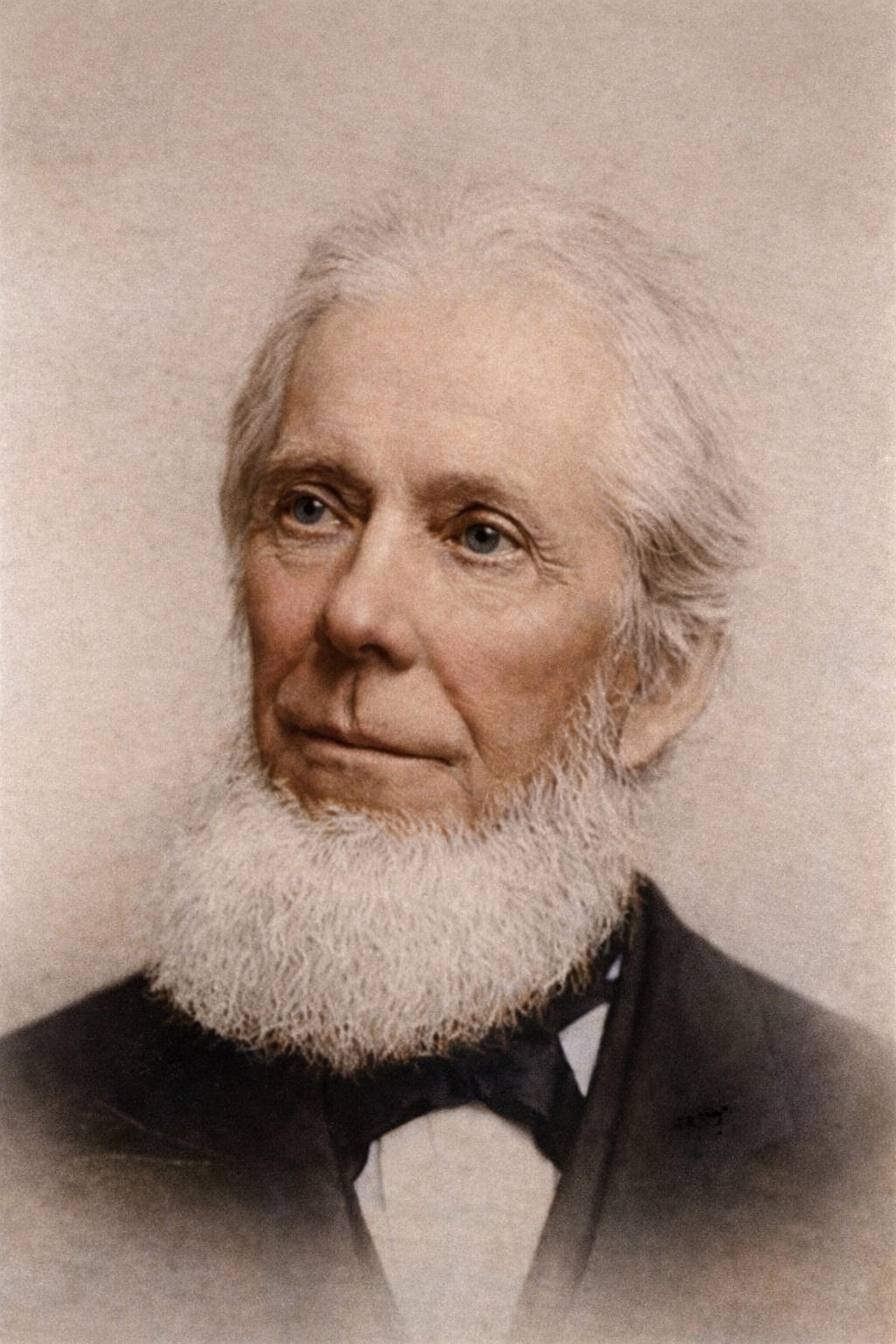 William Greenleaf Eliot, Jr.