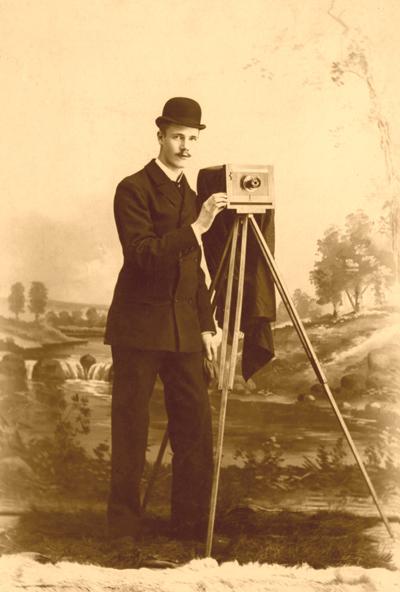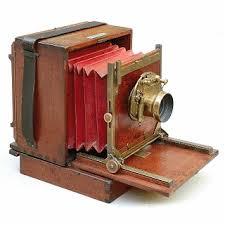
The St. Louis Photography Industry

The arrival of photography in nineteenth-century St. Louis transformed the city’s cultural memory, commercial life, and sense of identity in ways that few other technologies of the era could equal. By 1875, photography had evolved from a scientific curiosity into an established profession and thriving urban industry. In a rapidly growing city filled with merchants, industrialists, immigrants, politicians, soldiers, and aspiring middle-class families, photography became both a practical business and a powerful social force.

St. Louis embraced photography early. Daguerreotypists were operating in the city by the 1840s, only a few years after Louis Daguerre introduced the process in France. These early photographers worked with highly polished silver-coated copper plates that produced singular images of remarkable clarity. Though expensive and somewhat fragile, daguerreotypes fascinated the public because they offered something previous generations had never possessed: a precise and seemingly permanent likeness of an individual.

Before photography, only the wealthy could commonly afford painted portraits. Photography democratized personal imagery. A merchant living on Lucas Avenue, a Civil War veteran, a young child, or a newly married couple could now preserve their appearance for future generations. This seemingly simple shift profoundly altered the relationship between ordinary people and history. For the first time, large segments of society could visually document their existence.

By the 1850s and 1860s, St. Louis photography studios multiplied rapidly along major commercial streets, especially around Fourth and Fifth Streets. Men such as Andrew Jackson Fox built successful careers producing portraits for the growing urban population. Fox, listed in Gould’s 1875 Directory as a photographer and daguerreotypist at 205 North Fifth Street, represented an increasingly respected professional class within the city.
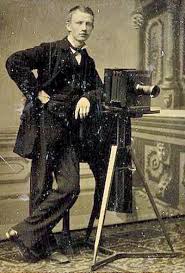
Photography also became intertwined with St. Louis’s emergence as a modern commercial center. Businesses recognized the value of photographic imagery for advertising, documentation, and promotion. Railroads commissioned photographs of bridges, depots, and western landscapes. Manufacturers used photography to display machinery and industrial facilities. Real estate developers promoted neighborhoods and commercial buildings through carefully staged images. As St. Louis expanded westward after the Civil War, photography helped market the city as prosperous, modern, and progressive.

The Civil War accelerated photography’s impact even further. St. Louis, a divided border city with deep military significance, became part of the broader national wartime photographic movement. Soldiers departing for service often sat for portraits before leaving home, while grieving families preserved images of loved ones who never returned. Photography introduced a new realism into public memory. Americans could now see actual faces of political leaders, generals, and common soldiers rather than relying solely on engravings or painted interpretations.

Following the war, photographic technology improved dramatically. The cumbersome daguerreotype gave way to ambrotypes, tintypes, and eventually albumen paper prints mounted on cards. The enormously popular “carte de visite” allowed multiple copies of portraits to be shared among relatives and friends. Middle-class families assembled photographic albums in their parlors, creating visual records of kinship and social connection. Photography thus became woven into domestic life itself.

In St. Louis society, a photographic portrait increasingly conveyed respectability and status. Prominent businessmen, clergy, politicians, and civic leaders commissioned formal studio portraits that projected authority and refinement. These images appeared in newspapers, commemorative books, and city histories, helping define the public image of the city’s elite. The visual culture of the Gilded Age was beginning to emerge, and photography stood at its center.
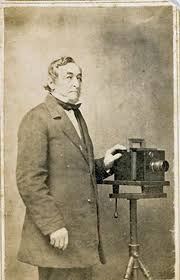
Photography also preserved a rapidly changing cityscape. During the late nineteenth century, St. Louis underwent enormous physical transformation through industrialization, railroad expansion, and urban development. Photographers documented streets, churches, schools, factories, riverfront scenes, and neighborhoods that would later disappear entirely. Today, much of what is known visually about nineteenth-century St. Louis survives because photographers captured these environments before modernization erased them.

The medium carried artistic implications as well. Though initially regarded primarily as a mechanical process, photography gradually gained recognition as an art form. Skilled photographers manipulated lighting, pose, composition, and backdrop to create images of sophistication and emotional depth. The best studios in St. Louis rivaled those in Chicago or New York in technical quality and elegance.

Yet perhaps photography’s greatest impact was philosophical. It altered humanity’s understanding of memory and permanence. For the first time in history, people could leave behind accurate visual evidence of themselves and their surroundings. The faces of nineteenth-century St. Louis residents—once destined to vanish into obscurity—could now look directly into the future.

For historians today, photography serves as one of the most invaluable surviving records of the era. Through these images, modern viewers can encounter the citizens, architecture, fashions, industries, and streets of nineteenth-century St. Louis with startling immediacy. Photography transformed memory into something tangible. In doing so, it helped preserve not only individual lives, but the evolving identity of the city itself.