 St. Louis Public Schools in 1875 - Stoddard School
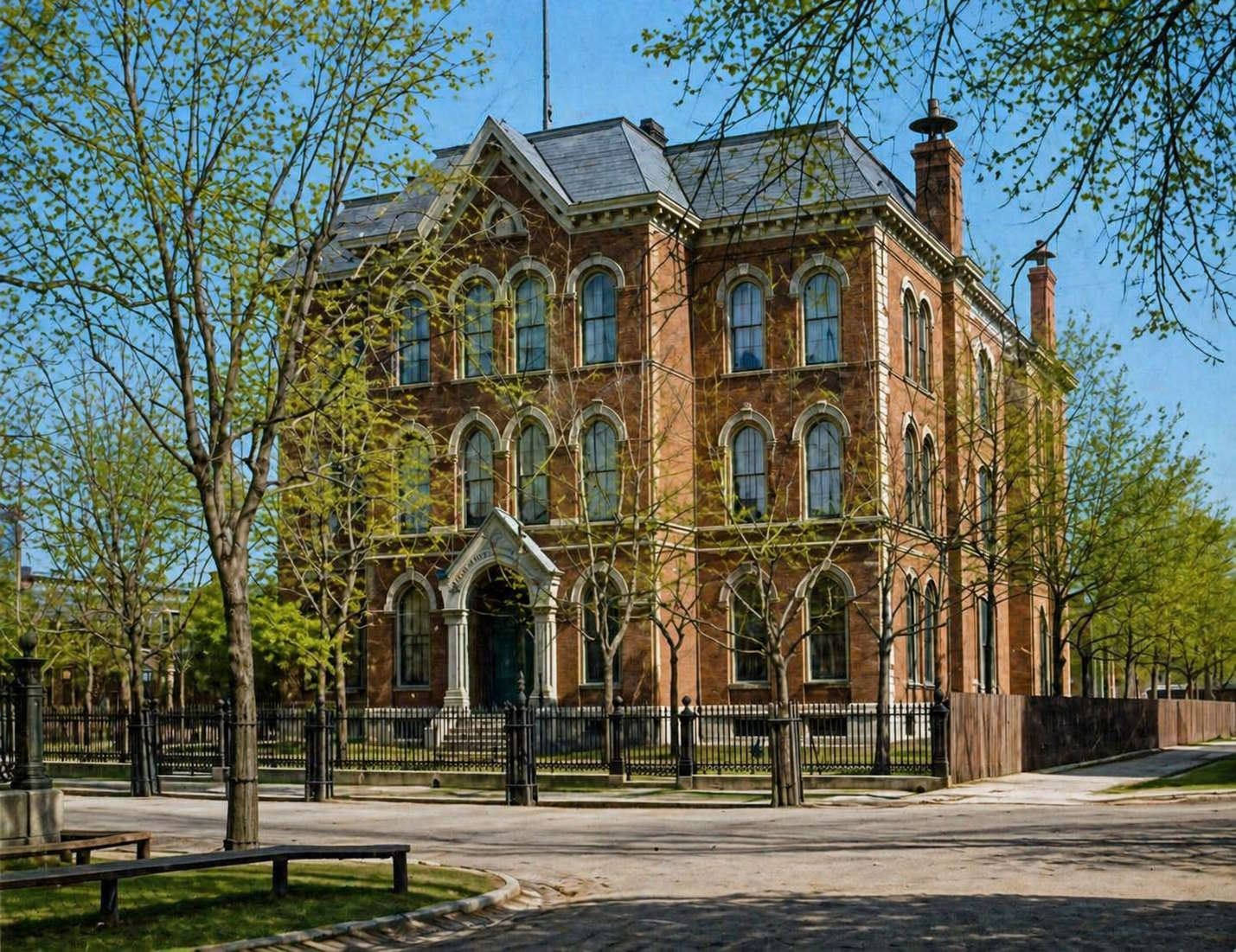
By 1875, public education in St. Louis had already become one of the city’s defining civic achievements. Unlike many American cities still struggling to establish consistent schooling systems, St. Louis had developed a structured, tax-supported public school network that was widely admired.
This system did not emerge accidentally. It was shaped by reform-minded leaders such as William Greenleaf Eliot, whose influence extended into education, social reform, and the founding of institutions like Washington University in St. Louis. Eliot and his contemporaries believed that education was essential to civic stability, moral development, and economic growth.
By the mid-1870s, that philosophy had taken physical form across the city—in the shape of increasingly substantial and well-organized school buildings.
The Structure of the System
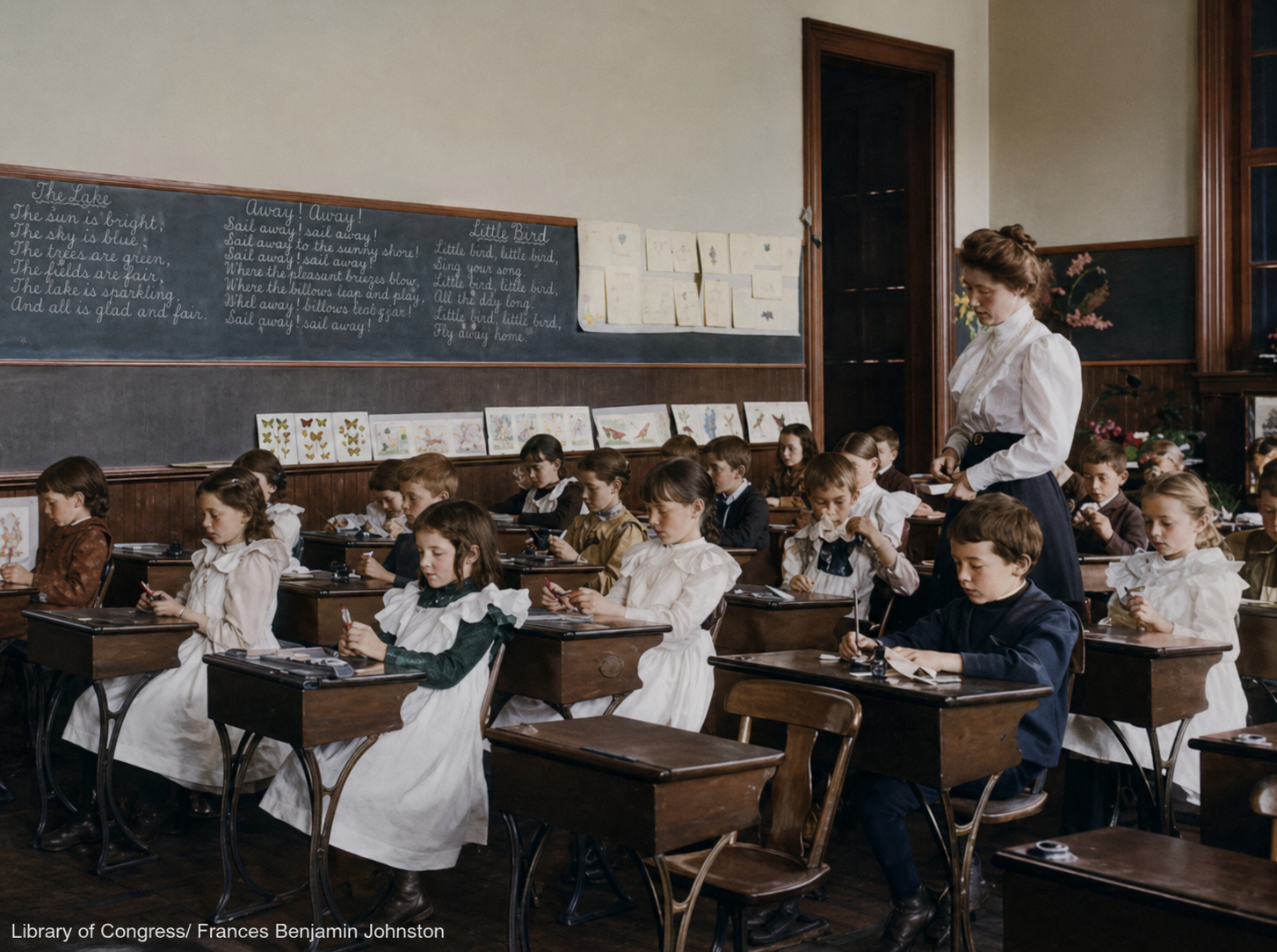
Typical 1875 Public School Classroom
At the heart of public education was the St. Louis Public Schools, already one of the most advanced systems west of the Mississippi River. Its features in 1875 included:
-
Graded schools rather than one-room models
-
A centralized administrative structure
-
A growing corps of trained teachers, many of them women
-
A defined curriculum including reading, writing, arithmetic, geography, and moral instruction
St. Louis was also notable for its early adoption of kindergarten education, influenced by German immigrant communities and educational reformers. This innovation placed the city at the forefront of progressive education in America.
The Neighborhood School: Stoddard as a Case Study
Within the Lucas and Garrison neighborhood, the Stoddard School stood as a tangible expression of these ideals.
Its presence tells us several important things about the neighborhood:
-
Commitment to education among residents
-
Accessibility of schooling within walking distance
-
The integration of family life and civic infrastructure
Unlike elite private academies, schools like Stoddard served a broader cross-section of the population. Children of merchants, professionals, and skilled workers could all pass through its doors, creating a shared educational experience that helped shape the city’s emerging middle class.
Education and Social Order
Public education in 1875 was not merely about literacy—it was about order, discipline, and cultural cohesion.
In a rapidly growing city marked by immigration, industrialization, and post–Civil War tensions, schools functioned as:
-
Instruments of Americanization
-
Centers of moral instruction
-
Foundations for economic participation
Students were taught not only academic subjects but also punctuality, obedience, and civic responsibility. In this sense, the classroom became an extension of the broader societal structure.
A City Investing in Its Future
The investment in public education reflected a deeper confidence in the future of St. Louis. As railroads expanded, industries grew, and neighborhoods like Lucas and Garrison flourished, education became the mechanism by which opportunity could be sustained across generations.
The children attending schools like Stoddard in 1875 would become:
-
Clerks and merchants
-
Teachers and professionals
-
Civic leaders and reformers