
 The manufacture and distribution of gunpowder in St. Louis circa 1875 formed a small but strategically vital component of the city’s broader industrial economy. While not as visible as flour milling, railroads, or river commerce, the powder trade intersected with mining, construction, military supply, and westward expansion—making it an industry of quiet but far-reaching importance.
The Nature of the Industry
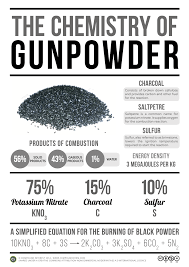
By 1875, the dominant product was black powder, a mixture of saltpeter (potassium nitrate), charcoal, and sulfur. Its uses extended well beyond firearms:
-
Mining and quarrying (especially coal and limestone)
-
Railroad construction (blasting cuts and tunnels)
-
River improvements along the Mississippi
-
Military and militia supply
-
Sporting and hunting markets
The manufacturing process was both labor-intensive and highly dangerous. Powder mills were typically located outside dense urban areas due to the constant risk of explosion. Even with precautions, accidents were common, and entire facilities could be destroyed in an instant.
 St. Louis as a Distribution Hub
St. Louis did not rival eastern centers like Wilmington, Delaware in raw production, but it excelled as a distribution and logistics hub. Its position on the Mississippi River and its expanding rail network allowed powder to move efficiently into:
-
The Missouri and Illinois coal regions
-
The lead mining districts of southeast Missouri
-
The western frontier, including Kansas, Nebraska, and beyond
Wholesale dealers and agents based in the city handled large volumes of powder shipped from eastern manufacturers and redistributed it throughout the West.
The Role of Laflin & Rand Powder Company
The most significant corporate presence tied to St. Louis in this period was the Laflin & Rand Powder Company, one of the leading powder producers in the United States.
-
Formed in 1869 through the consolidation of several earlier powder firms
-
Maintained regional offices and distribution agents in major cities, including St. Louis
-
Supplied powder for both industrial blasting and commercial sporting use
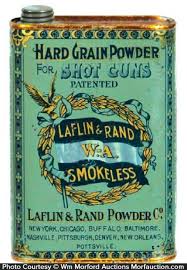 Figures such as A. H. Laflin (whom you’ve already explored) illustrate how eastern capital and manufacturing connected directly into St. Louis’s commercial networks. The city functioned less as a production center and more as a critical node in a national supply chain.
Local Dealers and Storage
Within St. Louis itself, gunpowder was typically handled by:
-
Commission merchants
-
Hardware and industrial supply firms
-
Specialized powder agents
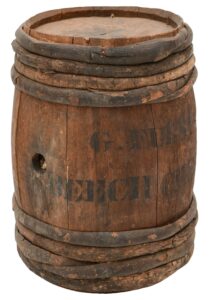
Because of the danger, powder storage was regulated and often confined to magazines—secure, isolated storage facilities located at safer distances from populated areas or along the riverfront where shipments could be transferred quickly.
 City ordinances frequently addressed:
-
Approved storage locations
-
Maximum quantities allowed within city limits
-
Transportation precautions
These regulations reflect both the necessity of the product and the ever-present fear of catastrophe.
Connection to the Coal and Industrial Economy
The powder industry in St. Louis was closely tied to the coal trade, which you’ve already begun to explore through figures like Gartside and Lewis. Blasting powder was essential for:
-
Extracting coal from underground seams
-
Breaking stone for construction
-
Expanding rail infrastructure
Without reliable powder supplies, the rapid industrial growth of St. Louis in the 1870s would have been severely constrained.
Military Legacy and Cultural Context
Only a decade removed from the American Civil War, the memory of wartime demand still shaped the industry. Many powder firms had expanded dramatically during the war and then transitioned to civilian markets afterward.
St. Louis, with its divided Civil War loyalties and strategic importance, remained a city where:
-
Military supply networks were well established
-
Veterans and officers retained influence in business circles
-
Preparedness and access to munitions still carried cultural weight
Interpretive Insight (Lucas and Garrison Lens)
What makes the gunpowder trade especially compelling in the Lucas and Garrison framework is its invisibility. Unlike grand homes, churches, or banks, powder left few architectural or visual traces within the neighborhood itself. Yet it underpinned the wealth and industrial expansion that made such neighborhoods possible.
This is a classic “hidden infrastructure” rabbit trail:
-
The refined households on Lucas Avenue
-
The financiers and industrialists behind them
-
And beneath it all, the explosive force—quite literally—that enabled their prosperity