Edwin Harrison
2825 Pine Street
President — Chouteau, Harrison & Valle
Iron Mountain Company / Iron Manufacturer
Office: 941 North 2nd Street (Gould, 1875)
Edwin Harrison stands as one of the clearest examples of how the industrial power structure of St. Louis was physically rooted within the Lucas and Garrison neighborhood. Residing at 2825 Pine Street on Plate 71, Harrison was not merely a man of business—he was a principal actor in one of the most consequential industrial enterprises of nineteenth-century Missouri.
As president of Chouteau, Harrison & Valle, Harrison occupied a leadership role in a firm that connected mineral extraction, manufacturing, and capital investment into a single integrated system. The firm’s association with the Iron Mountain Company placed it at the center of the iron industry that fueled St. Louis’s growth as a manufacturing city.
The significance of this position cannot be overstated. The Iron Mountain region of southeastern Missouri contained some of the richest iron ore deposits in the world, and Harrison’s firm—alongside partners such as Jules Valle and Pierre Chouteau, Jr.—helped organize the extraction, transport, and processing of that material into usable industrial output.
From his office at 941 North Second Street, Harrison operated within the commercial heart of the city, while his residence on Pine Street placed him among a concentration of similarly influential figures. This dual positioning—commercial downtown and residential enclave—was characteristic of the St. Louis elite of the period, whose daily decisions shaped both the economic and physical landscape of the city.
Yet Harrison’s career also unfolded during a period of instability. As noted in contemporary accounts, firms such as Chouteau, Harrison & Valle were not immune to the financial shocks that periodically rippled through the national economy. Bank failures, credit contraction, and interruptions in supply chains could—and did—force even major houses to suspend operations temporarily. Harrison’s leadership therefore required not only industrial vision, but the ability to navigate uncertainty within a rapidly evolving economic system.
In this, he represents a type frequently encountered on Plate 71: the industrial capitalist whose influence extended far beyond his address, yet whose presence within the neighborhood speaks to the concentration of power and decision-making in a relatively small geographic space.
LucGar Reflective Addendum
Edwin Harrison’s presence on Plate 71 brings the larger iron industry story into sharp geographic focus. The mines of Iron Mountain, the furnaces of Carondelet, and the capital networks reaching to New York and Europe were not abstract systems—they were directed by men who lived within walking distance of one another. This proximity fostered collaboration, competition, and shared risk. It also reminds us that the great industrial engines of St. Louis were, at their core, human enterprises—shaped in parlors, offices, and conversations taking place within neighborhoods like Lucas and Garrison.

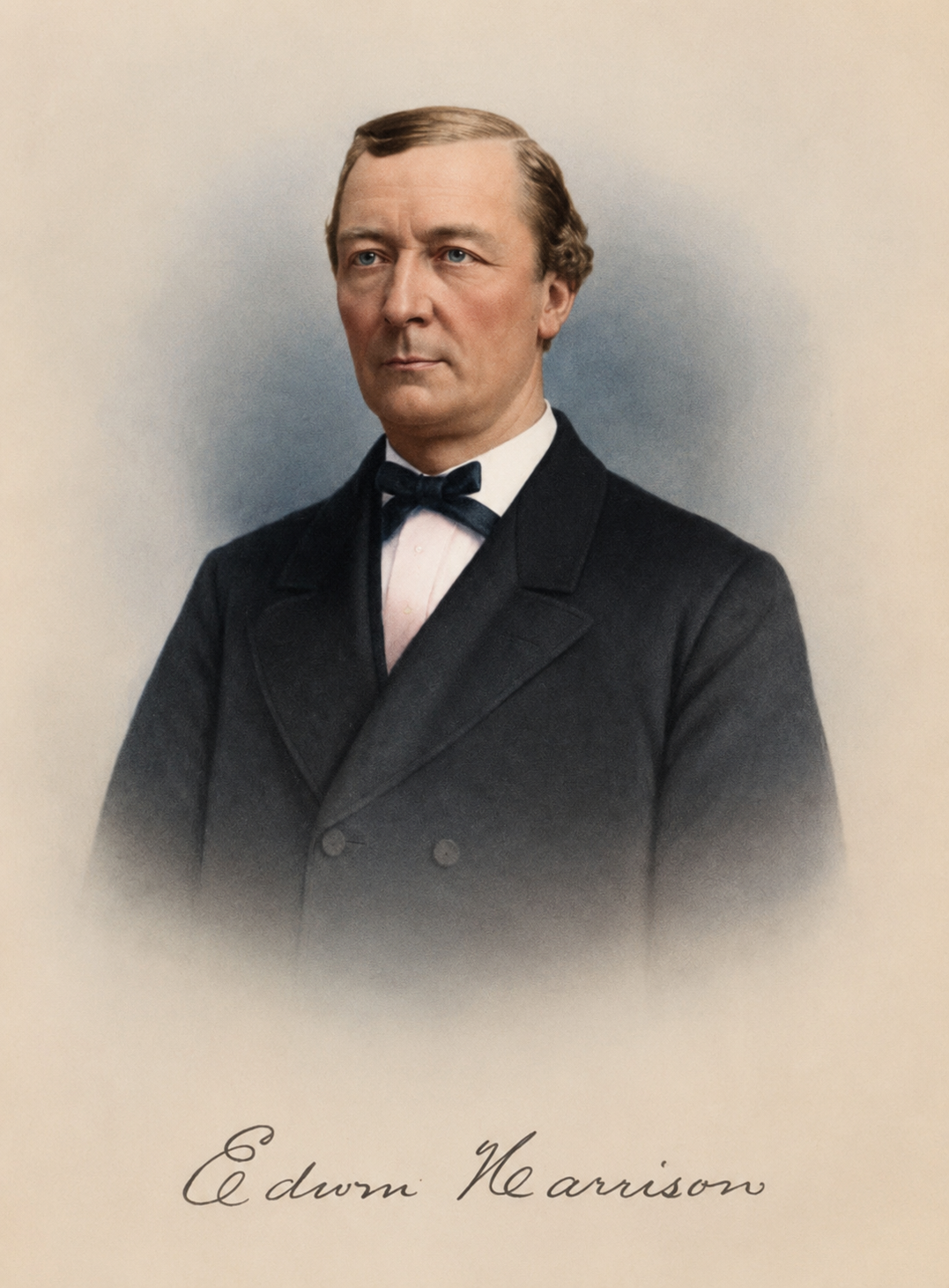 Edwin Harrison