
 Benton Stables – Benton Barracks
The reference to the “Benton Stables” opens a small but fascinating doorway into one of the largest and most important military installations in Civil War–era St. Louis: Benton Barracks. No connection has been found between Benton Stables, located at Market Street and Leffingwell Avenue in 1875, and the Benton Barracks, which were located in Northwest St. Louis City during the Civil War and beyond. Since there is no historic information available about Benton Stables, they simply provide a segue to tell the story of the much more interesting Benton Barracks.
 By 1875, much of the wartime activity had faded, yet the memory and physical remnants of the sprawling complex still lingered across north St. Louis. The site represented not merely a military encampment, but a temporary city unto itself—one deeply connected to immigration, labor, transportation, horses, supply networks, and the transformation of St. Louis into a western metropolis.
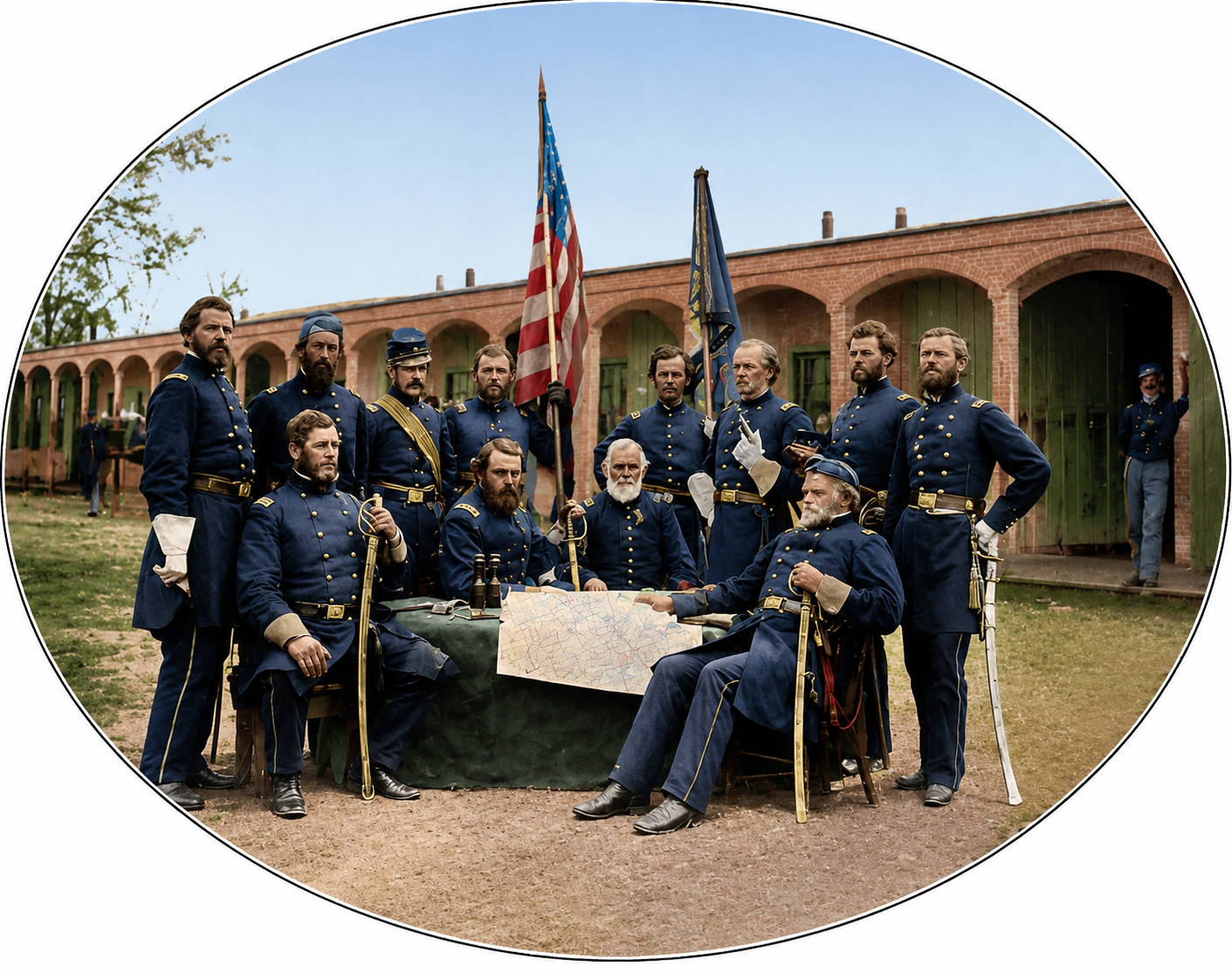
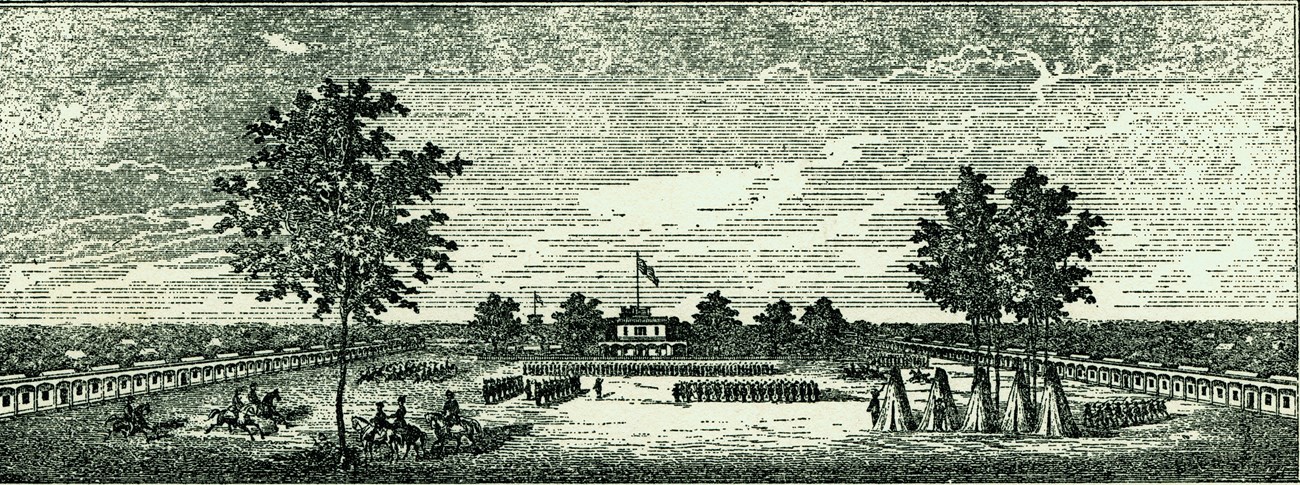
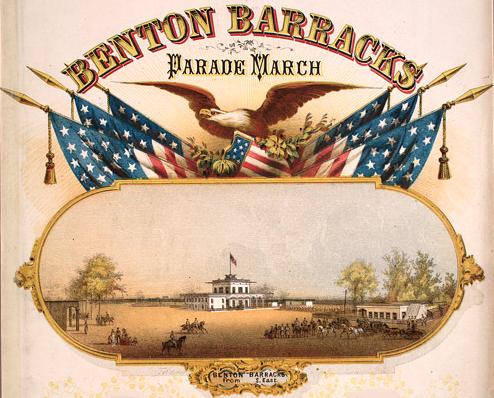
Constructed in 1861 and named for Missouri Senator Thomas Hart Benton, Benton Barracks occupied hundreds of acres on the city’s northwestern edge. During the Civil War it became one of the Union’s principal military depots west of the Mississippi River. Tens of thousands of soldiers passed through its grounds for organization, training, hospitalization, prisoner detention, and transport. The complex contained barracks, hospitals, warehouses, parade grounds, blacksmith shops, corrals, and enormous stable facilities capable of housing vast numbers of horses and mules essential to nineteenth-century military logistics.
It was within this environment that a young immigrant named Joseph Pulitzer reportedly found his first employment after arriving in St. Louis in 1866. According to Seeking St. Louis (p. 329), Pulitzer “secured his first employment there tending mules in the stables at Benton Barracks.” The image is striking when viewed in retrospect. One of the future giants of American journalism—eventually owner of the St. Louis Post-Dispatch and namesake of the Pulitzer Prize—began his American experience performing hard physical labor among the animals and transport operations of a fading military complex.
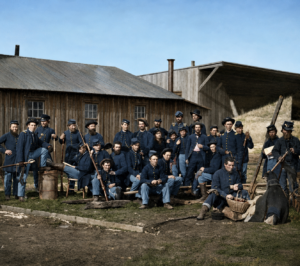 That detail also reveals something larger about St. Louis in the years immediately following the Civil War. The city was overflowing with immigrants, veterans, laborers, and ambitious young men attempting to find footing in a rapidly industrializing environment. Benton Barracks, though declining from its wartime peak, still offered employment opportunities connected to transportation, livestock handling, supply distribution, and government surplus activity. Horses and mules remained absolutely essential to urban life in the late nineteenth century. Every delivery wagon, dray company, omnibus line, transfer operation, construction contractor, funeral carriage, brewery wagon, and street maintenance department depended upon stable systems similar to those once maintained at Benton Barracks.
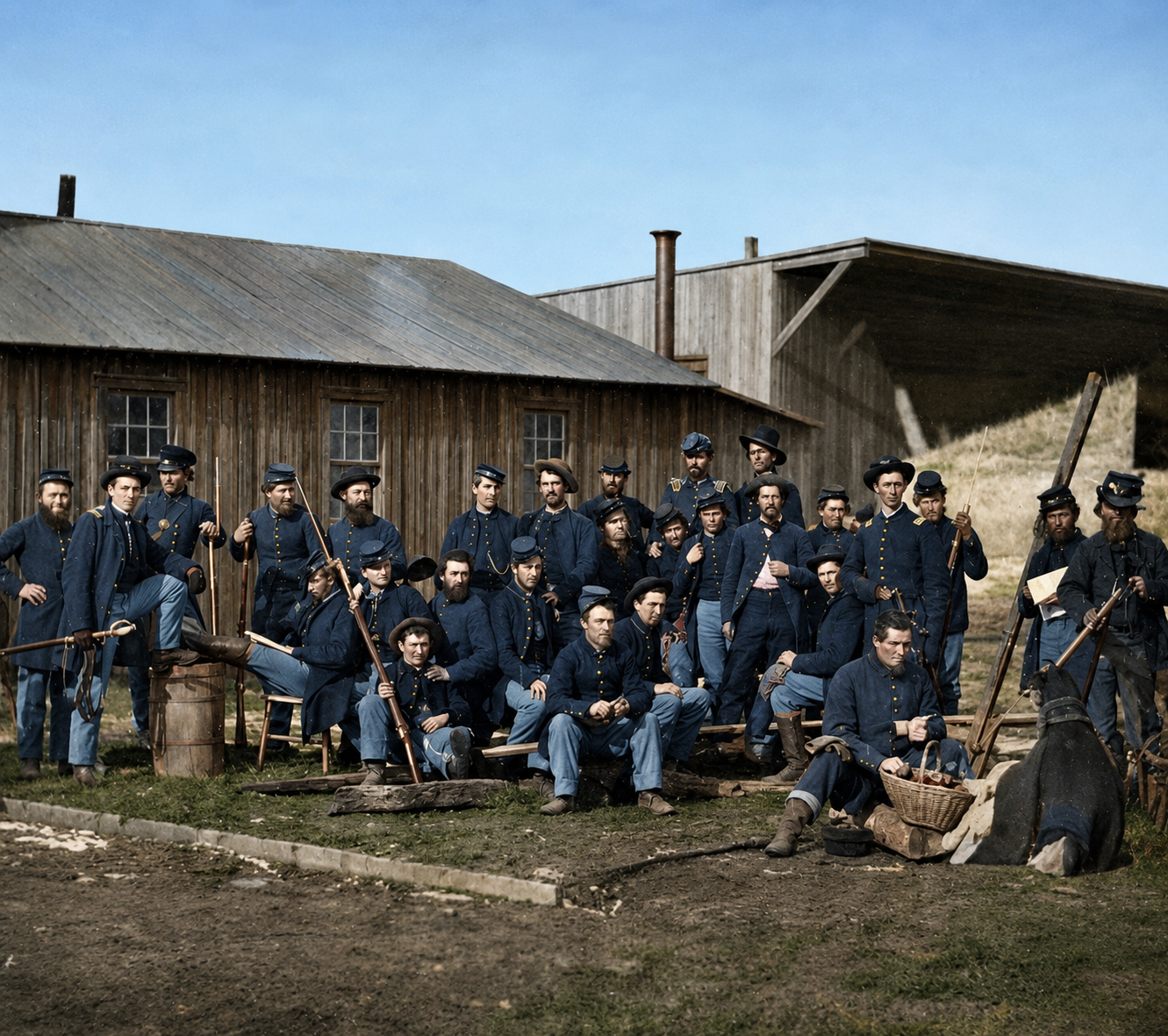
The stable operations themselves would have been immense and physically demanding. Mule tenders cleaned stalls, hauled feed, maintained harnesses, watered animals, and managed manure disposal in facilities that never truly slept. The odors, noise, mud, and constant movement formed part of the industrial rhythm of nineteenth-century cities. Before automobiles transformed urban transportation, stables were as necessary to city infrastructure as rail terminals or warehouses.
The connection between Pulitzer and Benton Barracks also provides an excellent example of the kind of hidden intersections that continually emerge within the Lucas and Garrison research project. Pulitzer would later become one of the most influential voices in St. Louis civic life, advocating reform journalism and public accountability. Yet his beginnings in the city were humble, immigrant, and labor-oriented—an embodiment of the upward mobility that St. Louis sometimes offered during its explosive postwar growth.
By 1875, portions of the former Benton Barracks property were already transitioning away from military use, reflecting the city’s outward expansion. Streets, residential districts, institutions, and industrial concerns gradually absorbed the landscape that had once housed Union troops and military livestock. Still, the memory of Benton Barracks remained deeply embedded in St. Louis consciousness for decades afterward, particularly among Civil War veterans and the immigrant communities that had interacted with the installation.
 The “Benton Stables” notation, brief though it may be, therefore connects to several larger themes central to the Lucas and Garrison project:
-
Civil War infrastructure lingering into the 1870s
-
The importance of horses and mules in urban industry
-
Immigration and labor in postwar St. Louis
-
The transformation of military landscapes into civilian neighborhoods
-
Unexpected intersections between ordinary labor and future prominence