 James W. Bell — 2819 Lucas Avenue
Secretary, Excelsior Manufacturing Company
Stove Foundries — 612–618 / 810 N. Main Street
Gould’s St. Louis Directory, 1875

James W. Bell Residence
At first glance, James W. Bell appears in the 1875 Gould Directory as a typical St. Louis professional—resident of 2819 Lucas Avenue, and Secretary of the Excelsior Manufacturing Company. Yet behind that understated title stood one of the largest and most influential industrial enterprises not only in St. Louis, but in the United States.
By the mid-1870s, the Excelsior Manufacturing Company had grown into what contemporary accounts described, without hesitation, as “the largest stove company in the world.” Organized formally in 1865 under the leadership of Giles F. Filley, the company represented the full maturity of an industry that had taken root in St. Louis a generation earlier.
Its scale was staggering. By 1875, Excelsior employed approximately 350 men, paid $26,000 monthly in wages, and generated annual business approaching $1.5 million. Its foundries consumed vast quantities of iron—6,000 tons in 1873 alone—much of it drawn from Missouri ore and smelted locally, tying the company directly to the mineral wealth of the region.
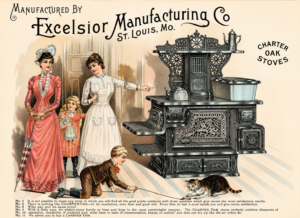
 From modest beginnings in 1849, when just 634 stoves were produced, the company expanded relentlessly. By 1874, it had manufactured over 600,000 stoves, consuming 75,000 tons of iron. Its products were no longer regional commodities, but national—and increasingly international—goods, shipped to twenty-eight states and territories, and exported as far as Germany and England.
At the center of this growth stood the company’s administrative and executive structure, within which Bell served as secretary. This role placed him in direct connection with the strategic, financial, and operational management of an enterprise whose influence extended far beyond its Main Street works.
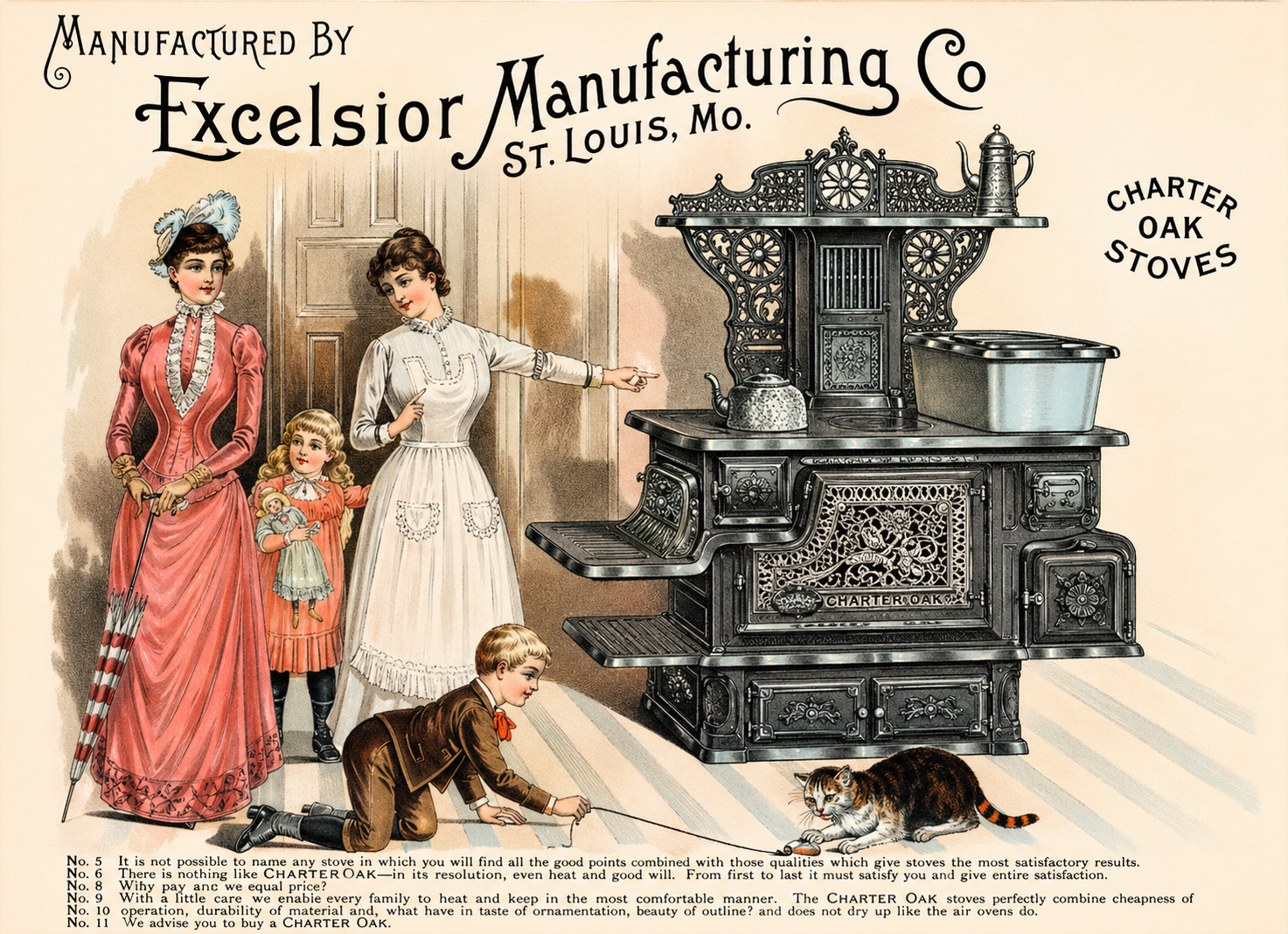
 The company’s flagship product, the Charter Oak stove, achieved extraordinary penetration into American life. By the mid-1870s, more than 250,000 units were in use, with contemporary observers claiming that they were “cooking the food for more than one-thirtieth part of the population of the United States.” The stove’s success was not accidental. It reflected careful attention to design, durability, and efficiency—qualities repeatedly emphasized in period descriptions of St. Louis manufacturing.
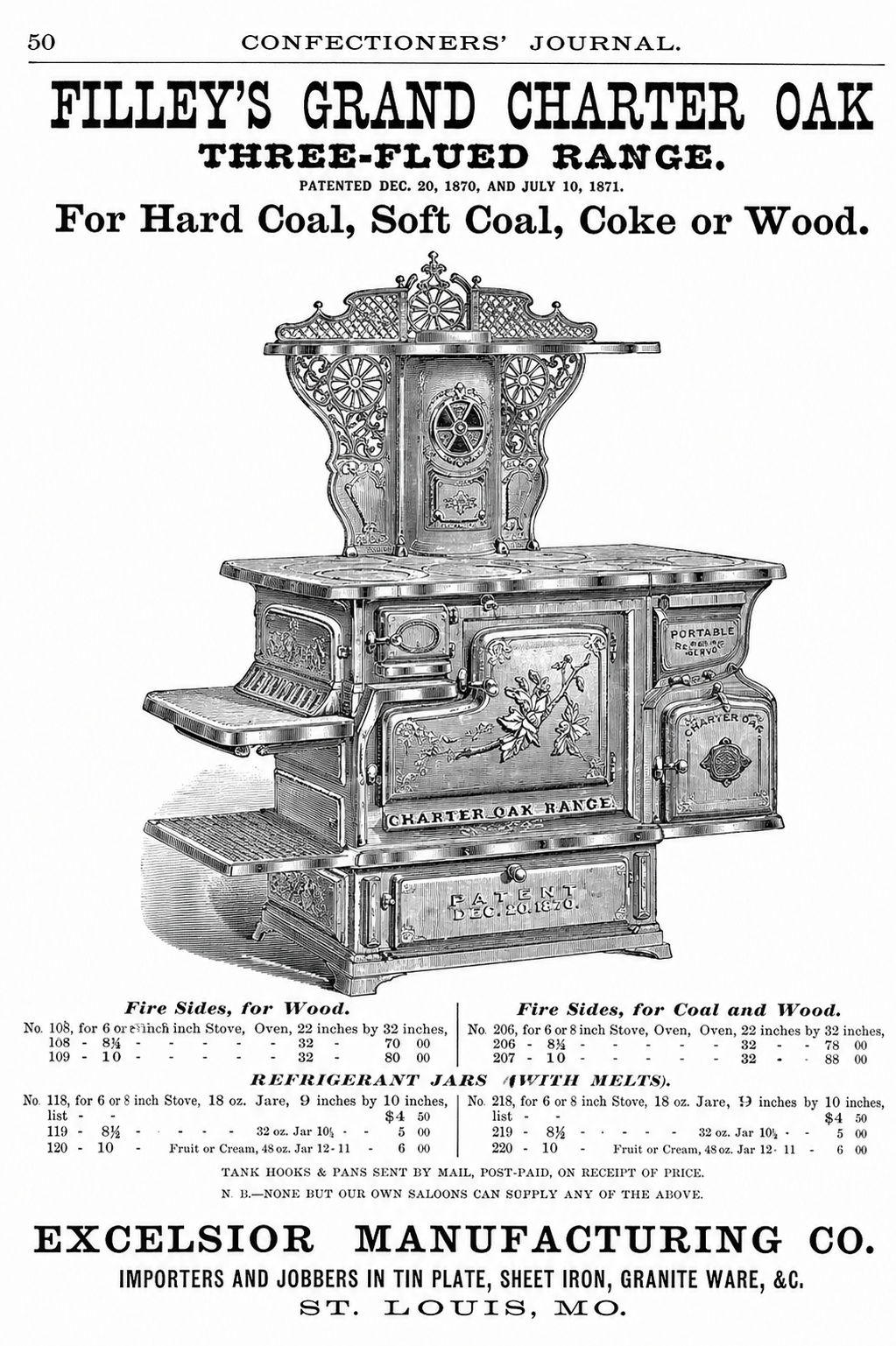
One contemporary account captured both the pride and ambition surrounding the enterprise:
“This great representative… is demonstrating, day after day, in the most indubitable manner, the superiority of the workmanship of St. Louis, and of the superiority of the iron of Missouri.”
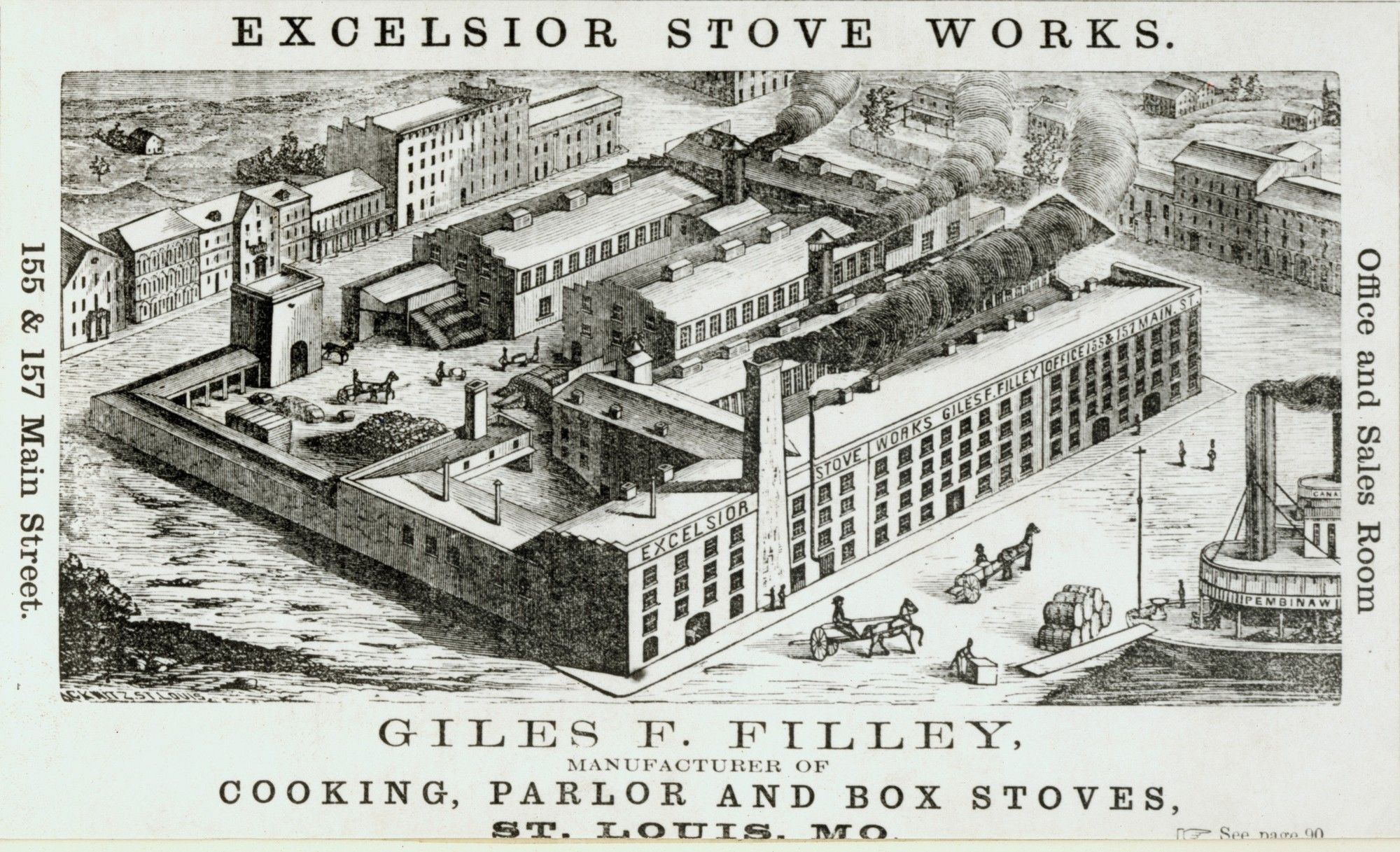
The physical plant itself matched the scale of the business. The company’s Main Street facilities included multi-story manufacturing and office buildings, extensive foundries covering several acres, and showroom spaces large enough to display hundreds of stove patterns. Production was continuous, with over forty tons of metal melted daily, and the enterprise directly or indirectly supporting as many as 2,000 people.
Excelsior’s product line extended far beyond a single model. Dozens of variations—cooking stoves, heating stoves, and specialized designs—served a wide spectrum of households, from modest families to large institutional kitchens. Some models could prepare meals for hundreds of people, while others were scaled for ordinary domestic use. The company’s reach was both broad and precise, adapting to the needs of a rapidly expanding nation.
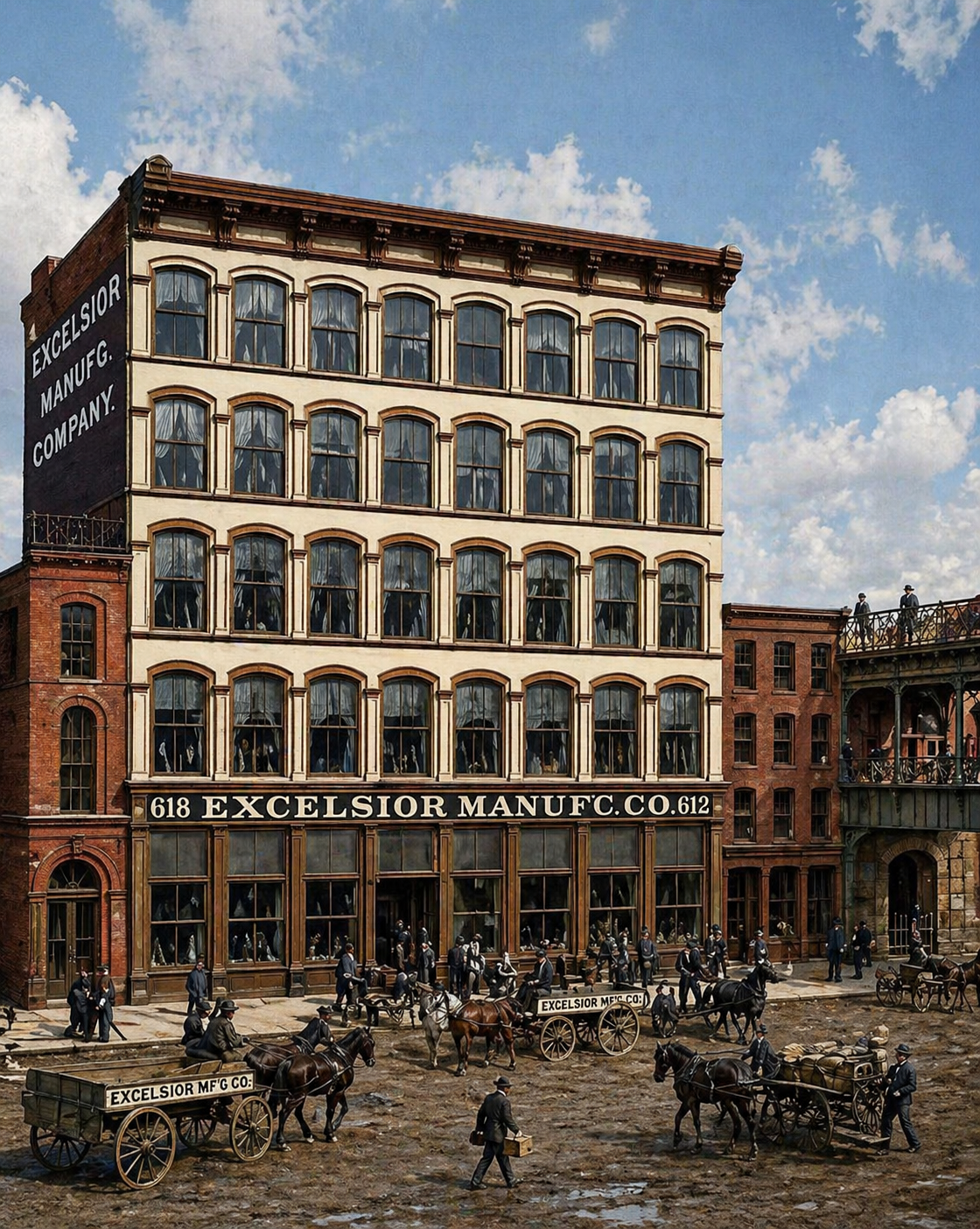
Excelsior Manufacturing Headquarters Building