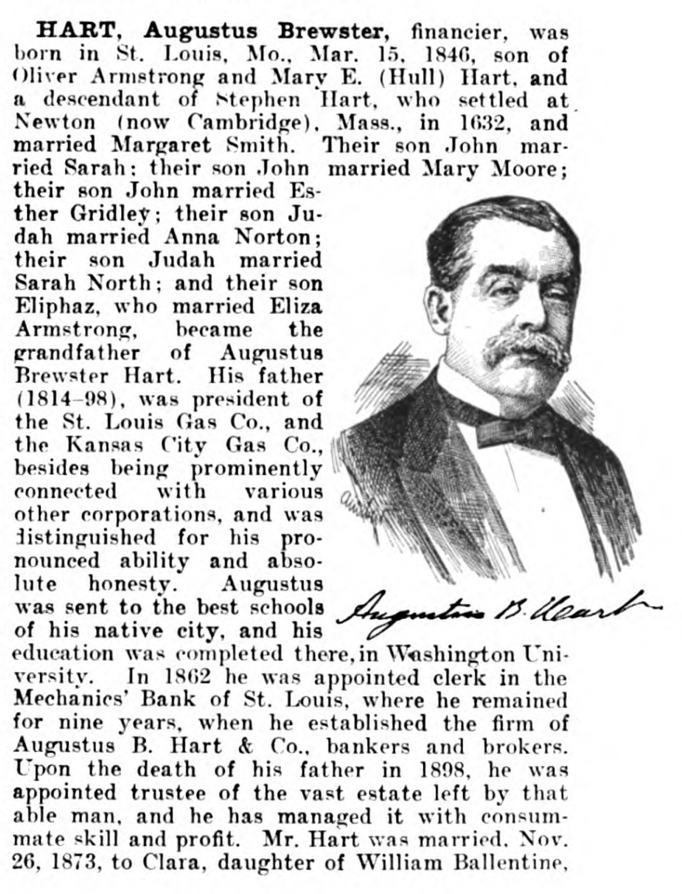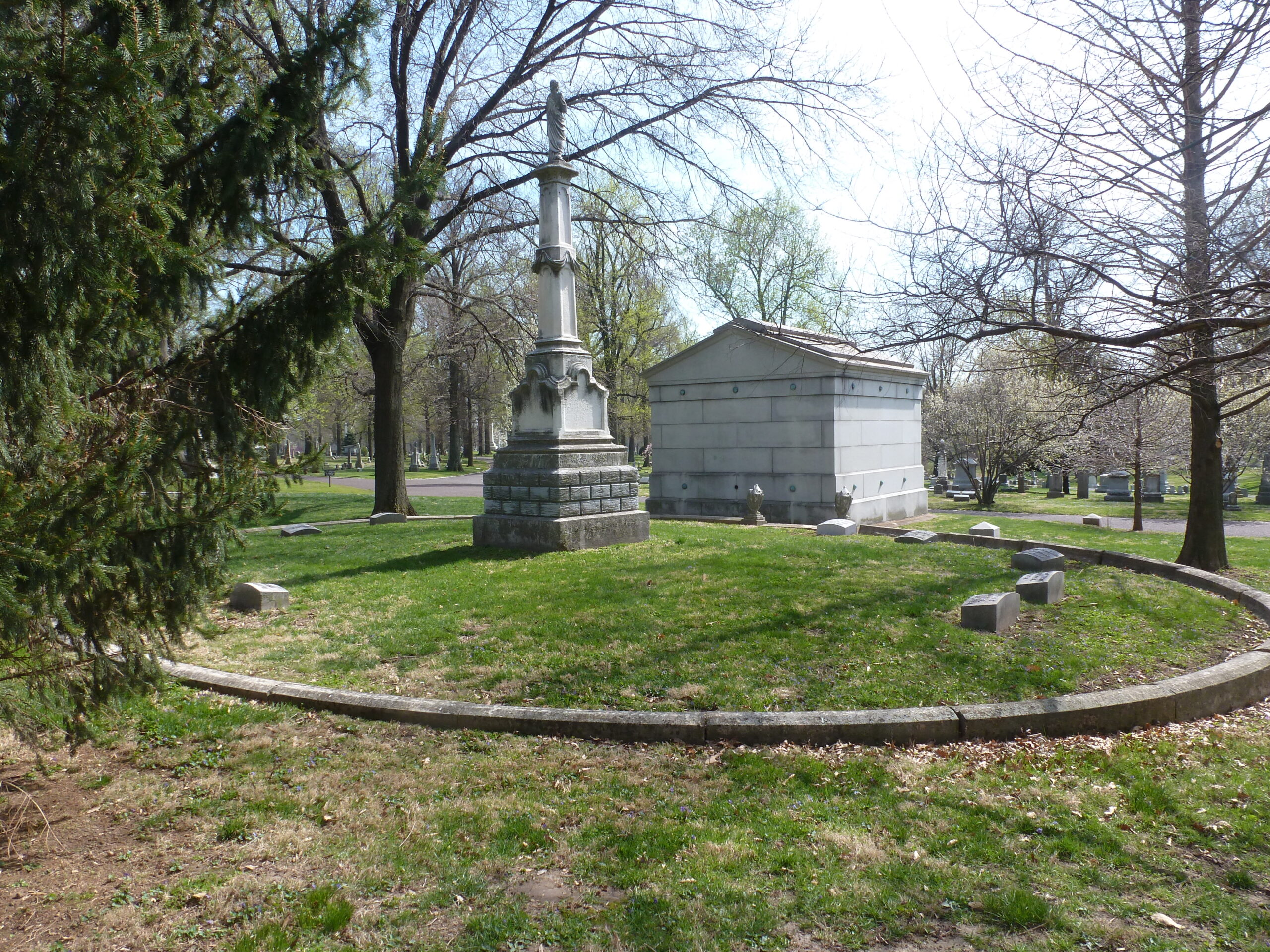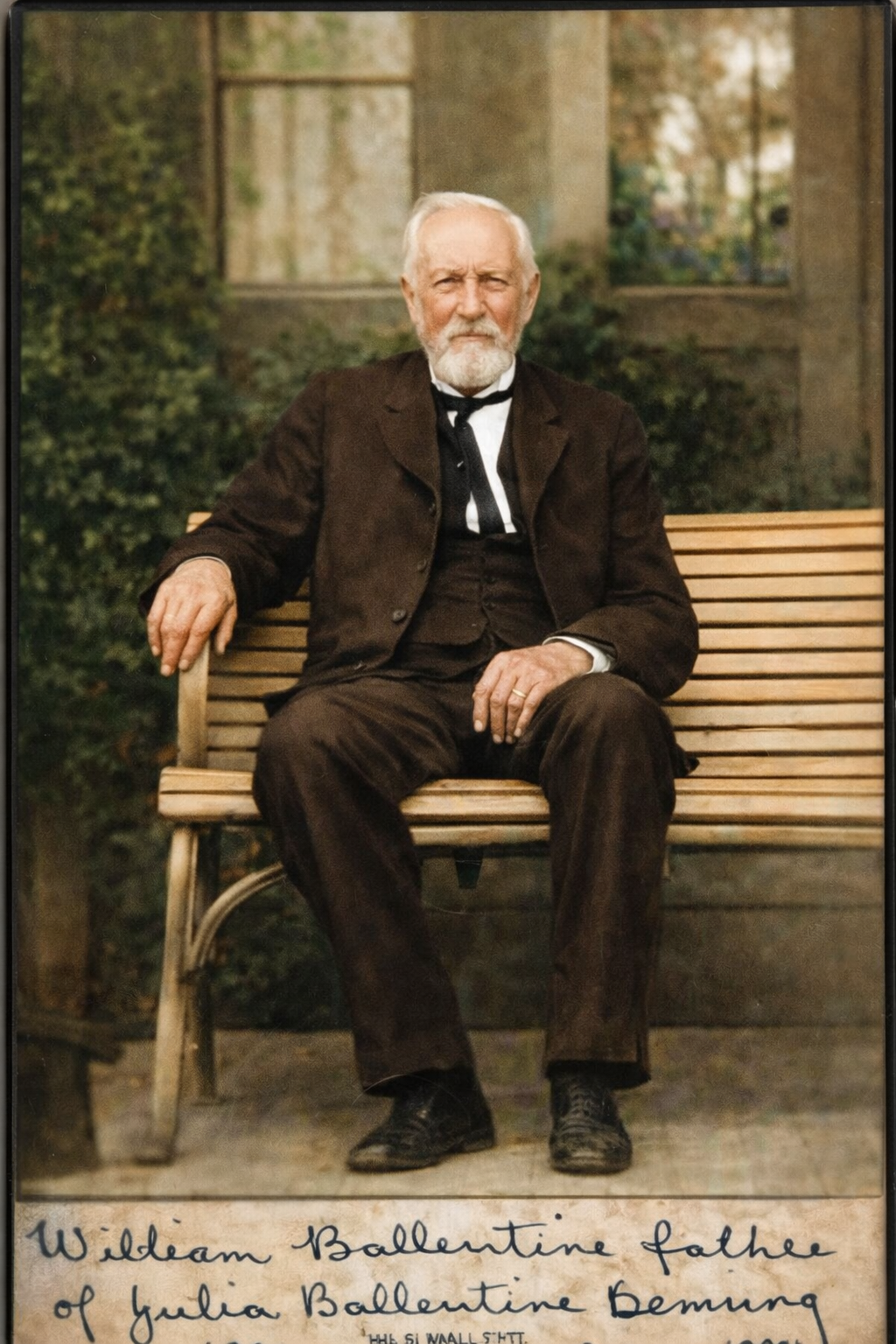
William Ballentine
William Ballentine
803 Garrison Avenue
Born: June, 1806
Ireland
Died: December 19, 1901 (95 years)
Kansas City, Jackson County, Missouri
Buried: Bellfontaine Cemetery
Saint Louis, Missouri
Spouse: Mary E. Hull Ballentine
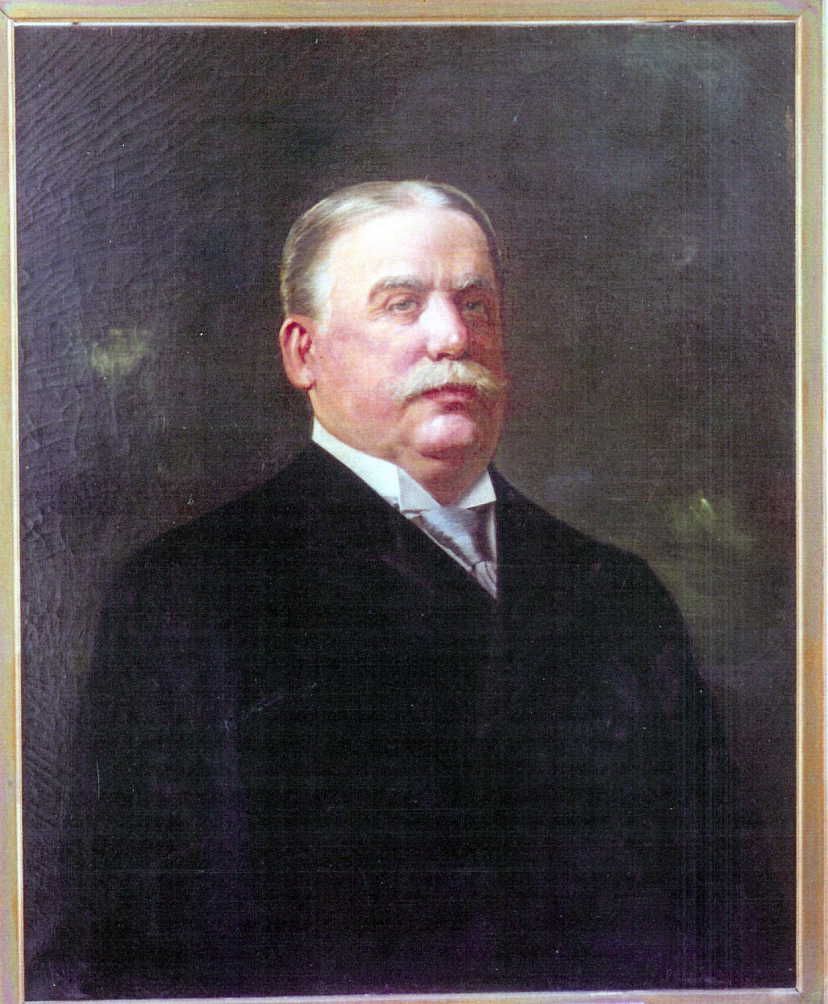
Augustus Brewster Hart
Augustus Brewster Hart
803 Garrison Avenue
(son-in-law of William Ballentine)
Born: March 15, 1864
Saint Louis, MIssouri
Died: July 6, 1916
Atlantic City, New Jersey
Buried: Bellfontaine Cemetery
Saint Louis, Missouri
Spouse: Clara Ballentine Hart
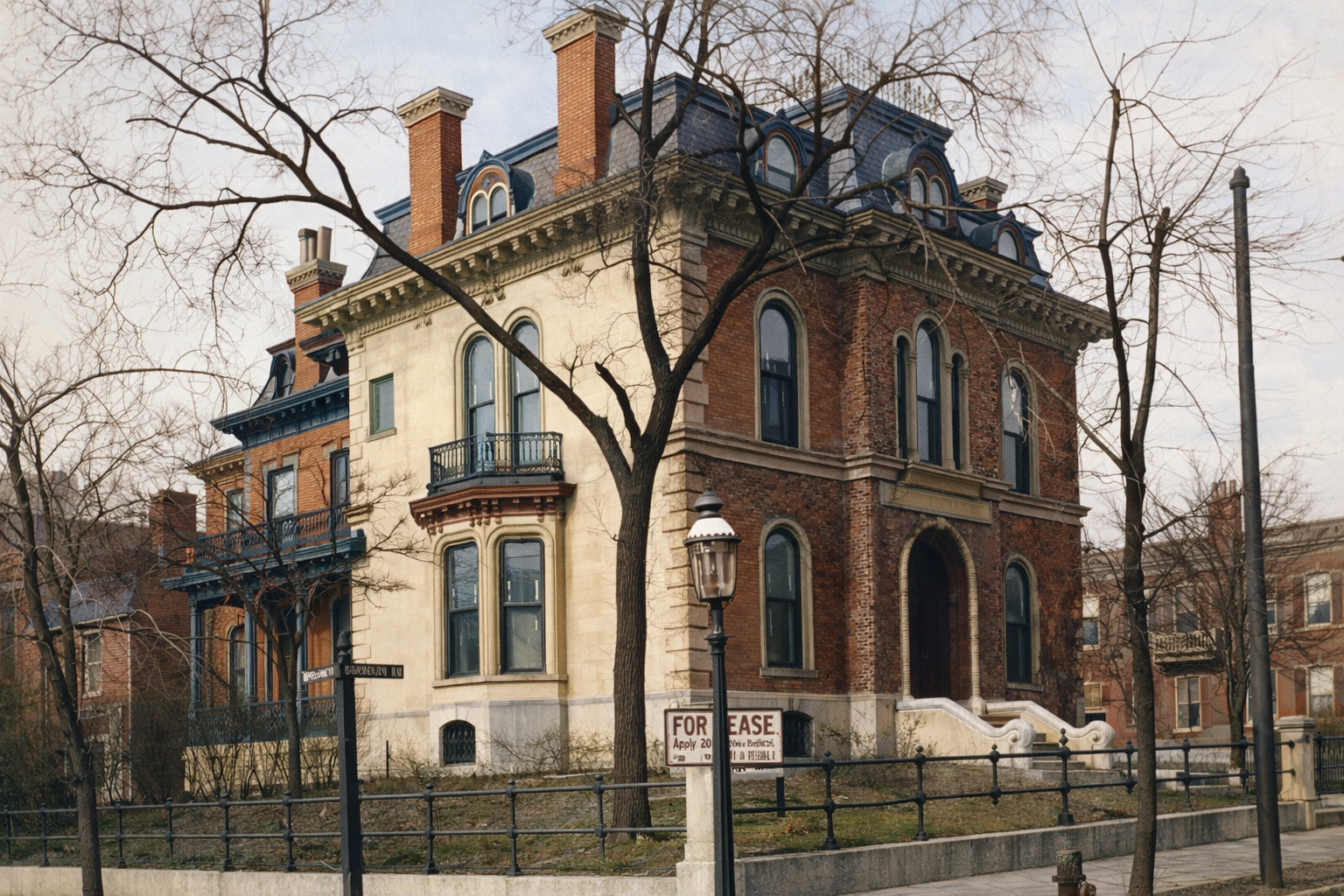
Ballentine/Hart Household
803 Garrison Avenue
In the years immediately following the Civil War, as St. Louis expanded westward and its commercial influence deepened, certain households emerged not merely as places of residence, but as centers of influence—where family, finance, and social standing converged into a single, functioning system. At 803 Garrison Avenue, such a household took form in the union of the Ballentine and Hart families, a domestic arrangement that reveals, in miniature, how the city’s professional and financial class truly operated in 1875.
At the head of this household stood Augustus Brewster Hart, a native of St. Louis and a product of both its educational institutions and its banking system. Having begun his career as a clerk in the Mechanics’ Bank, Hart represented a new generation of financially trained professionals—men whose authority derived not from land or trade alone, but from their command of capital. By the early 1870s, he had established the firm of Augustus B. Hart & Co., operating from offices at 222 Pine Street in the city’s commercial core.
 Yet Hart did not stand alone. His rise was closely intertwined with that of his father-in-law, William Ballentine, who was not merely a familial relation, but a named partner in the firm itself. Their association—formalized both through marriage and business—illustrates a defining characteristic of the period: the consolidation of trust, capital, and opportunity within the family structure. Ballentine, likely the elder and more seasoned figure, brought with him experience, credibility, and possibly capital, while Hart contributed training, ambition, and direction. Together, they formed a partnership that extended seamlessly from the counting room to the dining room.
Within the same household resided William Ballentine, Jr., whose role as collector for the firm placed him at the operational edge of the enterprise. If Hart directed and Ballentine structured, it was the younger Ballentine who enforced—managing accounts, securing payments, and maintaining the flow of capital upon which the firm depended. His presence within both the business and the home reflects a system built not on distant employment, but on proximity, loyalty, and oversight.
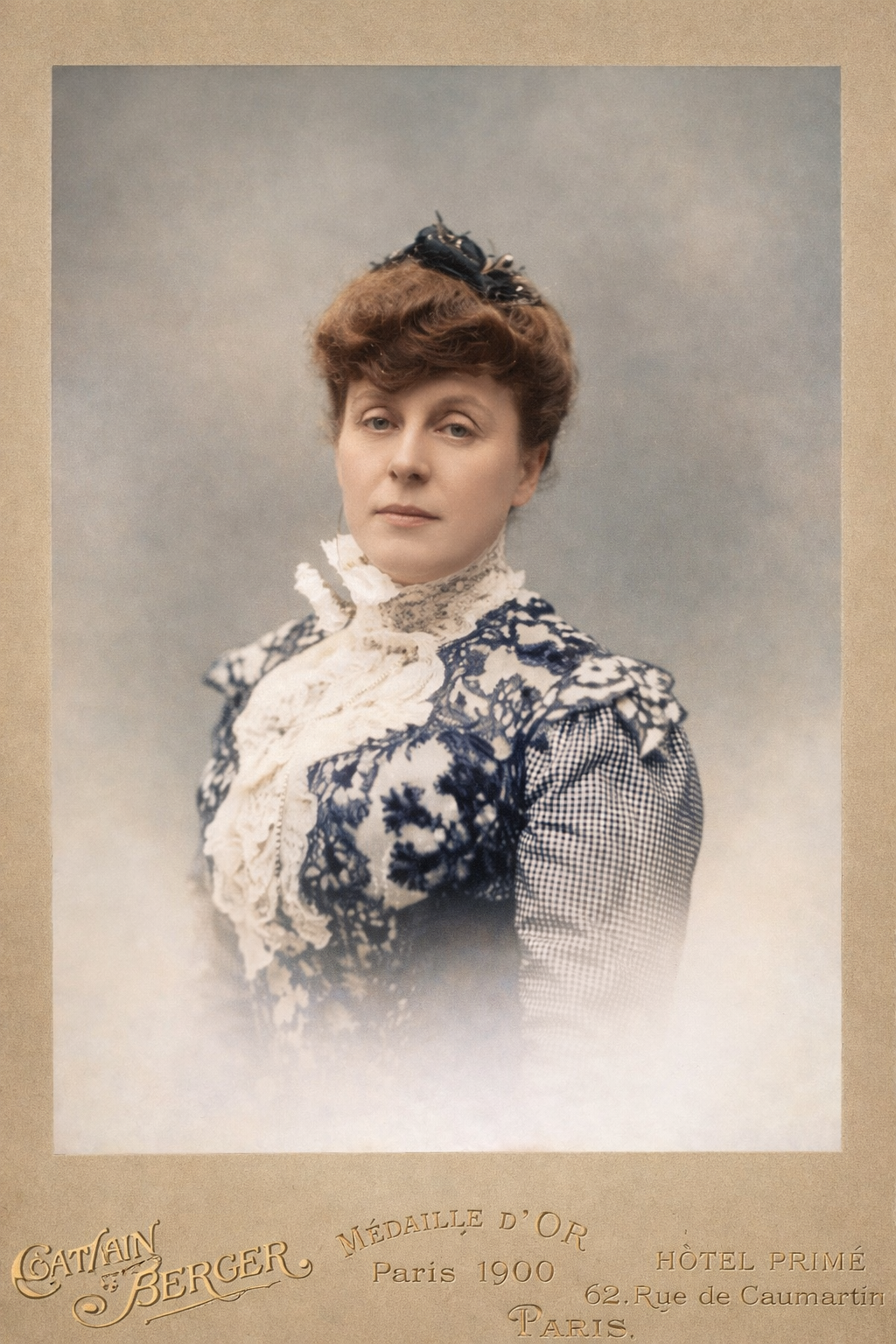
Clara Ballentine Hart
Completing this structure was Clara (Ballentine) Hart, whose marriage to Augustus in 1873 unified the two families and solidified the partnership that defined the household. While the formal records of the period speak little of her role, her presence is anything but silent. A portrait taken in Paris in 1900—far from the streets of St. Louis—reveals a woman situated within a world of refinement and international experience. Through her, the household at 803 Garrison was not only financially connected, but socially and culturally aligned with the broader currents of the Atlantic world. She stands as the bridge between generations and the embodiment of the household’s social identity.
Together, these four individuals formed more than a family—they constituted a domestic-financial unit, in which business operations, familial relationships, and social standing were mutually reinforcing. The house itself became an extension of the firm, and the firm an extension of the family. Decisions made at 222 Pine Street were informed by relationships cultivated at 803 Garrison, and the trust required for financial enterprise was secured not through contracts alone, but through kinship.
This pattern was not unique to the Ballentine–Hart household—but it is here, in this clearly documented instance, that it can be most plainly seen. Within a four-block stretch of Garrison Avenue—what may be termed the “Garrison Eleven”—similar concentrations of influence appear, suggesting that this neighborhood was not merely residential, but systemic. It was a place where the structures of post-war St. Louis were being quietly built, maintained, and transmitted across generations.
In the absence of the physical structures themselves, long since vanished, what remains are these intersections of name, address, and relationship. And in reconstructing them, the household at 803 Garrison Avenue emerges not as an isolated curiosity, but as a representative node within a broader network of power—one that defined the character of the city at a pivotal moment in its history.