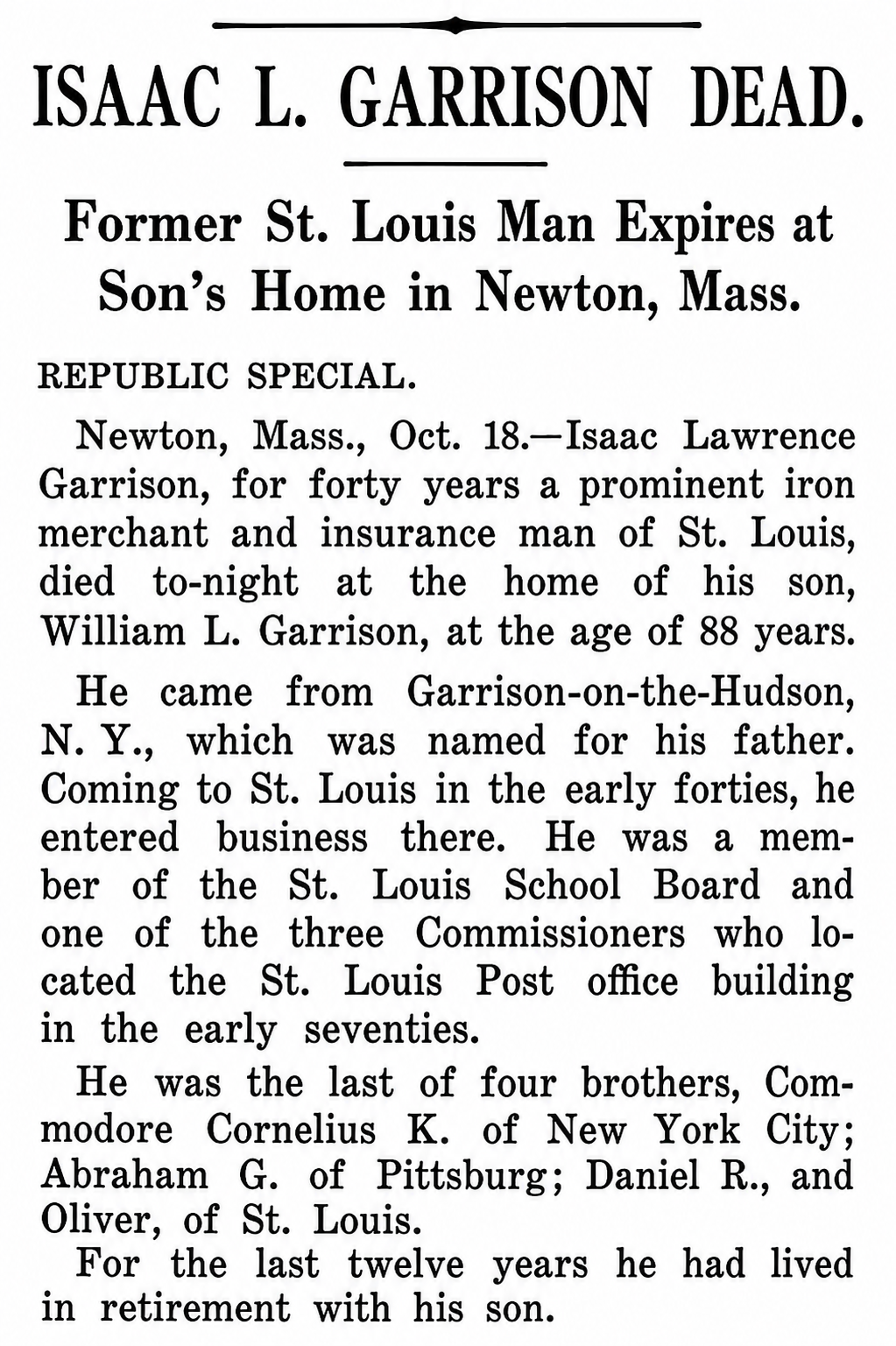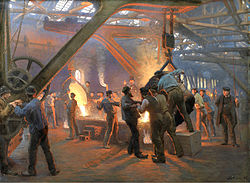
Iron Industry Foundry
Isaac L. Garrison
816 Garrison Avenue
Garrison-on-the-Hudson, New York
Died: October 16, 1905 (aged 87–88)
Newton, Middlesex County, Massachusetts
Buried: Bellefontaine Cemetery
Saint Louis, City of St. Louis, Missouri
Isaac L. Garrison stands as one of the more economically versatile and symbolically significant residents within the Lucas and Garrison neighborhood of 1875. His professional life traced the physical and financial development of St. Louis itself, moving through the iron trade, the marble and stone industry, and eventually into the expanding world of insurance and finance. In many respects, his career mirrors the broader maturation of St. Louis during the decades following the Civil War, as the city evolved from a frontier-oriented commercial center into one of America’s great industrial metropolises.
By 1875, Garrison resided at 816 Garrison Avenue, a fitting address for a man whose own name had become associated with one of the city’s principal residential corridors. The avenue represented stability, prosperity, and westward urban expansion. Large brick homes, landscaped lots, and socially prominent residents increasingly characterized the district, reflecting the confidence and ambition of postwar St. Louis society.
Garrison’s earliest professional associations appear rooted in the iron trade, one of the foundational industries of nineteenth-century urban growth. During the decades after the Civil War, iron was indispensable to nearly every aspect of American expansion. Railroads stretched westward across the continent. Bridges spanned rivers previously considered barriers to commerce. Warehouses, mills, factories, and commercial blocks rose rapidly throughout St. Louis. Men engaged in the iron business occupied an essential position within this network of development.
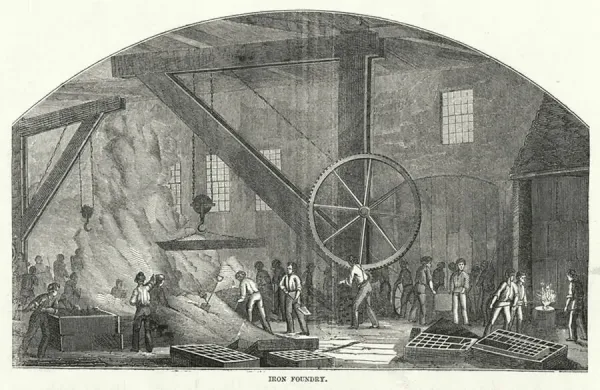
Late Nineteenth Century Iron Foundry
Whether operating as a dealer, merchant, or intermediary, Garrison participated in the circulation of materials that literally constructed the modern city. Iron was the skeleton of industrial America, and individuals involved in its trade often became closely connected to railroads, builders, engineers, and civic development interests. His work placed him among the class of businessmen who enabled the transformation of St. Louis from a river town into a major inland manufacturing and transportation center.
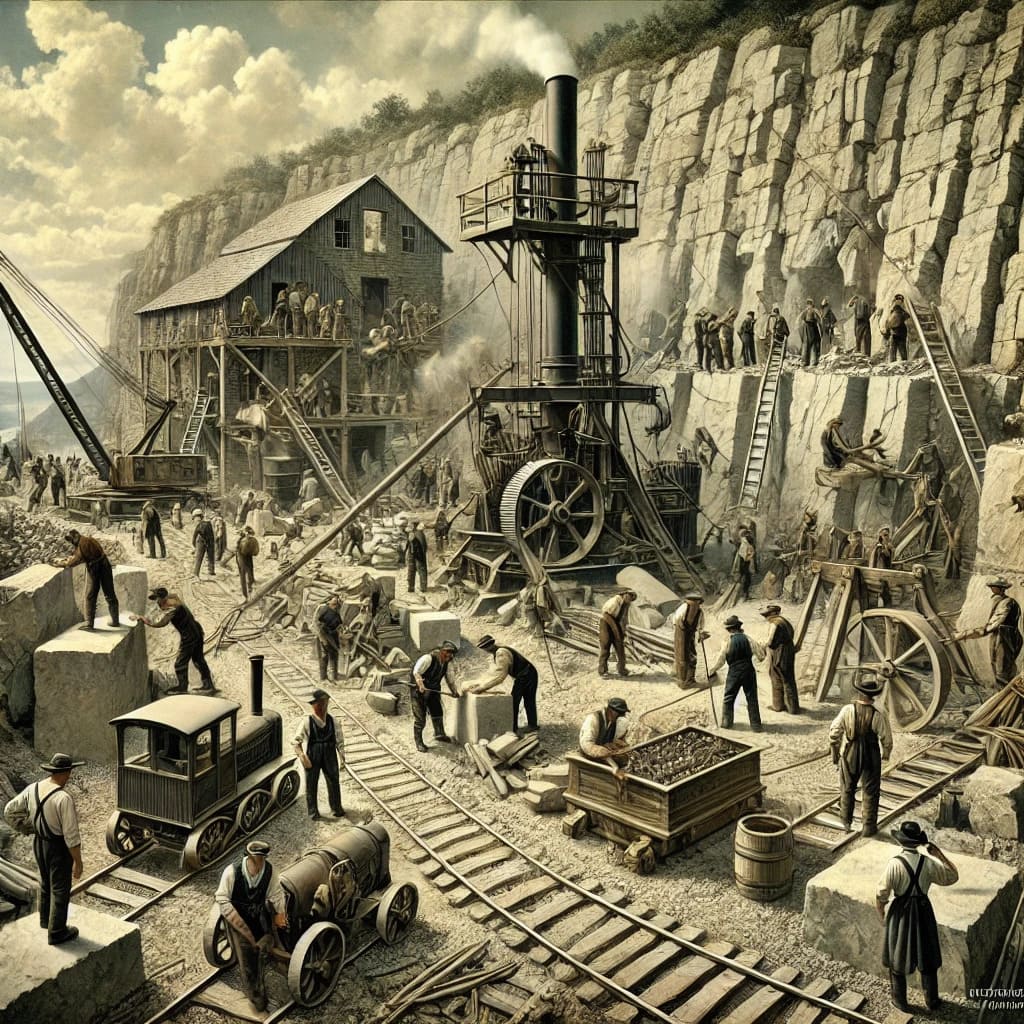
Late Nineteenth Century Marble Mining