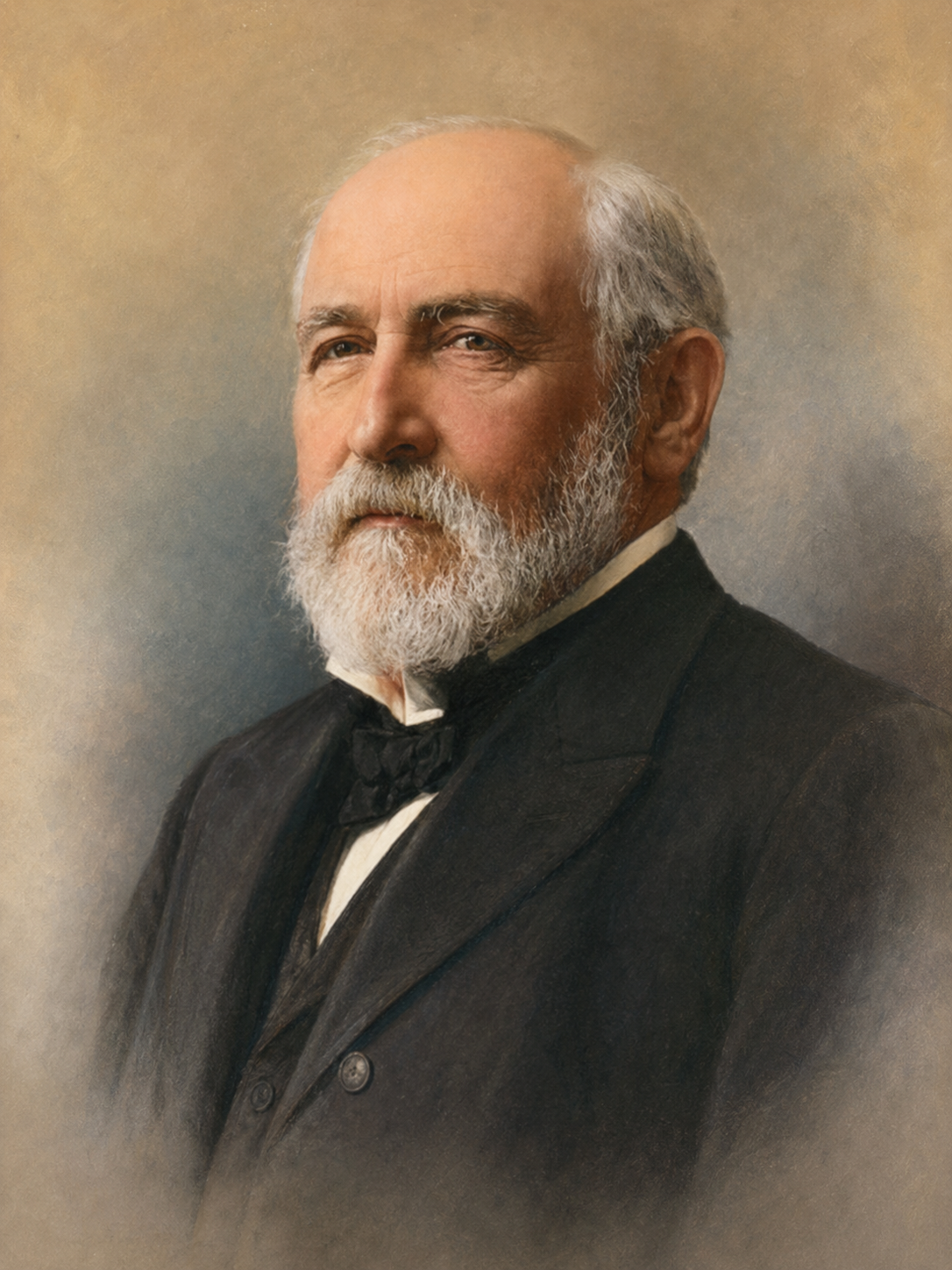
Robert Elisha Carr
3130 Lucas Avenue

Born: August 9,1827
Lexington, Fayette County, Kentucky
(the 13th of 13 Children)

Died: September 8. 1900
St. Louis, Missouri

Buried: Bellfontaine Cemetery
St. Louis Missouri

Spouse: Sarah Hamilton Block Carr (1831-1902)

Robert E. Carr stands as one of the more nationally connected figures residing along Lucas Avenue in 1875—a man whose life bridged the cultivated aristocracy of Kentucky, the political lineage of the Todd family, and the raw, expansionist energy of western railroad development.
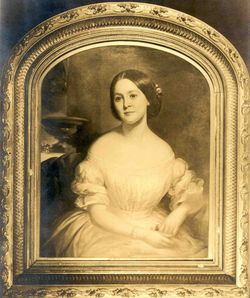
Sarah Hamilton Block Carr
Born in Lexington, Kentucky, Carr entered the world in rarefied company. His family estate adjoined that of Henry Clay at Ashland, placing him from birth within the orbit of one of America’s great political minds. His lineage reinforced that position: he was the son of Charles Carr and Elizabeth Todd, grandson of Colonel Levi Todd, and a first cousin of Mary Todd Lincoln. These connections embedded Carr within a network of influence that stretched from Kentucky society into the highest reaches of national leadership. He married Sarah Hamilton Block Carr and they had one child, Delia Block Carr Meysenburg.

Carr did not remain confined to inherited status. Like many men of his generation, he turned westward—toward the defining enterprise of the nineteenth century: the railroad.

Carr’s most significant achievement came with his direction of the Denver Pacific Railway and Telegraph Company, a critical link connecting Denver to the transcontinental system. Completed in 1870, this line effectively brought Denver into the national rail network, transforming it from a frontier outpost into a connected city. This was no small accomplishment; it required not only engineering oversight but political negotiation, financial coordination, and the ability to operate within the volatile environment of post–Civil War expansion.

His success led naturally to greater responsibilities. In 1871, Carr was elected president of the Kansas Pacific Railway, one of the principal arteries feeding the transcontinental system. He also held leadership roles with the Missouri, Kansas and Texas Railway, further cementing his influence across the developing rail infrastructure of the central United States.

Carr’s impact was sufficiently recognized that geography itself bears his name. The town of Carr, Colorado stands as a testament to his role in shaping the region’s development. Closer to St. Louis, his legacy is embedded in land rather than rail: the area known as Carrswold—once the site of his country estate—evolved into one of the region’s distinguished residential districts.

By 1875, Carr’s residence at 3130 Lucas placed him among the elite occupants of the Lucas and Garrison corridor—men whose wealth and influence were tied not merely to local enterprise, but to the national transformation underway. His presence there reflects the way St. Louis functioned as both a gateway and a command center for western expansion.

Further detail on Carr’s landholdings and the development of Carrswold can be found in From New Madrid to Claverach: How an Earthquake Spawned a St Louis Suburb, which traces the evolution of that landscape from frontier disruption to suburban refinement.

Lucas and Garrison Reflective Addendum

Robert E. Carr’s life illustrates a powerful convergence: inherited position meeting national opportunity. Unlike many who simply benefited from family connections, Carr leveraged his background into participation in one of the most consequential enterprises of the nineteenth century—the binding together of a continent by rail.

His story also reveals something essential about St. Louis in 1875. The city was not merely a place of residence for successful men; it was a strategic node in a national network. Figures like Carr lived on Lucas Avenue not because their influence was local, but because St. Louis sat at the crossroads of finance, transportation, and westward ambition.

And yet, there is a quieter lesson embedded here. Carr’s name endures in a Colorado town and a Clayton neighborhood—markers of achievement that outlast the man himself. But the deeper question remains: what, beyond infrastructure and land, constitutes a lasting legacy? The railroads he helped build reshaped a nation. The communities that followed—like Carrswold—represent the human desire to transform movement and expansion into stability and permanence.

In that sense, Carr’s life mirrors the broader American story of his era: motion giving way to settlement, ambition settling into structure, and influence leaving its imprint not only on maps, but on the very pattern of how and where people live.