The Laflin Brothers 

Addison Laflin & Sylvester Laflin
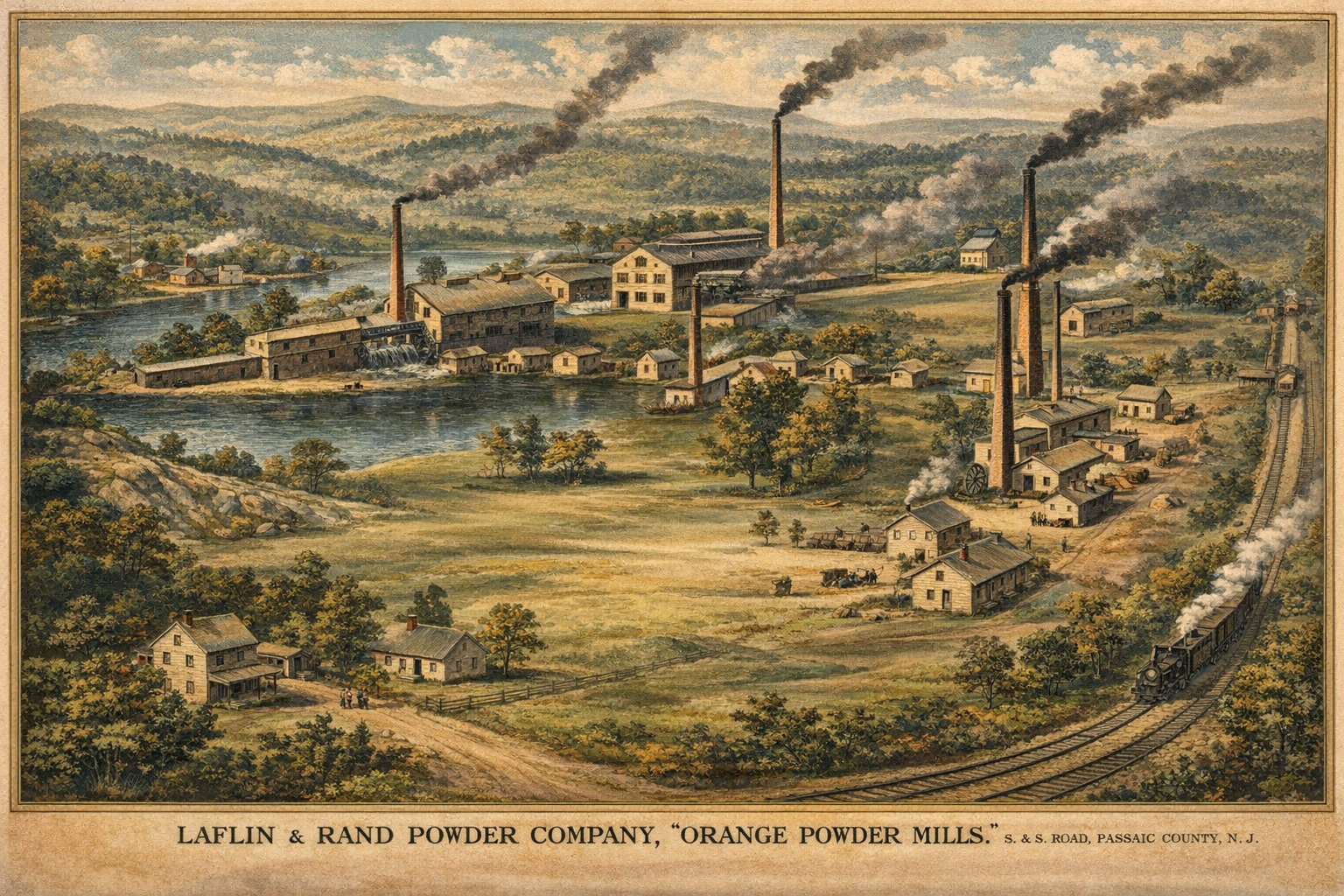
Laflin & Rand Powder Company
3216 Washington Avenue & 2848 Olive Street, St. Louis (1875)

Narrative Profile

In 1875, within the refined residential grid of St. Louis’s Lucas and Garrison district, two brothers lived in close proximity, their households set among the city’s professional and mercantile elite. Addison Laflin, residing at 3216 Washington Avenue, and his brother, Sylvester Laflin, at 2848 Olive Street, were not merely neighbors within this distinguished enclave—they were participants in one of the most consequential and least visible industries of their time.

Both men were associated with the Laflin & Rand Powder Company, a firm whose products powered the expansion of the United States in the decades following the Civil War. From the quiet dignity of their residences, the Laflin brothers were tied to a business that operated at the intersection of industry, risk, and national growth—an enterprise whose influence extended far beyond the boundaries of St. Louis.

The juxtaposition is striking. Along Washington Avenue and Olive Street stood well-appointed homes, orderly and composed, reflective of stability and success. Yet the fortunes that sustained such environments were, in this case, connected to a substance defined by volatility. Gunpowder—carefully measured, deliberately controlled—was nonetheless a force of sudden and immense destruction. It shattered rock, carved rail passages, and opened the earth to extraction. It was, quite literally, an agent of transformation.

Within the historical record, Sylvester Laflin emerges as the more visible of the two brothers. His name appears with greater frequency in business associations and corporate contexts, offering a clearer line of sight into the operations and reach of the Laflin & Rand enterprise. Through him, the connection between this St. Louis household and a national industrial network becomes readily apparent.

Addison Laflin, though less prominently documented, should not be regarded as a peripheral figure. His presence reinforces the reality that industrial enterprise in the nineteenth century often operated through familial networks—brothers, partners, and kin bound together not only by blood, but by shared economic purpose. In this light, the Laflin residences on Washington and Olive are best understood not as separate stories, but as components of a single household identity rooted in industry and enterprise.

From these two addresses, the reach of the Laflin brothers extended outward into the physical development of the nation. Powder supplied through their firm found its way into the lead mines of southeastern Missouri and the coal fields that fueled the region’s industry. It was used in the blasting required for railroad expansion, enabling lines to push westward across difficult terrain. It contributed to river improvements and urban construction, helping to shape both the infrastructure of St. Louis and the broader American landscape.

And yet, for all its importance, the industry itself remained largely unseen within the context of neighborhoods like Lucas and Garrison. Powder mills were necessarily located at a distance, their inherent dangers requiring isolation. Storage magazines were regulated and controlled. The trade was essential, but discreet—its presence felt more in its effects than in its visibility.

This distance between cause and effect is what makes the Laflin brothers particularly compelling within the study of Plate 71. Their lives illustrate a broader truth about the neighborhood itself: that its refinement was not self-contained, but dependent upon wider systems of production and supply. The elegance of Washington Avenue and Olive Street was sustained, in part, by industries that operated far beyond their sightlines—industries marked by heat, pressure, and risk.

In this way, the Laflin brothers stand as representatives of a “hidden infrastructure” of prosperity. They remind us that the polished surfaces of nineteenth-century urban life were often underwritten by forces that were anything but gentle. The same powder that fractured stone and fueled expansion also contributed to the stability and success embodied in their homes.

Their story does not end at their doorsteps. It leads outward—into mills and magazines, into rail lines and mining operations, into the broader narrative of a nation in motion. To follow that trail is to better understand not only the Laflin brothers, but the foundations upon which their world was built.

LucGar Reflective Addendum
The lives of Addison and Sylvester Laflin invite a deeper consideration of how communities are formed and sustained. The visible qualities of a neighborhood—its homes, its order, its sense of permanence—often rest upon systems that remain out of view. To study such connections is to move beyond surface impressions and toward a fuller understanding of the past.

If history is to offer more than curiosity, it must reveal these relationships. It must show how prosperity is constructed, how industries shape lives, and how decisions made in one sphere reverberate in another. In recognizing the unseen forces that supported communities like Lucas and Garrison, we are better equipped to reflect upon the structures that shape our own time—and to consider how they might be guided toward outcomes that are not only successful, but wise.