In 1875, St. Louis stood as one of the most strategically positioned coal distribution centers in the United States, even though it was not itself a major coal mining city. Its importance derived from geography, transportation infrastructure, and explosive urban growth. Coal was the indispensable fuel of the age—powering steamboats, railroads, factories, and domestic heating—and St. Louis functioned as a critical hub linking the coalfields of Illinois and beyond with the expanding markets of the Mississippi Valley and the American West.
Geography and Supply Networks
The coal that fueled St. Louis in 1875 came primarily from the rich bituminous coalfields of southern Illinois. These mines, located within relatively short distance across the Mississippi River, could efficiently ship coal by rail to river terminals or directly by barge. Illinois coal was particularly suited for industrial use, and its accessibility made it the dominant source for the city.
The Mississippi River itself was the lifeline of this trade. Coal arrived in large quantities on flatboats and barges, often towed by steamboats, and was offloaded along the bustling St. Louis levee. From there, it entered a complex distribution system of local dealers, rail spurs, and urban coal yards. The river not only connected St. Louis to its supply but also allowed it to serve as a redistribution point for coal heading southward or westward.
Railroads and Expanding Reach
By 1875, St. Louis had become a major railroad center, and this further amplified its role in the coal trade. Railroads such as the Missouri Pacific and the St. Louis, Iron Mountain & Southern transported coal inland, extending its reach far beyond the riverfront. The completion of the Eads Bridge in 1874 was particularly transformative. For the first time, rail lines could cross the Mississippi directly at St. Louis, linking eastern coal supplies seamlessly with western markets.
This integration of river and rail transportation made coal more accessible and affordable, accelerating industrial development. Factories could now rely on steady fuel supplies, and railroads themselves—major consumers of coal—benefited from improved logistics. The city’s infrastructure thus created a reinforcing cycle: better transportation increased coal availability, which in turn fueled further economic expansion.
Urban Demand and Domestic Use
The demand for coal in St. Louis was immense and growing. Industrial facilities—ironworks, foundries, flour mills, breweries, and manufacturing plants—required vast quantities of fuel to operate steam engines and furnaces. Coal was the backbone of industrial productivity.
At the same time, coal was becoming increasingly important in domestic life. By the mid-1870s, many middle- and upper-class homes in St. Louis had transitioned from wood to coal for heating. Coal burned hotter and more efficiently, making it ideal for the dense urban environment. Local coal dealers delivered fuel directly to residences, often storing it in cellars or backyard sheds.
This dual demand—industrial and domestic—ensured that coal remained a constant presence in daily life. It also contributed to the environmental character of the city: smoke from coal-fired furnaces and factories hung over St. Louis, marking it unmistakably as a city of the industrial age.
The Business of Coal: Dealers and Middlemen
While mining occurred primarily outside the city, St. Louis supported a robust network of coal merchants, brokers, and companies who handled the storage, sale, and distribution of coal. Firms such as the Gartside Coal Company—associated with individuals like Charles E. Gartside of your Plate 71 research—operated as intermediaries between producers and consumers.
These companies maintained coal yards along the riverfront and throughout the city, where coal was sorted, stored, and sold in varying grades and quantities. Business success depended on reliable supply chains, competitive pricing, and efficient delivery systems. The industry required coordination between miners, transport operators, and urban distributors, making it a complex and highly organized sector.
Coal dealers were also embedded in the social and economic fabric of the city. Many were prominent businessmen who lived in respectable neighborhoods—such as those along Lucas Avenue—and participated in civic and commercial institutions. Their fortunes were tied directly to the steady flow of fuel that powered the city.
Labor and Working Conditions
The coal industry also relied heavily on labor, both in the mines and in the city. Although mining took place largely in Illinois, St. Louis workers were employed in unloading barges, operating coal yards, and delivering fuel. These jobs were physically demanding and often dangerous, involving heavy lifting, exposure to dust, and long hours.
Coal dust and smoke affected not only workers but also the broader population. The environmental consequences of coal use were significant, contributing to air pollution and soiling buildings and streets. Yet in 1875, these effects were largely accepted as the cost of progress.
Conclusion
In 1875, the coal industry was fundamental to the identity and growth of St. Louis. Though the city did not mine coal itself, it served as a vital nexus connecting resource-rich regions with expanding markets. Its riverfront, railroads, and commercial networks transformed coal into the energy that powered industry, heated homes, and drove economic expansion.

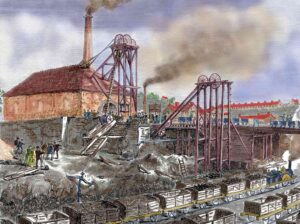 Geography and Supply Networks
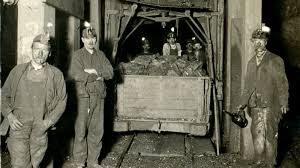 Urban Demand and Domestic Use
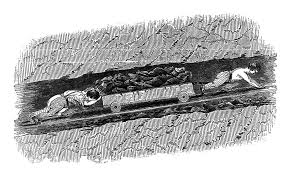 Labor and Working Conditions